

The word is very near you, it is in your mouth and in your heart so you may obey it. Deuteronomy 30:14 NIV
Bible verses for today, 1 Samuel 3-4, 1 Corinthians 9;19-27 finish the Bible in one year. (The Catholic Bible, the original one that includes all the books not included in Bibles used by other Christians.)
Watch and Listen here: and for explanations For the Rosary Julie Green Prophecies, Catholic Answers, Daily Readings,
Listen to the verses, as you enjoy the clips and pictures and a song at the end. Also look for the weekly review on the “Gizella Price” channel, YouTube or on Rumble.
A Christian’s goal should be to create the Kingdom of God here on earth, as it is in Heaven. Not only, to get to Heaven.
Prophesies by Julie Green. Click the date following: 9/1/22 August 2022 Post July 2022 Posts October Posts 11/24/22 video, 11/22 all 12/22 all 1/23 all
Go Here to see how many of Julie Green’s prophesies are being fulfilled every day.
My other websites: Catholic, Prophets today, For Kids
Read Today’s Bible Verses following here:
1 Samuel 3
1During the time young Samuel was minister to the LORD under Eli, the word of the LORD was scarce and vision infrequent.
2* One day Eli was asleep in his usual place. His eyes had lately grown so weak that he could not see.
3The lamp of God was not yet extinguished,* and Samuel was sleeping in the temple of the LORD where the ark of God was.a
4The LORD called to Samuel, who answered, “Here I am.”
5He ran to Eli and said, “Here I am. You called me.” “I did not call you,” Eli answered. “Go back to sleep.” So he went back to sleep.
6Again the LORD called Samuel, who rose and went to Eli. “Here I am,” he said. “You called me.” But he answered, “I did not call you, my son. Go back to sleep.”
7Samuel did not yet recognize the LORD, since the word of the LORD had not yet been revealed to him.
8The LORD called Samuel again, for the third time. Getting up and going to Eli, he said, “Here I am. You called me.” Then Eli understood that the LORD was calling the youth.
9So he said to Samuel, “Go to sleep, and if you are called, reply, ‘Speak, LORD, for your servant is listening.’” When Samuel went to sleep in his place,
10the LORD came and stood there, calling out as before: Samuel, Samuel! Samuel answered, “Speak, for your servant is listening.”
11The LORD said to Samuel: I am about to do something in Israel that will make the ears of everyone who hears it ring.b
12On that day I will carry out against Eli everything I have said about his house, beginning to end.
13I announce to him that I am condemning his house once and for all, because of this crime: though he knew his sons were blaspheming God, he did not reprove them.c
14Therefore, I swear to Eli’s house: No sacrifice or offering will ever expiate its crime.*
15Samuel then slept until morning, when he got up early and opened the doors of the temple of the LORD. He was afraid to tell Eli the vision,
16but Eli called to him, “Samuel, my son!” He replied, “Here I am.”
17Then Eli asked, “What did he say to you? Hide nothing from me! May God do thus to you, and more,* if you hide from me a single thing he told you.”
18So Samuel told him everything, and held nothing back. Eli answered, “It is the LORD. What is pleasing in the LORD’s sight, the LORD will do.”
Samuel Acknowledged as Prophet.
19Samuel grew up, and the LORD was with him, not permitting any word of his to go unfulfilled.d
20e Thus all Israel from Dan to Beer-sheba came to know that Samuel was a trustworthy prophet of the LORD.
21The LORD continued to appear at Shiloh, manifesting himself to Samuel at Shiloh through his word. Samuel’s word spread throughout Israel.
1 Samuel 4
Defeat of the Israelites.*
1At that time, the Philistines gathered for an attack on Israel. Israel went out to engage them in battle and camped at Ebenezer, while the Philistines camped at Aphek.
2The Philistines then drew up in battle formation against Israel. After a fierce struggle Israel was defeated by the Philistines, who killed about four thousand men on the battlefield.
3When the troops retired to the camp, the elders of Israel said, “Why has the LORD permitted us to be defeated today by the Philistines? Let us fetch the ark of the LORD from Shiloh that it may go into battle among us and save us from the grasp of our enemies.”a
4So the people sent to Shiloh and brought from there the ark of the LORD of hosts, who is enthroned upon the cherubim.* The two sons of Eli, Hophni and Phinehas, accompanied the ark of God.b
5When the ark of the LORD arrived in the camp, all Israel shouted so loudly that the earth shook.
6The Philistines, hearing the uproar, asked, “What does this loud shouting in the camp of the Hebrews mean?” On learning that the ark of the LORD had come into the camp,
7the Philistines were frightened, crying out, “Gods have come to their camp. Woe to us! This has never happened before.
8Woe to us! Who can deliver us from the power of these mighty gods?* These are the gods who struck the Egyptians with various plagues in the desert.
9Take courage and act like soldiers, Philistines; otherwise you will become slaves to the Hebrews, as they were your slaves. Fight like soldiers!”
10The Philistines fought and Israel was defeated; everyone fled to their own tents.* It was a disastrous defeat; Israel lost thirty thousand foot soldiers.
11The ark of God was captured, and Eli’s two sons, Hophni and Phinehas, were dead.c
12A Benjaminite fled from the battlefield and reached Shiloh that same day, with his clothes torn and his head covered with dirt.d
13When he arrived, Eli was sitting in his chair beside the gate, watching the road, for he was troubled at heart about the ark of God. The man, however, went into the city to announce his news; then the whole city cried out.
14When Eli heard the uproar, he wondered why there was such commotion. Just then the man rushed up to inform him.
15Eli was ninety-eight years old, and his eyes would not focus. So he could not see.
16The man said to Eli: “I have come from the battlefield; today I fled from there.” He asked, “What happened, my son?”
17And the messenger answered: “Israel fled from the Philistines; in fact, the troops suffered heavy losses. Your two sons, Hophni and Phinehas, are dead, and the ark of God has been captured.”
18At this mention of the ark of God, Eli fell backward from his chair into the gateway; he died of a broken neck since he was an old man and heavy. He had judged Israel for forty years.
19His daughter-in-law, the wife of Phinehas, was pregnant and about to give birth. When she heard the news about the capture of the ark of God and the deaths of her father-in-law and her husband, she crouched down in labor, and gave birth.
20She was about to die when the women standing around her said to her, “Do not be afraid, you have given birth to a son.” Yet she neither answered nor paid any attention.e
21She named the child Ichabod, saying, “Gone is the glory from Israel,” referring to the capture of the ark of God and to her father-in-law and her husband.
22She said, “Gone is the glory from Israel,” because the ark of God had been captured.f
1 Corinthians 9:19-27
19* Although I am free in regard to all, I have made myself a slave to all so as to win over as many as possible.n
20To the Jews I became like a Jew to win over Jews; to those under the law I became like one under the law—though I myself am not under the law—to win over those under the law.
21To those outside the law I became like one outside the law—though I am not outside God’s law but within the law of Christ—to win over those outside the law.
22To the weak I became weak, to win over the weak. I have become all things to all, to save at least some.o
23All this I do for the sake of the gospel, so that I too may have a share in it.
24* Do you not know that the runners in the stadium all run in the race, but only one wins the prize? Run so as to win.p
25Every athlete exercises discipline in every way. They do it to win a perishable crown, but we an imperishable one.q
26Thus I do not run aimlessly; I do not fight as if I were shadowboxing.
27No, I drive my body and train it, for fear that, after having preached to others, I myself should be disqualified.*
Sermons Rosary Prayers Catholic Answers
Introduction to the
THE BOOKS OF 1 Samuel
These books describe the rise and development of kingship in Israel. Samuel is a pivotal figure. He bridges the gap between the period of the Judges and the monarchy, and guides Israel’s transition to kingship. A Deuteronomistic editor presents both positive and negative traditions about the monarchy, portraying it both as evidence of Israel’s rejection of the Lord as their sovereign (1 Sm 8:6–22; 12:1–25) and as part of God’s plan to deliver the people (1 Sm 9:16; 10:17–27; 2 Sm 7:8–17). Samuel’s misgivings about abuse of royal power foreshadow the failures and misdeeds of Saul and David and the failures of subsequent Israelite kings.
Although the events described in 1 and 2 Samuel move from the last of the judges to the decline of David’s reign and the beginning of a legendary “Golden Age” under Solomon’s rule, this material does not present either a continuous history or a systematic account of this period. The author/editor developed a narrative timeline around freely composed speeches, delivered by prophets like Samuel (e.g., 1 Sm 15:10–31; 28:15–19) and Nathan (2 Sm 12:1–12), who endorse Deuteronomistic perspectives regarding the establishment of the monarchy, the relationship between worship and obedience, and the divine covenant established with the house of David.
These books include independent blocks (e.g., the Ark Narrative [1 Sm 4:1–7:1], Saul’s rise to power [1 Sm 9:1–11:15], David’s ascendancy over Saul [1 Sm 16–31], the Succession Narrative [2 Sm 9–20; 1 Kgs 1–2]), which the editor shaped into three narrative cycles, the last two marked by transitional passages in 1 Sm 13:1 and 2 Sm 1:1. Each section focuses on a major figure in the development of the monarchy: Samuel, the reluctant king maker (1 Sm 1–12); Saul, the king whom the Lord rejects (1 Sm 13–31); David, the king after the Lord’s own heart (2 Sm 1–24). A common theme unites these narratives: Israel’s God acts justly, prospering those who remain faithful and destroying those who reject his ways (1 Sm 2:9). Along with the rest of the Deuteronomistic History, the Books of Samuel become an object lesson for biblical Israel as it tries to re-establish its religious identity after the destruction of Jerusalem and the loss of its homeland (587/586 B.C.).
The contents of the Books of Samuel may be divided as follows:
- The Last Judges, Eli and Samuel (1 Sm 1:1–7:17)
- Establishment of the Monarchy (1 Sm 8:1–12:25)
- Saul and David (1 Sm 13:1–2 Sm 2:7)
- The Reign of David (2 Sm 2:8–20:26)
- Appendixes (2 Sm 21:1–24:25)
THE FIRST BOOK OF 1 SAMUEL
The book of 1 Corinthians
THE FIRST LETTER TO THE CORINTHIANS
Paul’s first letter to the church of Corinth provides us with a fuller insight into the life of an early Christian community of the first generation than any other book of the New Testament. Through it we can glimpse both the strengths and the weaknesses of this small group in a great city of the ancient world, men and women who had accepted the good news of Christ and were now trying to realize in their lives the implications of their baptism. Paul, who had founded the community and continued to look after it as a father, responds both to questions addressed to him and to situations of which he had been informed. In doing so, he reveals much about himself, his teaching, and the way in which he conducted his work of apostleship. Some things are puzzling because we have the correspondence only in one direction. For the person studying this letter, it seems to raise as many questions as it answers, but without it our knowledge of church life in the middle of the first century would be much poorer.
Paul established a Christian community in Corinth about the year 51, on his second missionary journey. The city, a commercial crossroads, was a melting pot full of devotees of various pagan cults and marked by a measure of moral depravity not unusual in a great seaport. The Acts of the Apostles suggests that moderate success attended Paul’s efforts among the Jews in Corinth at first, but that they soon turned against him (Acts 18:1–8). More fruitful was his year and a half spent among the Gentiles (Acts 18:11), which won to the faith many of the city’s poor and underprivileged (1 Cor 1:26). After his departure the eloquent Apollos, an Alexandrian Jewish Christian, rendered great service to the community, expounding “from the scriptures that the Messiah is Jesus” (Acts 18:24–28).
While Paul was in Ephesus on his third journey (1 Cor 16:8; Acts 19:1–20), he received disquieting news about Corinth. The community there was displaying open factionalism, as certain members were identifying themselves exclusively with individual Christian leaders and interpreting Christian teaching as a superior wisdom for the initiated few (1 Cor 1:10–4:21). The community lacked the decisiveness to take appropriate action against one of its members who was living publicly in an incestuous union (1 Cor 5:1–13). Other members engaged in legal conflicts in pagan courts of law (1 Cor 6:1–11); still others may have participated in religious prostitution (1 Cor 6:12–20) or temple sacrifices (1 Cor 10:14–22).
The community’s ills were reflected in its liturgy. In the celebration of the Eucharist certain members discriminated against others, drank too freely at the agape, or fellowship meal, and denied Christian social courtesies to the poor among the membership (1 Cor 11:17–22). Charisms such as ecstatic prayer, attributed freely to the impulse of the holy Spirit, were more highly prized than works of charity (1 Cor 13:1–2, 8), and were used at times in a disorderly way (1 Cor 14:1–40). Women appeared at the assembly without the customary head-covering (1 Cor 11:3–16), and perhaps were quarreling over their right to address the assembly (1 Cor 14:34–35).
Still other problems with which Paul had to deal concerned matters of conscience discussed among the faithful members of the community: the eating of meat that had been sacrificed to idols (1 Cor 8:1–13), the use of sex in marriage (1 Cor 7:1–7), and the attitude to be taken by the unmarried toward marriage in view of the possible proximity of Christ’s second coming (1 Cor 7:25–40). There was also a doctrinal matter that called for Paul’s attention, for some members of the community, despite their belief in the resurrection of Christ, were denying the possibility of general bodily resurrection.
To treat this wide spectrum of questions, Paul wrote this letter from Ephesus about the year 56. The majority of the Corinthian Christians may well have been quite faithful. Paul writes on their behalf to guard against the threats posed to the community by the views and conduct of various minorities. He writes with confidence in the authority of his apostolic mission, and he presumes that the Corinthians, despite their deficiencies, will recognize and accept it. On the other hand, he does not hesitate to exercise his authority as his judgment dictates in each situation, even going so far as to promise a direct confrontation with recalcitrants, should the abuses he scores remain uncorrected (1 Cor 4:18–21).
The letter illustrates well the mind and character of Paul. Although he is impelled to insist on his office as founder of the community, he recognizes that he is only one servant of God among many and generously acknowledges the labors of Apollos (1 Cor 3:5–8). He provides us in this letter with many valuable examples of his method of theological reflection and exposition. He always treats the questions at issue on the level of the purity of Christian teaching and conduct. Certain passages of the letter are of the greatest importance for the understanding of early Christian teaching on the Eucharist (1 Cor 10:14–22; 11:17–34) and on the resurrection of the body (1 Cor 15:1–58).
Paul’s authorship of 1 Corinthians, apart from a few verses that some regard as later interpolations, has never been seriously questioned. Some scholars have proposed, however, that the letter as we have it contains portions of more than one original Pauline letter. We know that Paul wrote at least two other letters to Corinth (see 1 Cor 5:9; 2 Cor 2:3–4) in addition to the two that we now have; this theory holds that the additional letters are actually contained within the two canonical ones. Most commentators, however, find 1 Corinthians quite understandable as a single coherent work.
The principal divisions of the First Letter to the Corinthians are the following:
- Address (1:1–9)
- Disorders in the Corinthian Community (1:10–6:20)
- Answers to the Corinthians’ Questions (7:1–11:1)
- Problems in Liturgical Assemblies (11:2–14:40)
- The Resurrection (15:1–58)
- Conclusion (16:1–24)
Sermons on the Book of 1 Corinthians
SERMONS ON THE BOOK OF 1 Samuel
Catholic Daily Readings at every Mass
You can also read it, if you watch this on You Tube, under the videos
Sermons Rosary Prayers Catholic Answers Scriptural Rosary
Prophesies by Julie Green. Click the date following: December 22 Posts, November 22 Posts, September Posts, August 2022 Post July 2022 Posts October Posts video,
Go Here to see how many of Julie Green’s prophesies are being fulfilled every day.
Prophetic words given on November 24, 2022
See prophesy blog for Jan 2nd 2023.
Dr. Myles Munroe
I am including a video by Dr. Myles Munroe, I’ve listened to him back in the nineties, and rediscovered him recently. Now his perspective seems to be a good way to also look at scripture. In Pursuit of Purpose – Book Highlights
Sermons Rosary Prayers Catholic Answers
Called to Communion Dr. David Anders

Rosary Mysteries
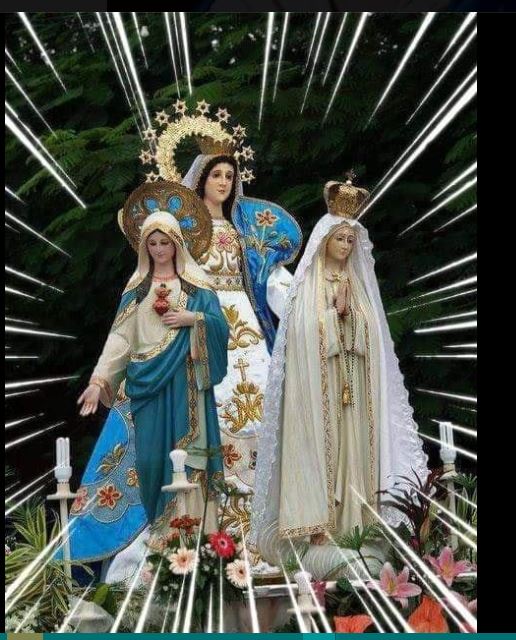
The images help me to focus on the particular mystery that I am contemplating as I say the Hail Mary on each bead.
Pray on Mondays Joyful, on Tuesdays Sorrowful, on Wednesdays Glorious, on Thursdays Luminous, on Fridays Sorrowful, on Saturdays Joyful, on Sundays Glorious Mysteries in union with millions of faithful believers on this Earth.
Joyful Mysteries
Luminous Mysteries
Sorrowful Mysteries
Glorious Mysteries
Prayers of the Rosary
Links to “How to pray the rosary” Popular Catholic Prayers
The Creed
I believe in God the father all mighty, creator of heaven and earth, and Jesus Christ, His only son,Who was conceived by the Holy Spirit, born of the Virgin Mary, suffered under Pontius Pilate, was crucified, died, and was buried,
He descended into hell; the third day He arose again from the dead; He ascended into Heaven, sitteth at the right hand of God, the Father Almighty, from thence He shall come to judge the living and the dead.
I believe in the Holy Spirit, the Holy Catholic Church, the communion of saints, the forgiveness of sins, the resurrection of the body, and life everlasting. Amen.
Our Father, Who art in Heaven, hallowed b e Thy name, Thy Kingdom come, Thy will be done on earth as it is in Heaven.
Give us this day our daily bread; and forgive us our trespasses as we forgive those who trespass against us; and lead us not into temptation, but deliver us from evil. Amen.
(this prayer is optional and may be said after all Glory Be to the Fathers…..)
O my Jesus, forgive us our sins. Save us from the fires of hell.
Lead all souls to heaven, especially those who are in most need of thy mercy.
Console the souls in Purgatory, particularly those most abandoned. Amen
Hail Mary, full of grace, the Lord is with thee, blessed art thou amongst women and blessed is the fruit of thy womb, Jesus.
Holy Mary Mother of God, pray for us sinners now and at the hour of our death. Amen.
Hail Holy Queen, Mother of Mercy, our life our sweetness and our hope.
To thee do we cry, poor banished children of Eve;
To thee do we send up our sighs, mourning and weeping in this valley of tears.
Turn then, most gracious advocate, thine eyes of mercy toward us and after this our exile show unto us the blessed fruit of thy womb, Jesus.
O clement, O loving, O sweet Virgin Mary!
That we maybe made worthy of the promises of Christ.
O God, whose only begotten Son, by His life, death, and resurrection, has purchased for us the rewards of eternal salvation.
Grant, we beseech Thee, that while meditating on these mysteries of the most holy Rosary of the Blessed Virgin Mary,
that we may imitate what they contain and obtain what they promise, through Christ our Lord. Amen.
Most Holy Trinity – Father, Son, and Holy Spirit – I adore thee profoundly. I offer Thee the most precious Body, Blood, Soul and Divinity of Jesus Christ, present in all the tabernacles of the world, in reparation for the outrages, sacrileges and indifference’s whereby He is offended. And through the infinite merits of His Most Sacred Heart and the Immaculate Heart of Mary, I beg of Thee the conversion of poor sinners.
Saint Michael, the Archangel, defend us in battle. Be our safeguard against the wickedness and snares of the devil. May God rebuke him, we humbly pray; and do you, O Prince of the heavenly host, by the power of God cast into hell Satan and all the evil spirits who wander through the world seeking the ruin of souls.
Amen.
 Thurzo Gizella Bible Study
Leave a comment