

The people who do know God shall be strong, and do exploits Daniel 11:32 NIV
Bible verses for today, Numbers 15-18, Hebrews 1-2 to finish the Bible in one year. (The Catholic Bible, the original one that includes all the books not included in Bibles used by other Christians.)
Watch and Listen here: and for explanations For the Rosary Julie Green Prophecies, Catholic Answers, Daily Readings,
Listen to the verses, as you enjoy the clips and pictures and a song at the end. Also look for the weekly review on the “Gizella Price” channel, YouTube or on Rumble.
A Christian’s goal should be to create the Kingdom of God here on earth, as it is in Heaven. Not only, to get to Heaven.
Prophesies by Julie Green. Click the date following: 9/1/22 August 2022 Post July 2022 Posts October Posts 11/24/22 video, 11/22 all 12/22 all 1/23 all
Go Here to see how many of Julie Green’s prophesies are being fulfilled every day.
My other websites: Catholic, Prophets today, For Kids
Read Today’s Bible Verses following here:
Numbers 15
2* Speak to the Israelites and say to them: When you enter the land that I am giving you for your settlements,
3if you make to the LORD an oblation from the herd or from the flock—either a burnt offering or a sacrifice, to fulfill a vow, or as a voluntary offering, or for one of your festivals—to produce a pleasing aroma for the LORD,
4the one presenting the offering shall also present to the LORD a grain offering, a tenth of a measure* of bran flour mixed with a fourth of a hin of oil,
5as well as wine for a libation, a fourth of a hin. You will do this with the burnt offering or the sacrifice, for each lamb.
6Alternatively for a ram you shall make a grain offering of two tenths of a measure of bran flour mixed with a third of a hin of oil,
7and for a libation, a third of a hin of wine, thereby presenting a pleasing aroma to the LORD.
8If you make an offering from the herd—either a burnt offering, or a sacrifice, to fulfill a vow, or as a communion offering to the LORD,
9with it a grain offering of three tenths of a measure of bran flour mixed with half a hin of oil will be presented;
10and you will present for a libation, half a hin of wine—a sweet-smelling oblation to the LORD.
11The same is to be done for each ox, ram, lamb or goat.
12Whatever the number you offer, do the same for each of them.
13All the native-born shall make these offerings in this way, whenever they present a sweet-smelling oblation to the LORD.
14Likewise, in any future generation, any alien residing with you or anyone else in your midst, who presents an oblation of pleasing aroma to the LORD, must do as you do.
15There is but one statute for you and for the resident alien, a perpetual statute throughout your generations. You and the resident alien will be alike before the LORD;
16you and the alien residing with you will have the same rule and the same application of it.
18Speak to the Israelites and say to them: When you enter the land into which I am bringing you
19and eat of the bread of the land, you shall offer the LORD a contribution.
20A round loaf from your first batch of dough* you shall offer as a contribution. Just like a contribution from the threshing floor you shall offer it.a
21Throughout your generations you shall give a contribution to the LORD from your first batch of dough.
Purification Offerings.*
22If through inadvertence you fail to do any of these commandments which the LORD has given to Moses—b
23anything the LORD commanded you through Moses from the time the LORD first gave the command down through your generations—
24if it was done inadvertently without the community’s knowledge, the whole community shall sacrifice one bull from the herd as a burnt offering of pleasing aroma to the LORD, along with its prescribed grain offering and libation, as well as one he-goat as a purification offering.
25c Then the priest shall make atonement for the whole Israelite community; and they will be forgiven, since it was inadvertence, and for their inadvertence they have brought their offering: an oblation to the LORD as well as their purification offering before the LORD.
26Not only the whole Israelite community but also the aliens residing among you shall be forgiven, since the inadvertent fault affects all the people.
27If it is an individual who sins inadvertently,d this person shall bring a yearling she-goat as a purification offering.
28And the priest shall make atonement before the LORD for the one who erred, since the sin was inadvertent, making atonement for the person to secure forgiveness.
29You shall have but one rule for the person who sins inadvertently, whether a native-born Israelite or an alien residing among you.
30But anyone who acts defiantly,e whether a native or an alien, reviles the LORD, and shall be cut off from among the people.
31f For having despised the word of the LORD and broken his commandment, he must be cut off entirely and bear the punishment.
32While the Israelites were in the wilderness, a man was discovered gathering wood on the sabbath day.
33Those who caught him at it brought him to Moses and Aaron and the whole community.
34But they put him in custody, for there was no clear decision* as to what should be done with him.g
35Then the LORD said to Moses: This man shall be put to death; let the whole community stone him outside the camp.
36So the whole community led him outside the camp and stoned him to death, as the LORD had commanded Moses.
Numbers 16,
1* Korah, son of Izhar, son of Kohath, son of Levi, and the Reubenites Dathan and Abiram, sons of Eliab, and On, son of Peleth,* son of Reuben took
2two hundred and fifty Israelites who were leaders in the community, members of the council and men of note, and confronted Moses.
3Holding an assembly against Moses and Aaron, they said,a “You go too far! The whole community, all of them, are holy; the LORD is in their midst. Why then should you set yourselves over the LORD’s assembly?”
4When Moses heard this, he fell prostrate.
5Then he said to Korah and to all his faction, “May the LORD make known tomorrow morning who belongs to him and who is the holy one and whom he will have draw near to him! The one whom he chooses, he will have draw near to him.
6Do this: take your censers, Korah and all his faction,
7and put fire in them and place incense in them before the LORD tomorrow. He whom the LORD then chooses is the holy one. You Levites go too far!”
8Moses also said to Korah, “Hear, now, you Levites!
9b Are you not satisfied that the God of Israel has singled you out from the community of Israel, to have you draw near him to maintain the LORD’s tabernacle, and to attend upon the community and to serve them?
10He has allowed you and your Levite kinsmen with you to approach him, and yet you seek the priesthood too.
11It is therefore against the LORD that you and all your faction are conspiring. As for Aaron, what has he done that you should grumble against him?”
Rebellion of Dathan and Abiram.
12Moses summoned Dathan and Abiram, sons of Eliab, but they answered, “We will not go.*
13Are you not satisfied that you have brought us here from a land flowing with milk and honey to have us perish in the wilderness, that now you must also lord it over us?
14Far from bringing us to a land flowing with milk and honey, or giving us fields and vineyards for our inheritance, will you gouge out our eyes?* No, we will not go.”
15Then Moses became very angry and said to the LORD, “Pay no attention to their offering. I have never taken a single donkey from them, nor have I wronged any one of them.”c
16Moses said to Korah, “You and all your faction shall appear before the LORD tomorrow—you and they and Aaron too.
17Then each of you take his own censer, put incense in it, and present it before the LORD, two hundred and fifty censers; and you and Aaron, each with his own censer, do the same.”
18So each of them took their censers, and laying incense on the fire they had put in them, they took their stand by the entrance of the tent of meeting along with Moses and Aaron.
19Then, when Korah had assembled all the community against them at the entrance of the tent of meeting, the glory of the LORD appeared to the entire community,
20and the LORD said to Moses and Aaron:
21Stand apart from this community, that I may consume them at once.
22But they fell prostrate and exclaimed, “O God, God of the spirits of all living creatures, if one man sins will you be angry with the whole community?”
24Speak to the community and tell them: Withdraw from the area around the tent* of Korah, Dathan and Abiram.
Punishment of Dathan and Abiram.
25Moses, followed by the elders of Israel, arose and went to Dathan and Abiram.*
26Then he spoke to the community, “Move away from the tents of these wicked men and do not touch anything that is theirs: otherwise you too will be swept away because of all their sins.”
27So they withdrew from the area around the tents of Korah, Dathan and Abiram. When Dathan and Abiram had come out and were standing at the entrance of their tents with their wives, their children, and their little ones,
28Moses said, “This is how you shall know that the LORD sent me to do all I have done, and that it was not of my own devising:
29if these die an ordinary death, merely suffering the fate common to all humanity, the LORD has not sent me.
30But if the LORD makes a chasm, and the ground opens its mouth and swallows them with all belonging to them, and they go down alive to Sheol,* then you will know that these men have spurned the LORD.”
31d No sooner had he finished saying all this than the ground beneath them split open,
32and the earth opened its mouth and swallowed them and their families and all of Korah’s people* with all their possessions.
33They went down alive to Sheol with all belonging to them; the earth closed over them, and they disappeared from the assembly.
34But all the Israelites near them fled at their shrieks, saying, “The earth might swallow us too!”
35And fire from the LORD came forth which consumed the two hundred and fifty men who were offering the incense.
Numbers 17,
2Tell Eleazar, son of Aaron the priest, to remove the censers from the embers; and scatter the fire some distance away, for they have become holy—
3* the censers of those who sinned at the cost of their lives. Have them hammered into plates to cover the altar, because in being presented before the LORD they have become holy. In this way they shall serve as a sign to the Israelites.
4So taking the bronze censers which had been presented by those who were burned, Eleazar the priest had them hammered into a covering for the altar,
5just as the LORD had directed him through Moses. This was to be a reminder to the Israelites that no unauthorized person, no one who was not a descendant of Aaron, should draw near to offer incense before the LORD, lest he meet the fate of Korah and his faction.
6The next day the whole Israelite community grumbled against Moses and Aaron, saying, “You have killed the people of the LORD.”
7But while the community was assembling against them, Moses and Aaron turned toward the tent of meeting, and the cloud now covered it and the glory of the LORD appeared.
8Then Moses and Aaron came to the front of the tent of meeting,
10Remove yourselves from this community, that I may consume them at once. But they fell prostrate.
11Then Moses said to Aaron, “Take your censer, put fire from the altar in it, lay incense on it, and bring it quickly to the community to make atonement for them; for wrath has come forth from the LORD and the plague has begun.”a
12Aaron took his censer just as Moses directed and ran in among the assembly, where the plague had already begun among the people. Then he offered the incense and made atonement for the people,
13while standing there between the living and the dead. And so the scourge was checked.
14There were fourteen thousand seven hundred dead from the scourge, in addition to those who died because of Korah.
15When the scourge had been checked, Aaron returned to Moses at the entrance of the tent of meeting.
17Speak to the Israelites and get from them a staff* for each ancestral house, twelve staffs in all, from all the leaders of their ancestral houses. Write each man’s name on his staff;
18and write Aaron’s name on Levi’s staff.* For each head of an ancestral house shall have a staff.
19Then deposit them in the tent of meeting, in front of the covenant, where I meet you.
20The staff of the man whom I choose shall sprout. Thus I will rid myself of the Israelites’ grumbling against you.
21So Moses spoke to the Israelites, and all their leaders gave him staffs, twelve in all, one from each leader of their ancestral houses; and Aaron’s staff was among them.
22Then Moses deposited the staffs before the LORD in the tent of the covenant.
23The next day, when Moses entered the tent of the covenant, Aaron’s staff, representing the house of Levi, had sprouted. It had put forth sprouts, produced blossoms, and borne ripe almonds!
24So Moses brought out all the staffs from the LORD’s presence to all the Israelites, and each one identified his own staff and took it.
25Then the LORD said to Moses: Put back Aaron’s staff in front of the covenant, for safe keeping as a sign to the rebellious, so that their grumbling against me may cease and they might not die.
26Moses did this. Just as the LORD had commanded him, so he did.
27* Then the Israelites exclaimed to Moses, “We will perish; we are lost, we are all lost!
28Anyone who approaches the tabernacle of the LORD will die! Will there be no end to our perishing?”
Numbers 18
The LORD said to Aaron:* You and your sons as well as your ancestral house with you* shall be responsible for any sin with respect to the sanctuary; but only you and your sons with you shall be responsible for any sin with respect to your priesthood.
2You shall also present with you your kinsmen of the tribe of Levi, your ancestral tribe, that they may be joined to you* and assist you, while you and your sons with you are in front of the tent of the covenant.
3They shall discharge your obligations and those with respect to the whole tent; however, they shall not come near the utensils of the sanctuary or the altar, or else both they and you will die.
4They will be joined to you to perform the duties associated with the tent of meeting, all the labor pertaining to the tent. But no unauthorized person* shall come near you.
5You shall perform the duties of the sanctuary and of the altar, that wrath may not fall again upon the Israelites.
6I hereby take your kinsmen, the Levites, from among the Israelites; they are a gift to you,a dedicated to the LORD for the labor they perform for the tent of meeting.
7b But you and your sons with you must take care to exercise your priesthood in whatever concerns the altar and the area within the veil.* I give you your priesthood as a gift. Any unauthorized person who comes near shall be put to death.
The Priests’ Share of the Sacrifices.
8The LORD said to Aaron:* I hereby give to you charge of the contributions made to me, including the various holy offerings of the Israelites;c I assign them to you and to your sons as a perquisite, a perpetual due.
9This is what you shall have from the oblations that are most holy: every offering of theirs—namely, all their grain offerings, purification offerings, and reparation offerings which they must return to me—shall be most holy for you and for your sons.
10You shall eat them in a most holy place;* every male may partake of them. As holy, they belong to you.
11This also you shall have: the contributions that are their gifts, including the elevated offering* of the Israelites; I assign them to you and to your sons and daughters with you as a perpetual due.d All in your household who are clean may eat them.
12I also assign to you all the beste of the new oil and of the new wine and grain that they give to the LORD as their first produce that has been processed.
13The first-ripened fruits of whatever is in their land, which they bring to the LORD, shall be yours; all of your household who are clean may eat them.
14Whatever is under the ban* in Israel shall be yours.
15Every living thing that opens the womb, human being and beast alike, such as are to be offered to the LORD, shall be yours;f but you must redeem the firstborn of human beings, as well as redeem the firstborn of unclean animals.
16For the redemption price of a son, when he is a month old, you shall pay the equivalent of five silver shekels according to the sanctuary shekel, that is, twenty gerahs.
17But the firstborn of cattle, or the firstborn of sheep or the firstborn of goats you shall not redeem; they are holy. Their blood you must splash on the altar and their fat you must burn as an oblation of pleasing aroma to the LORD.
18g Their meat, however, shall be yours, just as the brisket of the elevated offering and the right thigh belong to you.
19As a perpetual due I assign to you and to your sons and daughters with you all the contributions of holy things which the Israelites set aside for the LORD; this is a covenant of salt* to last forever before the LORD, for you and for your descendants with you.
20h Then the LORD said to Aaron:* You shall not have any heritage in their land nor hold any portion among them; I will be your portion and your heritage among the Israelites.
21To the Levites, however, I hereby assign all tithes in Israel as their heritage in recompense for the labor they perform, the labor pertaining to the tent of meeting.i
22The Israelites may no longer approach the tent of meeting, thereby incurring the penalty of death.
23Only the Levites are to perform the labor pertaining to the tent of meeting, and they shall incur the penalty for the Israelites’ sin;* this is a permanent statute for all your generations. But they shall not have any heritage among the Israelites,
24for I have assigned to the Levites as their heritage the tithes which the Israelites put aside as a contribution to the LORD. That is why I have said, they will not have any heritage among the Israelites.
26Speak to the Levites and say to them: When you take from the Israelites the tithes I have assigned you from them as your heritage, you are to make a contribution from them to the LORD, a tithe of the tithe;
27and your contribution will be credited to you as if it were grain from the threshing floor or new wine from the vat.
28Thus you too shall make a contribution to the LORD from all the tithes you take from the Israelites, handing over to Aaron the priest the contribution to the LORD.
29From all the gifts to you, you shall make every contribution due to the LORD—from their best parts, that is the part to be consecrated from them.
30Say to them also: Once you have made your contribution from the best part, the rest of the tithe will be credited to the Levites as if it were produce of the threshing floor or the produce of the vat.
31You and your households may eat it anywhere, since it is your recompense in exchange for labor in the tent of meeting.
32You will incur no punishment when you contribute the best part of it. But do not profane the holy offerings of the Israelites or else you shall die.
Hebrews 1
In times past, God spoke in partial and various ways to our ancestors through the prophets;
2in these last days, he spoke to us through a son, whom he made heir of all things and through whom he created the universe,a
3who is the refulgence of his glory,
the very imprint of his being,
and who sustains all things by his mighty word.
When he had accomplished purification from sins,
he took his seat at the right hand of the Majesty on high,b
4as far superior to the angels
as the name he has inherited is more excellent than theirs.c
II. The Son Higher than the Angels
Messianic Enthronement.*
5For to which of the angels did God ever say:
“You are my son; this day I have begotten you”?d
Or again:
“I will be a father to him, and he shall be a son to me”?
6And again, when he leads* the first-born into the world, he says:
“Let all the angels of God worship him.”e
7Of the angels he says:
“He makes his angels winds
and his ministers a fiery flame”;f
8but of the Son:
“Your throne, O God,* stands forever and ever;
and a righteous scepter is the scepter of your kingdom.g
9You loved justice and hated wickedness;
therefore God, your God, anointed you
with the oil of gladness above your companions”;
10and:
“At the beginning, O Lord, you established the earth,h
and the heavens are the works of your hands.
11They will perish, but you remain;
and they will all grow old like a garment.
12You will roll them up like a cloak,
and like a garment they will be changed.
But you are the same, and your years will have no end.”
13But to which of the angels has he ever said:
“Sit at my right hand
until I make your enemies your footstool”?i
14Are they not all ministering spirits sent to serve, for the sake of those who are to inherit salvation?j
Hebrews 2
Exhortation to Faithfulness.*
1Therefore, we must attend all the more to what we have heard, so that we may not be carried away.
2For if the word announced through angels proved firm, and every transgression and disobedience received its just recompense,a
3how shall we escape if we ignore so great a salvation? Announced originally through the Lord, it was confirmed for us by those who had heard.b
4God added his testimony by signs, wonders, various acts of power, and distribution of the gifts of the holy Spirit according to his will.c
Exaltation through Abasement.*
5For it was not to angels that he subjected the world to come, of which we are speaking.
6Instead, someone has testified somewhere:
“What is man that you are mindful of him,
or the son of man that you care for him?d
7You made him for a little while lower than the angels;
you crowned him with glory and honor,
8subjecting all things under his feet.”
In “subjecting” all things [to him], he left nothing not “subject to him.” Yet at present we do not see “all things subject to him,”e
9but we do see Jesus “crowned with glory and honor” because he suffered death, he who “for a little while” was made “lower than the angels,” that by the grace of God he might taste death for everyone.f
10For it was fitting that he, for whom and through whom all things exist, in bringing many children to glory, should make the leader to their salvation perfect through suffering.g
11He who consecrates and those who are being consecrated all have one origin. Therefore, he is not ashamed to call them “brothers,”
12saying:
“I will proclaim your name to my brothers,
in the midst of the assembly I will praise you”;h
13and again:
“I will put my trust in him”;
and again:
“Behold, I and the children God has given me.”i
14Now since the children share in blood and flesh, he likewise shared in them, that through death he might destroy the one who has the power of death, that is, the devil,j
15and free those who through fear of death had been subject to slavery all their life.
16Surely he did not help angels but rather the descendants of Abraham;
17therefore, he had to become like his brothers in every way, that he might be a merciful and faithful high priest before God to expiate the sins of the people.k
18Because he himself was tested through what he suffered, he is able to help those who are being tested.
Sermons Rosary Prayers Catholic Answers
The complete Book of Numbers
THE BOOK OF NUMBERS
The Book of Numbers derives its name from the account of the two censuses taken of the Hebrew people, one near the beginning and the other toward the end of the journey in the wilderness (chaps. 1 and 26). It continues the story of that journey begun in Exodus, and describes briefly the experiences of the Israelites for a period of thirty-eight years, from the end of their encampment at Sinai to their arrival at the border of the promised land. Numerous legal ordinances are interspersed in the account, making the book a combination of law and history.
The book divides neatly into two parts. Each part begins with a census of the people (chaps. 1 and 26) and inaugurates a period of preparation prior to entering the promised land. In the first case these preparations come to a tragic end when scouts are sent forth to survey the promised land (chaps. 13–14). Upon their return, the people are so disheartened by the description of the native inhabitants and the seemingly impossible task that lies in front of them that they refuse to enter the land. This results in a decision to doom that entire generation to death and to allow another generation the chance to enter. After the death of the first generation, then, a second census is taken (chap. 26) and again preparations are made to enter the land. In this case, however, the birth of a new generation suggests these preparations will not be in vain. The book ends with the Israelites across the Jordan outside the land of Canaan, underscoring a chief theme of the Pentateuch as a whole: the people anticipating the fulfillment of God’s promise of the land.
In the New Testament numerous allusions to incidents in the Book of Numbers appear: the bronze serpent (Jn 3:14–15), the sedition of Korah and its consequences (1 Cor 10:10), the prophecies of Balaam (2 Pt 2:15–16), and the water gushing from the rock (1 Cor 10:4).
The chief divisions of the Book of Numbers are as follows:
Census and Preparation for the Departure from Sinai (1:1–10:10)
Departure, Rebellion, and Wandering in the Wilderness for Forty Years (10:11–25:18)
Second Census of a New Generation and Preparation to Enter the Promised Land (25:19–36:13)
I. CENSUS AND PREPARATION FOR THE DEPARTURE FROM SINAI
The book of Hebrews
THE LETTER TO THE HEBREWS
As early as the second century, this treatise, which is of great rhetorical power and force in its admonition to faithful pilgrimage under Christ’s leadership, bore the title “To the Hebrews.” It was assumed to be directed to Jewish Christians. Usually Hebrews was attached in Greek manuscripts to the collection of letters by Paul. Although no author is mentioned (for there is no address), a reference to Timothy (Heb 13:23) suggested connections to the circle of Paul and his assistants. Yet the exact audience, the author, and even whether Hebrews is a letter have long been disputed.
The author saw the addressees in danger of apostasy from their Christian faith. This danger was due not to any persecution from outsiders but to a weariness with the demands of Christian life and a growing indifference to their calling (Heb 2:1; 4:14; 6:1–12; 10:23–32). The author’s main theme, the priesthood and sacrifice of Jesus (Heb 3–10), is not developed for its own sake but as a means of restoring their lost fervor and strengthening them in their faith. Another important theme of the letter is that of the pilgrimage of the people of God to the heavenly Jerusalem (11:10; 12:1–3, 18–29; 13:14). This theme is intimately connected with that of Jesus’ ministry in the heavenly sanctuary (Heb 9:11–10:22).
The author calls this work a “message of encouragement” (Heb 13:22), a designation that is given to a synagogue sermon in Acts 13:15. Hebrews is probably therefore a written homily, to which the author gave an epistolary ending (Heb 13:22–25). The author begins with a reminder of the preexistence, incarnation, and exaltation of Jesus (Heb 1:3) that proclaimed him the climax of God’s word to humanity (Heb 1:1–3). He dwells upon the dignity of the person of Christ, superior to the angels (Heb 1:4–2:2). Christ is God’s final word of salvation communicated (in association with accredited witnesses to his teaching: cf. Heb 2:3–4) not merely by word but through his suffering in the humanity common to him and to all others (Heb 2:5–16). This enactment of salvation went beyond the pattern known to Moses, faithful prophet of God’s word though he was, for Jesus as high priest expiated sin and was faithful to God with the faithfulness of God’s own Son (Heb 2:17–3:6).
Just as the infidelity of the people thwarted Moses’ efforts to save them, so the infidelity of any Christian may thwart God’s plan in Christ (3:6–4:13). Christians are to reflect that it is their humanity that Jesus took upon himself, with all its defects save sinfulness, and that he bore the burden of it until death out of obedience to God. God declared this work of his Son to be the cause of salvation for all (Heb 4:14–5:10). Although Christians recognize this fundamental teaching, they may grow weary of it and of its implications, and therefore require other reflections to stimulate their faith (5:11–6:20).
Therefore, the author presents to the readers for their reflection the everlasting priesthood of Christ (Heb 7:1–28), a priesthood that fulfills the promise of the Old Testament (Heb 8:1–13). It also provides the meaning God ultimately intended in the sacrifices of the Old Testament (Heb 9:1–28): these pointed to the unique sacrifice of Christ, which alone obtains forgiveness of sins (Heb 10:1–18). The trial of faith experienced by the readers should resolve itself through their consideration of Christ’s ministry in the heavenly sanctuary and his perpetual intercession there on their behalf (Heb 7:25; 8:1–13). They should also be strengthened by the assurance of his foreordained parousia, and by the fruits of faith that they have already enjoyed (Heb 10:19–39).
It is in the nature of faith to recognize the reality of what is not yet seen and is the object of hope, and the saints of the Old Testament give striking example of that faith (Heb 11:1–40). The perseverance to which the author exhorts the readers is shown forth in the earthly life of Jesus. Despite the afflictions of his ministry and the supreme trial of his suffering and death, he remained confident of the triumph that God would bring him (Heb 12:1–3). The difficulties of human life have meaning when they are accepted as God’s discipline (Heb 12:4–13), and if Christians persevere in fidelity to the word in which they have believed, they are assured of possessing forever the unshakable kingdom of God (Heb 12:14–29).
The letter concludes with specific moral commandments (Heb 13:1–17), in the course of which the author recalls again his central theme of the sacrifice of Jesus and the courage needed to associate oneself with it in faith (Heb 13:9–16).
As early as the end of the second century, the church of Alexandria in Egypt accepted Hebrews as a letter of Paul, and that became the view commonly held in the East. Pauline authorship was contested in the West into the fourth century, but then accepted. In the sixteenth century, doubts about that position were again raised, and the modern consensus is that the letter was not written by Paul. There is, however, no widespread agreement on any of the other suggested authors, e.g., Barnabas, Apollos, or Prisc(ill)a and Aquila. The document itself has no statement about its author.
Among the reasons why Pauline authorship has been abandoned are the great difference of vocabulary and style between Hebrews and Paul’s letters, the alternation of doctrinal teaching with moral exhortation, the different manner of citing the Old Testament, and the resemblance between the thought of Hebrews and that of Alexandrian Judaism. The Greek of the letter is in many ways the best in the New Testament.
Since the letter of Clement of Rome to the Corinthians, written about A.D. 96, most probably cites Hebrews, the upper limit for the date of composition is reasonably certain. While the letter’s references in the present tense to the Old Testament sacrificial worship do not necessarily show that temple worship was still going on, many older commentators and a growing number of recent ones favor the view that it was and that the author wrote before the destruction of the temple of Jerusalem in A.D. 70. In that case, the argument of the letter is more easily explained as directed toward Jewish Christians rather than those of Gentile origin, and the persecutions they have suffered in the past (cf. Heb 10:32–34) may have been connected with the disturbances that preceded the expulsion of the Jews from Rome in A.D. 49 under the emperor Claudius. These were probably caused by disputes between Jews who accepted Jesus as the Messiah and those who did not.
The principal divisions of the Letter to the Hebrews are the following:
- Introduction (1:1–4)
- The Son Higher than the Angels (1:5–2:18)
- Jesus, Faithful and Compassionate High Priest (3:1–5:10)
- Jesus’ Eternal Priesthood and Eternal Sacrifice (5:11–10:39)
- Examples, Discipline, Disobedience (11:1–12:29)
- Final Exhortation, Blessing, Greetings (13:1–25)
Sermons on the Book of Numbers
Sermon on the Book of Hebrews
Catholic Daily Readings at every Mass
You can also read it, if you watch this on You Tube, under the videos
Sermons Rosary Prayers Catholic Answers Scriptural Rosary
Prophesies by Julie Green. Click the date following: December 22 Posts, November 22 Posts, September Posts, August 2022 Post July 2022 Posts October Posts video,
Go Here to see how many of Julie Green’s prophesies are being fulfilled every day.
Prophetic words given on November 24, 2022
See prophesy blog for Jan 2nd 2023.
Dr. Myles Munroe
I am including a video by Dr. Myles Munroe, I’ve listened to him back in the nineties, and rediscovered him recently. Now his perspective seems to be a good way to also look at scripture. In Pursuit of Purpose – Book Highlights
Sermons Rosary Prayers Catholic Answers
Called to Communion Dr. David Anders

Rosary Mysteries
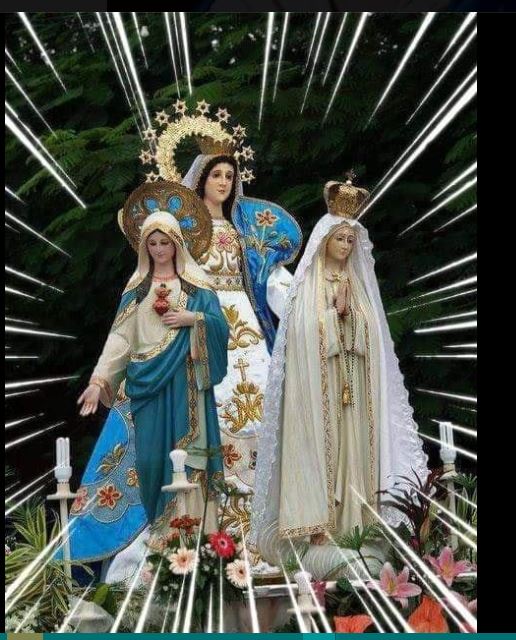
The images help me to focus on the particular mystery that I am contemplating as I say the Hail Mary on each bead.
Pray on Mondays Joyful, on Tuesdays Sorrowful, on Wednesdays Glorious, on Thursdays Luminous, on Fridays Sorrowful, on Saturdays Joyful, on Sundays Glorious Mysteries in union with millions of faithful believers on this Earth.
Joyful Mysteries
Luminous Mysteries
Sorrowful Mysteries
Glorious Mysteries
Prayers of the Rosary
Links to “How to pray the rosary” Popular Catholic Prayers
The Creed
I believe in God the father all mighty, creator of heaven and earth, and Jesus Christ, His only son,Who was conceived by the Holy Spirit, born of the Virgin Mary, suffered under Pontius Pilate, was crucified, died, and was buried,
He descended into hell; the third day He arose again from the dead; He ascended into Heaven, sitteth at the right hand of God, the Father Almighty, from thence He shall come to judge the living and the dead.
I believe in the Holy Spirit, the Holy Catholic Church, the communion of saints, the forgiveness of sins, the resurrection of the body, and life everlasting. Amen.
Our Father, Who art in Heaven, hallowed b e Thy name, Thy Kingdom come, Thy will be done on earth as it is in Heaven.
Give us this day our daily bread; and forgive us our trespasses as we forgive those who trespass against us; and lead us not into temptation, but deliver us from evil. Amen.
(this prayer is optional and may be said after all Glory Be to the Fathers…..)
O my Jesus, forgive us our sins. Save us from the fires of hell.
Lead all souls to heaven, especially those who are in most need of thy mercy.
Console the souls in Purgatory, particularly those most abandoned. Amen
Hail Mary, full of grace, the Lord is with thee, blessed art thou amongst women and blessed is the fruit of thy womb, Jesus.
Holy Mary Mother of God, pray for us sinners now and at the hour of our death. Amen.
Hail Holy Queen, Mother of Mercy, our life our sweetness and our hope.
To thee do we cry, poor banished children of Eve;
To thee do we send up our sighs, mourning and weeping in this valley of tears.
Turn then, most gracious advocate, thine eyes of mercy toward us and after this our exile show unto us the blessed fruit of thy womb, Jesus.
O clement, O loving, O sweet Virgin Mary!
That we maybe made worthy of the promises of Christ.
O God, whose only begotten Son, by His life, death, and resurrection, has purchased for us the rewards of eternal salvation.
Grant, we beseech Thee, that while meditating on these mysteries of the most holy Rosary of the Blessed Virgin Mary,
that we may imitate what they contain and obtain what they promise, through Christ our Lord. Amen.
Most Holy Trinity – Father, Son, and Holy Spirit – I adore thee profoundly. I offer Thee the most precious Body, Blood, Soul and Divinity of Jesus Christ, present in all the tabernacles of the world, in reparation for the outrages, sacrileges and indifference’s whereby He is offended. And through the infinite merits of His Most Sacred Heart and the Immaculate Heart of Mary, I beg of Thee the conversion of poor sinners.
Saint Michael, the Archangel, defend us in battle. Be our safeguard against the wickedness and snares of the devil. May God rebuke him, we humbly pray; and do you, O Prince of the heavenly host, by the power of God cast into hell Satan and all the evil spirits who wander through the world seeking the ruin of souls.
Amen.
 Thurzo Gizella Bible Study
Leave a comment