
These were all commanded for their faith. Hebrews 11:39 NIV
Bible verses for today, 1 Maccabees 3-5, Matthew 23:13 – 23, finish the Bible in one year. (The Catholic Bible, the original one that includes all the books not included in Bibles used by other Christians.)
Watch and Listen here: and for explanations For the Rosary Julie Green Prophecies, Catholic Answers, Daily Readings,
Listen to the verses, as you enjoy the clips and pictures and a song at the end. Also look for the weekly review on the “Gizella Price” channel, YouTube or on Rumble.
A Christian’s goal should be to create the Kingdom of God here on earth, as it is in Heaven. Not only, to get to Heaven.
Prophesies by Julie Green. Click the date following: 9/1/22 August 2022 Post July 2022 Posts October Posts 11/24/22 video, 11/22 all 12/22 all 1/23 all
Go Here to see how many of Julie Green’s prophesies are being fulfilled every day.
My other websites: Catholic, Prophets today, For Kids
Read Today’s Bible Verses following here:
1 Maccabees 3
1Now Gorgias took five thousand infantry and a thousand picked cavalry, and this detachment set out at night
2in order to fall upon the camp of the Jews in a surprise attack. Some from the citadel were his guides.
3Judas heard of it and himself set out with his soldiers to attack the king’s army at Emmaus
4while these forces were still scattered away from the camp.
5During the night Gorgias came into the camp of Judas, and found no one there; so he sought them in the mountains, saying, “They are fleeing from us.”
6But at daybreak Judas appeared in the plain with three thousand men; furthermore they lacked the helmets and swords they wanted.
7They saw the army of the Gentiles,* strong, breastplated, and flanked with cavalry, and made up of experienced soldiers.
8a Judas said to the men with him: “Do not fear their numbers or dread their attack.
9Remember how our ancestors were saved in the Red Sea, when Pharaoh pursued them with an army.b
10So now let us cry to Heaven in the hope that he will favor us, remember the covenant with our ancestors, and destroy this army before us today.
11All the Gentiles shall know that there is One who redeems and delivers Israel.”
12When the foreigners looked up and saw them marching toward them,
13they came out of their camp for battle. The men with Judas blew the trumpet, and
14joined the battle. They crushed the Gentiles, who fled toward the plain.
15Their whole rear guard fell by the sword, and they were pursued as far as Gazara* and the plains of Idumaea, to Azotus and Jamnia. About three thousand of their men fell.
16When Judas and the army returned from the pursuit,
17he said to the people: “Do not be greedy for plunder; for there is a fight ahead of us,
18and Gorgias and his army are near us on the mountain. But now stand firm against our enemies and fight them. Afterward you can freely take the plunder.”
19As Judas was finishing this speech, a detachment* appeared, looking down from the mountain.
20They saw that their army had been put to flight and their camp was burning. The smoke they saw revealed what had happened.
21When they realized this, they completely lost heart; and when they also saw the army of Judas in the plain ready to attack,
22they all fled to the land of the foreigners.*
23Then Judas went back to plunder the camp, and they took much gold and silver, cloth dyed blue and marine purple, and great treasure.
24As they returned, they were singing hymns and glorifying Heaven, “who is good, whose mercy endures forever.”c
25Thus Israel experienced a great deliverance that day.
26d But those of the foreigners who had escaped went and told Lysias all that had occurred.
27When he heard it he was disturbed and discouraged, because things had not turned out in Israel as he intended and as the king had ordered.
28So the following year he gathered together sixty thousand picked men and five thousand cavalry, to fight them.
29They came into Idumea and camped at Beth-zur,* and Judas met them with ten thousand men.
30Seeing that the army was strong, he prayed thus:
“Blessed are you, Savior of Israel, who crushed the attack of the mighty one by the hand of your servant David and delivered the foreign camp into the hand of Jonathan, the son of Saul, and his armor-bearer.e
31Give this army into the hands of your people Israel; make them ashamed of their troops and their cavalry.
32Strike them with cowardice, weaken the boldness of their strength, and let them tremble at their own destruction.
33Strike them down by the sword of those who love you, that all who know your name may sing your praise.”
34Then they engaged in battle, and about five thousand of Lysias’ army fell in hand-to-hand fighting.
35* When Lysias saw the tide of the battle turning, and the increased boldness of Judas, whose men were ready either to live or to die nobly, he withdrew to Antioch and began to recruit mercenaries so as to return to Judea with greater numbers.f
Purification and Rededication of the Temple.
36g Then Judas and his brothers said, “Now that our enemies have been crushed, let us go up to purify the sanctuary* and rededicate it.”
37So the whole army assembled, and went up to Mount Zion.
38They found the sanctuary desolate, the altar desecrated, the gates burnt, weeds growing in the courts as in a thicket or on some mountain, and the priests’ chambers demolished.h
39Then they tore their garments and made great lamentation; they sprinkled their heads with ashes
40and prostrated themselves. And when the signal was given with trumpets, they cried out to Heaven.
41Judas appointed men to attack those in the citadel, while he purified the sanctuary.
42He chose blameless priests, devoted to the law;
43these purified the sanctuary and carried away the stones of the defilement to an unclean place.
44They deliberated what ought to be done with the altar for burnt offerings that had been desecrated.i
45They decided it best to tear it down, lest it be a lasting shame to them that the Gentiles had defiled it; so they tore down the altar.
46They stored the stones in a suitable place on the temple mount, until the coming of a prophet who could determine what to do with them.j
47Then they took uncut stones, according to the law, and built a new altar like the former one.k
48They also repaired the sanctuary and the interior of the temple and consecrated the courts.
49They made new sacred vessels and brought the lampstand, the altar of incense, and the table into the temple.l
50Then they burned incense on the altar and lighted the lamps on the lampstand, and these illuminated the temple.
51They also put loaves on the table and hung up the curtains. Thus they finished all the work they had undertaken.
52They rose early on the morning of the twenty-fifth day of the ninth month, that is, the month of Kislev, in the year one hundred and forty-eight,*
53and offered sacrifice according to the law on the new altar for burnt offerings that they had made.m
54On the anniversary of the day on which the Gentiles had desecrated it, on that very day it was rededicated with songs, harps, lyres, and cymbals.
55All the people prostrated themselves and adored and praised Heaven, who had given them success.
56For eight days they celebrated the dedication of the altar and joyfully offered burnt offerings and sacrifices of deliverance and praise.
57They ornamented the facade of the temple with gold crowns and shields; they repaired the gates and the priests’ chambers and furnished them with doors.
58There was great joy among the people now that the disgrace brought by the Gentiles was removed.
59Then Judas and his brothers and the entire assembly of Israel decreed that every year for eight days, from the twenty-fifth day of the month Kislev,n the days of the dedication* of the altar should be observed with joy and gladness on the anniversary.
60At that time they built high walls and strong towers around Mount Zion, to prevent the Gentiles from coming and trampling it as they had done before.
61Judas also placed a garrison there to protect it, and likewise fortified Beth-zur, that the people might have a stronghold facing Idumea.
1 Maccabees 4
Victories over Hostile Neighbors.*
1a When the nations round about heard that the altar had been rebuilt and the sanctuary restored as before, they were enraged.
2So they decided to destroy the descendants of Jacob who were among them, and they began to kill and eradicate the people.
3b Then Judas attacked the Edomites* at Akrabattene in Idumea, because they were blockading Israel; he dealt them a heavy blow, humbled and despoiled them.
4He also remembered the malice of the Baeanites,* who had become a snare and a stumbling block to the people by ambushing them along the roads.
5He forced them to take refuge in towers, which he besieged; he put them under the ban and burned down their towers along with all who were in them.
6* c Then he crossed over to the Ammonites, where he found a strong army and a large body of people with Timothy as their leader.
7He fought many battles with them, routed them, and struck them down.
8After seizing Jazer and its villages, he returned to Judea.
Liberation of Jews in Galilee and Gilead.
9The Gentiles in Gilead assembled to destroy the Israelites who were in their territory; these then fled to the stronghold of Dathema.*
10They sent a letter to Judas and his brothers saying: “The Gentiles around us have assembled against us to destroy us,
11and they are preparing to come and seize this stronghold to which we have fled. Timothy is the leader of their army.
12Come at once to rescue us from them, for many of us have fallen.
13All our kindred who were in the territory of the Tobiads* have been killed; the Gentiles have captured their wives, their children and their goods, and they have slain there about a thousand men.”d
14While they were reading this letter, suddenly other messengers, with garments torn, arrived from Galilee to deliver a similar message:
15that “the inhabitants of Ptolemais,* Tyre, and Sidon, and the whole of Gentile Galilee have joined forces to destroy us.”
16When Judas and the people heard this, a great assembly convened to consider what they should do for their kindred who were in distress and being attacked by enemies.
17Judas said to his brother Simon: “Choose men for yourself, and go, rescue your kindred in Galilee; my brother Jonathan and I will go to Gilead.”
18He left Joseph, son of Zechariah, and Azariah, leader of the people, with the rest of the army in Judea to guard it.
19He commanded them, “Take charge of these people, but do not join battle against the Gentiles until we return.”
20Three thousand men were allotted to Simon to go into Galilee, and eight thousand men to Judas, for Gilead.
21Simon went into Galilee and fought many battles with the Gentiles. They were crushed before him,
22and he pursued them to the very gate of Ptolemais. About three thousand of the Gentiles fell, and he gathered their spoils.
23He took with him the Jews who were in Galilee and in Arbatta,* with their wives and children and all that they had, and brought them to Judea with great rejoicing.
24e Judas Maccabeus and his brother Jonathan crossed the Jordan and marched for three days through the wilderness.
25There they met some Nabateans,* who received them peaceably and told them all that had happened to their kindred in Gilead:
26“Many of them are shut up in Bozrah, in Bosor near Alema, in Chaspho, Maked, and Carnaim”—all of these are large, fortified cities—
27“and some are shut up in other cities of Gilead. Tomorrow their enemies plan to attack the strongholds and to seize and destroy all these people in one day.”
28Thereupon Judas suddenly changed direction with his army, marched across the wilderness to Bozrah, and captured the city. He put every male to the sword, took all their spoils, and set fire to the city.
29* He led his army from that place by night, and they marched toward the stronghold.
30When morning came, they looked ahead and saw a countless multitude, with ladders and machines for capturing the stronghold, beginning to attack.
31When Judas perceived that the struggle had begun and that the noise of the battle was resounding to heaven with trumpet blasts and loud shouting,
32he said to the men of his army, “Fight for our kindred today.”
33He came up behind them with three columns blowing their trumpets and crying out in prayer.
34When the army of Timothy realized that it was Maccabeus, they fled before him, and he inflicted on them a great defeat. About eight thousand of their men fell that day.
35Then he turned toward Alema* and attacked and captured it; he killed every male, took spoils, and burned it down.
36From there he moved on and took Chaspho, Maked, Bosor, and the other cities of Gilead.
37f After these events Timothy assembled another army and camped opposite Raphon, on the other side of the wadi.
38Judas sent men to spy on the camp, and they reported to him: “All the Gentiles around us have rallied to him, making a very large force;
39they have also hired Arabians to help them, and have camped beyond the wadi, ready to attack you.” So Judas went forward to meet them.
40As Judas and his army were approaching the flowing wadi, Timothy said to the officers of his army: “If he crosses over to us first, we shall not be able to resist him; he will certainly defeat us.g
41But if he is hesitant and camps on the other side of the river, we will cross over to him and defeat him.”
42But when Judas reached the flowing wadi, he stationed the officers of the people beside it and gave them this order: “Do not allow anyone to encamp; all must go into battle.”
43He was the first to cross to the attack, with all the people behind him, and all the Gentiles were crushed before them. They threw away their arms and fled to the temple enclosure at Carnaim.
44But Judas’ troops captured the city and burnt the temple enclosure with all who were in it. So Carnaim was subdued, and Judas met with no more resistance.
45h Then Judas assembled all the Israelites, great and small, who were in Gilead, with their wives and children and their goods, a very large company, to go into the land of Judah.
46When they reached Ephron,* a large and strongly fortified city along the way, they found it impossible to go around it on either the right or the left; they would have to march right through it.i
47But the people in the city shut them out and blocked up the gates with stones.
48Then Judas sent them this peaceful message: “Let us cross your territory in order to reach our own; no one will harm you; we will only march through.” But they would not open to him.
49So Judas ordered a proclamation to be made in the camp that everyone should take up positions where they were.
50When the men of the army took up their positions, he assaulted the city all that day and night, and it was delivered into his hand.
51He put every male to the sword, leveled the city, took spoils and passed through it over the slain.
52Then they crossed the Jordan to the great plain in front of Beth-shan;
53and Judas kept gathering the stragglers and encouraging the people the whole way, until he reached the land of Judah.
54They ascended Mount Zion in joy and gladness and sacrificed burnt offerings, because not one of them had fallen; they had returned in safety.
55In those days when Judas and Jonathan were in the land of Gilead, and Simon his brother was in Galilee opposite Ptolemais,
56Joseph, son of Zechariah, and Azariah, the leaders of the army, heard about the brave deeds and the fighting that they were doing.
57They said, “Let us also make a name for ourselves by going out and fighting against the Gentiles around us.”
58They gave orders to those of their army who were with them, and marched against Jamnia.*
59But Gorgias and his men came out of the city to meet them in battle.
60Joseph and Azariah were routed and were pursued to the frontiers of Judea, and about two thousand Israelites fell that day.
61It was a great setback for the people, because they had not obeyed Judas and his brothers, thinking that they would do brave deeds.
62But they were not of the family through whom Israel’s deliverance was given.
Victories at Hebron and Azotus.
63The valiant Judas and his brothers were greatly honored in all Israel and among all the Gentiles, wherever their name was heard;
64and people gathered about them and praised them.
65j Then Judas and his brothers went out and attacked the Edomites in the land toward the south; he took Hebron and its villages, and he destroyed its strongholds and burned the towers around it.
66He then set out for the land of the foreigners and passed through Marisa.
67On that day some priests fell in battle who had gone out rashly to fight in their desire to do brave deeds.
68Judas then turned toward Azotus in the land of the foreigners. He destroyed their altars and burned the carved images of their gods; and after plundering their cities he returned to the land of Judah.
1 Maccabees 5
1a As King Antiochus passed through the eastern provinces, he heard that in Persia there was a city, Elam,* famous for its wealth in silver and gold,
2and that its temple was very rich, containing gold helmets, breastplates, and weapons left there by the first king of the Greeks, Alexander, son of Philip, king of Macedon.
3He went therefore and tried to capture and loot the city. But he could not do so, because his plan became known to the people of the city
4who rose up in battle against him. So he fled and in great dismay withdrew from there to return to Babylon.
5While he was in Persia, a messenger brought him news that the armies that had gone into the land of Judah had been routed;
6that Lysias had gone at first with a strong army and been driven back; that the people of Judah had grown strong by reason of the arms, wealth, and abundant spoils taken from the armies they had cut down;
7that they had pulled down the abomination which he had built upon the altar in Jerusalem; and that they had surrounded with high walls both the sanctuary, as it had been before, and his city of Beth-zur.b
8When the king heard this news, he was astonished and very much shaken. Sick with grief because his designs had failed, he took to his bed.
9There he remained many days, assailed by waves of grief, for he thought he was going to die.
10So he called in all his Friends and said to them: “Sleep has departed from my eyes, and my heart sinks from anxiety.
11I said to myself: ‘Into what tribulation have I come, and in what floods of sorrow am I now! Yet I was kindly and beloved in my rule.’
12But I now recall the evils I did in Jerusalem, when I carried away all the vessels of silver and gold that were in it, and for no cause gave orders that the inhabitants of Judah be destroyed.
13I know that this is why these evils have overtaken me; and now I am dying, in bitter grief, in a foreign land.”
14Then he summoned Philip, one of his Friends, and put him in charge of his whole kingdom.
15He gave him his diadem, his robe, and his signet ring, so that he might guide the king’s son Antiochus and bring him up to be king.
16So King Antiochus died there in the one hundred and forty-ninth year.*
17When Lysias learned that the king was dead, he set up the king’s son Antiochus,* whom he had reared as a child, to be king in his place; and he gave him the title Eupator.c
18Those in the citadel were hemming Israel in around the sanctuary, continually trying to harm them and to strengthen the Gentiles.d
19And so Judas planned to destroy them, and assembled the people to besiege them.
20So in the one hundred and fiftieth year* they assembled and besieged the citadel, for which purpose he constructed platforms and siege engines.
21But some of the besieged escaped, and some renegade Israelites joined them.
22They went to the king and said: “How long will you fail to do justice and to avenge our kindred?
23We agreed to serve your father and to follow his orders and obey his edicts.
24And for this our own people have become our enemies; they have put to death as many of us as they could find and have seized our inheritances.
25They have acted aggressively not only against us, but throughout their whole territory.
26Look! Today they have besieged the citadel in Jerusalem in order to capture it, and they have fortified the sanctuary and Beth-zur.
27Unless you act quickly to prevent them, they will do even worse things than these, and you will not be able to stop them.”
28e When the king heard this he was enraged, and he called together all his Friends, the officers of his army, and the commanders of the cavalry.
29Mercenary forces also came to him from other kingdoms and from the islands of the seas.
30His army numbered a hundred thousand footsoldiers, twenty thousand cavalry, and thirty-two elephants trained for war.
31They passed through Idumea and camped before Beth-zur. For many days they attacked it; they constructed siege engines, but the besieged made a sortie and burned these, and they fought bravely.
32Then Judas marched away from the citadel and moved his camp to Beth-zechariah,* opposite the king’s camp.
33The king, rising before dawn, moved his force hastily along the road to Beth-zechariah; and the troops prepared for battle and sounded the trumpet.
34They made the elephants drunk on the juice of grapes and mulberries to get them ready to fight.
35The beasts were distributed along the phalanxes, each elephant having assigned to it a thousand men in coats of mail, with bronze helmets on their heads, and five hundred picked cavalry.
36These accompanied the beast wherever it was; wherever it moved, they moved too and never left it.
37Each elephant was outfitted with a strong wooden tower, fastened to it by a harness; each tower held three soldiers who fought from it, besides the Indian driver.
38The remaining cavalry were stationed on one or the other of the two flanks of the army, to harass the enemy and to be protected by the phalanxes.
39When the sun shone on the gold and bronze shields, the mountains gleamed with their brightness and blazed like flaming torches.
40Part of the king’s army spread out along the heights, while some were on low ground, and they marched forward steadily in good order.
41All who heard the noise of their numbers, the tramp of their marching, and the clanging of the arms, trembled; for the army was very great and strong.
42Judas with his army advanced to fight, and six hundred men of the king’s army fell.
43Eleazar, called Avaran, saw one of the beasts covered with royal armor and bigger than any of the others, and so he thought the king was on it.f
44He gave up his life to save his people and win an everlasting name for himself.
45He dashed courageously up to it in the middle of the phalanx, killing men right and left, so that they parted before him.
46He ran under the elephant, stabbed it and killed it. The beast fell to the ground on top of him, and he died there.
47But when Judas’ troops saw the strength of the royal army and the ardor of its forces, they retreated from them.
48Some of the king’s army went up to Jerusalem to attack them, and the king established camps in Judea and at Mount Zion.
49He made peace with the people of Beth-zur, and they evacuated the city, because they had no food there to enable them to withstand a siege, for that was a sabbath year in the land.* g
50The king took Beth-zur and stationed a garrison there to hold it.
51For many days he besieged the sanctuary, setting up platforms and siege engines, fire-throwers, catapults and mechanical bows for shooting arrows and projectiles.
52The defenders countered by setting up siege engines of their own, and kept up the fight a long time.
53But there were no provisions in the storerooms, because it was the seventh year, and the reserves had been eaten up by those who had been rescued from the Gentiles and brought to Judea.
54Few men remained in the sanctuary because the famine was too much for them; the rest scattered, each to his own home.
55h Lysias heard that Philip, whom King Antiochus, before his death, had appointed to train his son Antiochus to be king,
56had returned from Persia and Media with the army that accompanied the king, and that he was seeking to take over the government.
57So he hastily decided to withdraw. He said to the king, the leaders of the army, and the soldiers: “We are growing weaker every day, our provisions are scanty, the place we are besieging is strong, and it is our duty to take care of the affairs of the kingdom.i
58Therefore let us now come to terms with these people and make peace with them and all their nation.
59Let us grant them freedom to live according to their own laws as formerly; it was on account of their laws, which we abolished, that they became enraged and did all these things.”
60The proposal pleased the king and the leaders; he sent peace terms to the Jews, and they accepted.
61So the king and the leaders swore an oath to them, and on these terms the Jews evacuated the fortification.
62But when the king entered Mount Zion and saw how the place was fortified, he broke the oath he had sworn and gave orders to tear down the encircling wall.
63Then he departed in haste and returned to Antioch, where he found Philip in control of the city. He fought against him and took the city by force.
Matthew 23 13 – 23
13* g “Woe to you, scribes and Pharisees, you hypocrites. You lock the kingdom of heaven* before human beings. You do not enter yourselves, nor do you allow entrance to those trying to enter.
[14]*
15* “Woe to you, scribes and Pharisees, you hypocrites. You traverse sea and land to make one convert, and when that happens you make him a child of Gehenna twice as much as yourselves.
16* h “Woe to you, blind guides, who say, ‘If one swears by the temple, it means nothing, but if one swears by the gold of the temple, one is obligated.’
17Blind fools, which is greater, the gold, or the temple that made the gold sacred?
18And you say, ‘If one swears by the altar, it means nothing, but if one swears by the gift on the altar, one is obligated.’
19You blind ones, which is greater, the gift, or the altar that makes the gift sacred?
20i One who swears by the altar swears by it and all that is upon it;
21one who swears by the temple swears by it and by him who dwells in it;
22one who swears by heaven swears by the throne of God and by him who is seated on it.
23j “Woe to you, scribes and Pharisees, you hypocrites. You pay tithes* of mint and dill and cummin, and have neglected the weightier things of the law: judgment and mercy and fidelity. [But] these you should have done, without neglecting the others.
Sermons Rosary Prayers Catholic Answers
THE FIRST BOOK OF MACCABEES
The name Maccabee, probably meaning “hammer,” is actually applied in the Books of Maccabees to only one man, Judas, third son of the priest Mattathias and first leader of the revolt against the Seleucid kings who persecuted the Jews (1 Mc 2:4, 66; 2 Mc 8:5, 16; 10:1, 16). Traditionally the name has come to be extended to the brothers of Judas, his supporters, and even to other Jewish heroes of the period, such as the seven brothers (2 Mc 7).
The two Books of Maccabees contain independent accounts of events (in part identical) that accompanied the attempted suppression of Judaism in Palestine in the second century B.C. The vigorous reaction to this attempt established for a time the religious and political independence of the Jews.
First Maccabees was written about 100 B.C., in Hebrew, but the original has not come down to us. Instead, we have an early, pre-Christian, Greek translation full of Hebrew idioms. The author, probably a Palestinian Jew, is unknown. He was familiar with the traditions and sacred books of his people and had access to much reliable information on their recent history (from 175 to 134 B.C.). He may well have played some part in it himself in his youth. His purpose in writing is to record the deliverance of Israel that God worked through the family of Mattathias (5:62)—especially through his three sons, Judas, Jonathan, and Simon, and his grandson, John Hyrcanus. The writer compares their virtues and their exploits with those of Israel’s ancient heroes, the Judges, Samuel, and David.
There are seven poetic sections in the book that imitate the style of classical Hebrew poetry: four laments (1:25–28, 36–40; 2:7–13; 3:45), and three hymns of praise of “our fathers” (2:51–64), of Judas (3:3–9), and of Simon (14:4–15). The doctrine expressed in the book is the customary belief of Israel, without the new developments which appear in 2 Maccabees and Daniel. The people of Israel have been specially chosen by the one true God as covenant-partner, and they alone are privileged to know and worship God, their eternal benefactor and unfailing source of help. The people, in turn, must worship the Lord alone and observe exactly the precepts of the law given to them. The rededication of the Jerusalem Temple described in 4:36–59 (see 2 Mc 10:1–8) is the origin of the Jewish feast of Hanukkah.
Unlike the Second Book of Maccabees, there is no doctrine of individual immortality except in the survival of one’s name and fame, nor does the book express any messianic expectation, though messianic images are applied historically to “the days of Simon” (1 Mc 14:4–17). In true Deuteronomic tradition, the author insists on fidelity to the law as the expression of Israel’s love for God. The contest which he describes is a struggle, not simply between Jew and Gentile, but between those who would uphold the law and those, Jews or Gentiles, who would destroy it. His severest condemnation goes, not to the Seleucid politicians, but to the lawless apostates among his own people, adversaries of Judas and his brothers, who are models of faith and loyalty.
The first and second Books of Maccabees, though regarded by Jews and Protestants as apocryphal, i.e., not inspired Scripture, because not contained in the Jewish list of books drawn up at the end of the first century A.D., have always been accepted by the Catholic Church as inspired and are called “deuterocanonical” to indicate that they are canonical even though disputed by some.
First Maccabees can be divided as follows:
- Crisis and Response (1:1–2:70)
- Leadership of Judas Maccabeus (3:1–9:22)
- Leadership of Jonathan (9:23–12:53)
- Leadership of Simon (13:1–16:24)
https://www.youtube.com/live/yd50u002du002ddynSY?feature=share
THE GOSPEL ACCORDING TO MATTHEW
The position of the Gospel according to Matthew as the first of the four gospels in the New Testament reflects both the view that it was the first to be written, a view that goes back to the late second century A.D., and the esteem in which it was held by the church; no other was so frequently quoted in the noncanonical literature of earliest Christianity. Although the majority of scholars now reject the opinion about the time of its composition, the high estimation of this work remains. The reason for that becomes clear upon study of the way in which Matthew presents his story of Jesus, the demands of Christian discipleship, and the breaking-in of the new and final age through the ministry but particularly through the death and resurrection of Jesus.
The gospel begins with a narrative prologue (Mt 1:1–2:23), the first part of which is a genealogy of Jesus starting with Abraham, the father of Israel (Mt 1:1–17). Yet at the beginning of that genealogy Jesus is designated as “the son of David, the son of Abraham” (Mt 1:1). The kingly ancestor who lived about a thousand years after Abraham is named first, for this is the genealogy of Jesus Christ, the Messiah, the royal anointed one (Mt 1:16). In the first of the episodes of the infancy narrative that follow the genealogy, the mystery of Jesus’ person is declared. He is conceived of a virgin by the power of the Spirit of God (Mt 1:18–25). The first of the gospel’s fulfillment citations, whose purpose it is to show that he was the one to whom the prophecies of Israel were pointing, occurs here (Mt 1:23): he shall be named Emmanuel, for in him God is with us.
The announcement of the birth of this newborn king of the Jews greatly troubles not only King Herod but all Jerusalem (Mt 2:1–3), yet the Gentile magi are overjoyed to find him and offer him their homage and their gifts (Mt 2:10–11). Thus his ultimate rejection by the mass of his own people and his acceptance by the Gentile nations is foreshadowed. He must be taken to Egypt to escape the murderous plan of Herod. By his sojourn there and his subsequent return after the king’s death he relives the Exodus experience of Israel. The words of the Lord spoken through the prophet Hosea, “Out of Egypt I called my son,” are fulfilled in him (Mt 2:15); if Israel was God’s son, Jesus is so in a way far surpassing the dignity of that nation, as his marvelous birth and the unfolding of his story show (see Mt 3:17; 4:1–11; 11:27; 14:33; 16:16; 27:54). Back in the land of Israel, he must be taken to Nazareth in Galilee because of the danger to his life in Judea, where Herod’s son Archelaus is now ruling (Mt 2:22–23). The sufferings of Jesus in the infancy narrative anticipate those of his passion, and if his life is spared in spite of the dangers, it is because his destiny is finally to give it on the cross as “a ransom for many” (Mt 20:28). Thus the word of the angel will be fulfilled, “…he will save his people from their sins” (Mt 1:21; cf. Mt 26:28).
In Mt 4:12 Matthew begins his account of the ministry of Jesus, introducing it by the preparatory preaching of John the Baptist (Mt 3:1–12), the baptism of Jesus that culminates in God’s proclaiming him his “beloved Son” (Mt 3:13–17), and the temptation in which he proves his true sonship by his victory over the devil’s attempt to deflect him from the way of obedience to the Father (Mt 4:1–11). The central message of Jesus’ preaching is the coming of the kingdom of heaven and the need for repentance, a complete change of heart and conduct, on the part of those who are to receive this great gift of God (Mt 4:17). Galilee is the setting for most of his ministry; he leaves there for Judea only in Mt 19:1, and his ministry in Jerusalem, the goal of his journey, is limited to a few days (Mt 21:1–25:46).
In this extensive material there are five great discourses of Jesus, each concluding with the formula “When Jesus finished these words” or one closely similar (Mt 7:28; 11:1; 13:53; 19:1; 26:1). These are an important structure of the gospel. In every case the discourse is preceded by a narrative section, each narrative and discourse together constituting a “book” of the gospel. The discourses are, respectively, the “Sermon on the Mount” (Mt 5:3–7:27), the missionary discourse (Mt 10:5–42), the parable discourse (Mt 13:3–52), the “church order” discourse (Mt 18:3–35), and the eschatological discourse (Mt 24:4–25:46). In large measure the material of these discourses came to Matthew from his tradition, but his work in modifying and adding to what he had received is abundantly evident. No other evangelist gives the teaching of Jesus with such elegance and order as he.
In the “Sermon on the Mount” the theme of righteousness is prominent, and even at this early stage of the ministry the note of opposition is struck between Jesus and the Pharisees, who are designated as “the hypocrites” (Mt 6:2, 5, 16). The righteousness of his disciples must surpass that of the scribes and Pharisees; otherwise, in spite of their alleged following of Jesus, they will not enter into the kingdom of heaven (Mt 5:20). Righteousness means doing the will of the heavenly Father (Mt 7:21), and his will is proclaimed in a manner that is startling to all who have identified it with the law of Moses. The antitheses of the Sermon (Mt 5:21–48) both accept (Mt 5:21–30, 43–48) and reject (Mt 5:31–42) elements of that law, and in the former case the understanding of the law’s demands is deepened and extended. The antitheses are the best commentary on the meaning of Jesus’ claim that he has come not to abolish but to fulfill the law (Mt 5:17). What is meant by fulfillment of the law is not the demand to keep it exactly as it stood before the coming of Jesus, but rather his bringing the law to be a lasting expression of the will of God, and in that fulfillment there is much that will pass away. Should this appear contradictory to his saying that “until heaven and earth pass away” not even the smallest part of the law will pass (Mt 5:18), that time of fulfillment is not the dissolution of the universe but the coming of the new age, which will occur with Jesus’ death and resurrection. While righteousness in the new age will continue to mean conduct that is in accordance with the law, it will be conduct in accordance with the law as expounded and interpreted by Jesus (cf. Mt 28:20, “…all that I have commanded you”).
Though Jesus speaks harshly about the Pharisees in the Sermon, his judgment is not solely a condemnation of them. The Pharisees are portrayed as a negative example for his disciples, and his condemnation of those who claim to belong to him while disobeying his word is no less severe (Mt 7:21–23, 26–27).
In Mt 4:23 a summary statement of Jesus’ activity speaks not only of his teaching and proclaiming the gospel but of his “curing every disease and illness among the people”; this is repeated almost verbatim in Mt 9:35. The narrative section that follows the Sermon on the Mount (Mt 8:1–9:38) is composed principally of accounts of those merciful deeds of Jesus, but it is far from being simply a collection of stories about miraculous cures. The nature of the community that Jesus will establish is shown; it will always be under the protection of him whose power can deal with all dangers (Mt 8:23–27), but it is only for those who are prepared to follow him at whatever cost (Mt 8:16–22), not only believing Israelites but Gentiles who have come to faith in him (Mt 8:10–12). The disciples begin to have some insight, however imperfect, into the mystery of Jesus’ person. They wonder about him whom “the winds and the sea obey” (Mt 8:27), and they witness his bold declaration of the forgiveness of the paralytic’s sins (Mt 9:2). That episode of the narrative moves on two levels. When the crowd sees the cure that testifies to the authority of Jesus, the Son of Man, to forgive sins (Mt 9:6), they glorify God “who had given such authority to human beings” (Mt 9:8). The forgiveness of sins is now not the prerogative of Jesus alone but of “human beings,” that is, of the disciples who constitute the community of Jesus, the church. The ecclesial character of this narrative section could hardly be more plainly indicated.
The end of the section prepares for the discourse on the church’s mission (Mt 10:5–42). Jesus is moved to pity at the sight of the crowds who are like sheep without a shepherd (Mt 9:36), and he sends out the twelve disciples to make the proclamation with which his own ministry began, “The kingdom of heaven is at hand” (Mt 10:7; cf. Mt 4:17), and to drive out demons and cure the sick as he has done (Mt 10:1). Their mission is limited to Israel (Mt 10:5–6) as Jesus’ own was (Mt 15:24), yet in Mt 15:16 that perspective broadens and the discourse begins to speak of the mission that the disciples will have after the resurrection and of the severe persecution that will attend it (Mt 10:18). Again, the discourse moves on two levels: that of the time of Jesus and that of the time of the church.
The narrative section of the third book (Mt 11:2–12:50) deals with the growing opposition to Jesus. Hostility toward him has already been manifested (Mt 8:10; 9:3, 10–13, 34), but here it becomes more intense. The rejection of Jesus comes, as before, from Pharisees, who take “counsel against him to put him to death” (Mt 12:14) and repeat their earlier accusation that he drives out demons because he is in league with demonic power (Mt 12:22–24). But they are not alone in their rejection. Jesus complains of the lack of faith of “this generation” of Israelites (Mt 11:16–19) and reproaches the towns “where most of his mighty deeds had been done” for not heeding his call to repentance (Mt 11:20–24). This dark picture is relieved by Jesus’ praise of the Father who has enabled “the childlike” to accept him (Mt 11:25–27), but on the whole the story is one of opposition to his word and blindness to the meaning of his deeds. The whole section ends with his declaring that not even the most intimate blood relationship with him counts for anything; his only true relatives are those who do the will of his heavenly Father (Mt 12:48–50).
The narrative of rejection leads up to the parable discourse (Mt 13:3–52). The reason given for Jesus’ speaking to the crowds in parables is that they have hardened themselves against his clear teaching, unlike the disciples to whom knowledge of “the mysteries of the kingdom has been granted” (Mt 13:10–16). In Mt 13:36 he dismisses the crowds and continues the discourse to his disciples alone, who claim, at the end, to have understood all that he has said (Mt 13:51). But, lest the impression be given that the church of Jesus is made up only of true disciples, the explanation of the parable of the weeds among the wheat (Mt 13:37–43), as well as the parable of the net thrown into the sea “which collects fish of every kind” (Mt 13:47–49), shows that it is composed of both the righteous and the wicked, and that separation between the two will be made only at the time of the final judgment.
In the narrative that constitutes the first part of the fourth book of the gospel (Mt 13:54–17:27), Jesus is shown preparing for the establishment of his church with its teaching authority that will supplant the blind guidance of the Pharisees (Mt 15:13–14), whose teaching, curiously said to be that of the Sadducees also, is repudiated by Jesus as the norm for his disciples (Mt 16:6, 11–12). The church of Jesus will be built on Peter (Mt 16:18), who will be given authority to bind and loose on earth, an authority whose exercise will be confirmed in heaven (Mt 16:19). The metaphor of binding and loosing has a variety of meanings, among them that of giving authoritative teaching. This promise is made to Peter directly after he has confessed Jesus to be the Messiah, the Son of the living God (Mt 16:16), a confession that he has made as the result of revelation given to him by the heavenly Father (Mt 16:17); Matthew’s ecclesiology is based on his high christology.
Directly after that confession Jesus begins to instruct his disciples about how he must go the way of suffering and death (Mt 16:21). Peter, who has been praised for his confession, protests against this and receives from Jesus the sharpest of rebukes for attempting to deflect Jesus from his God-appointed destiny. The future rock upon whom the church will be built is still a man of “little faith” (see Mt 14:31). Both he and the other disciples must know not only that Jesus will have to suffer and die but that they too will have to follow him on the way of the cross if they are truly to be his disciples (Mt 16:24–25).
The discourse following this narrative (Mt 18:1–35) is often called the “church order” discourse, although that title is perhaps misleading since the emphasis is not on the structure of the church but on the care that the disciples must have for one another in respect to guarding each other’s faith in Jesus (Mt 18:6–7), to seeking out those who have wandered from the fold (Mt 18:10–14), and to repeated forgiving of their fellow disciples who have offended them (Mt 18:21–35). But there is also the obligation to correct the sinful fellow Christian and, should one refuse to be corrected, separation from the community is demanded (Mt 18:15–18).
The narrative of the fifth book (Mt 19:1–23:39) begins with the departure of Jesus and his disciples from Galilee for Jerusalem. In the course of their journey Jesus for the third time predicts the passion that awaits him at Jerusalem and also his resurrection (Mt 20:17–19). At his entrance into the city he is hailed as the Son of David by the crowds accompanying him (Mt 21:9). He cleanses the temple (Mt 21:12–17), and in the few days of his Jerusalem ministry he engages in a series of controversies with the Jewish religious leaders (Mt 21:23–27; 22:15–22, 23–33, 34–40, 41–46), meanwhile speaking parables against them (Mt 21:28–32, 33–46), against all those Israelites who have rejected God’s invitation to the messianic banquet (Mt 22:1–10), and against all, Jew and Gentile, who have accepted but have shown themselves unworthy of it (Mt 22:11–14). Once again, the perspective of the evangelist includes not only the time of Jesus’ ministry but that of the preaching of the gospel after his resurrection. The narrative culminates in Jesus’ denunciation of the scribes and Pharisees, reflecting not only his own opposition to them but that of Matthew’s church (Mt 23:1–36), and in Jesus’ lament over Jerusalem (Mt 23:37–39).
In the discourse of the fifth book (Mt 24:1–25:46), the last of the great structural discourses of the gospel, Jesus predicts the destruction of the temple and his own final coming. The time of the latter is unknown (Mt 24:36, 44), and the disciples are exhorted in various parables to live in readiness for it, a readiness that entails faithful attention to the duties of the interim period (Mt 24:45–25:30). The coming of Jesus will bring with it the great judgment by which the everlasting destiny of all will be determined (Mt 25:31–46).
The story of Jesus’ passion and resurrection (Mt 26:1–28:20), the climax of the gospel, throws light on all that has preceded. In Matthew “righteousness” means both the faithful response to the will of God demanded of all to whom that will is announced and also the saving activity of God for his people (see Mt 3:15; 5:6; 6:33). The passion supremely exemplifies both meanings of that central Matthean word. In Jesus’ absolute faithfulness to the Father’s will that he drink the cup of suffering (Mt 26:39), the incomparable model for Christian obedience is given; in his death “for the forgiveness of sins” (Mt 26:28), the saving power of God is manifested as never before.
Matthew’s portrayal of Jesus in his passion combines both the majestic serenity of the obedient Son who goes his destined way in fulfillment of the scriptures (Mt 26:52–54), confident of his ultimate vindication by God, and the depths of fear and abandonment that he feels in face of death (Mt 26:38–39; 27:46). These two aspects are expressed by an Old Testament theme that occurs often in the narrative, i.e., the portrait of the suffering Righteous One who complains to God in his misery, but is certain of eventual deliverance from his terrible ordeal.
The passion-resurrection of God’s Son means nothing less than the turn of the ages, a new stage of history, the coming of the Son of Man in his kingdom (Mt 28:18; cf. Mt 16:28). That is the sense of the apocalyptic signs that accompany Jesus’ death (Mt 27:51–53) and resurrection (Mt 28:2). Although the old age continues, as it will until the manifestation of Jesus’ triumph at his parousia, the final age has now begun. This is known only to those who have seen the Risen One and to those, both Jews and Gentiles, who have believed in their announcement of Jesus’ triumph and have themselves become his disciples (cf. Mt 28:19). To them he is constantly, though invisibly, present (Mt 28:20), verifying the name Emmanuel, “God is with us” (cf. Mt 1:23).
The questions of authorship, sources, and the time of composition of this gospel have received many answers, none of which can claim more than a greater or lesser degree of probability. The one now favored by the majority of scholars is the following.
The ancient tradition that the author was the disciple and apostle of Jesus named Matthew (see Mt 10:3) is untenable because the gospel is based, in large part, on the Gospel according to Mark (almost all the verses of that gospel have been utilized in this), and it is hardly likely that a companion of Jesus would have followed so extensively an account that came from one who admittedly never had such an association rather than rely on his own memories. The attribution of the gospel to the disciple Matthew may have been due to his having been responsible for some of the traditions found in it, but that is far from certain.
The unknown author, whom we shall continue to call Matthew for the sake of convenience, drew not only upon the Gospel according to Mark but upon a large body of material (principally, sayings of Jesus) not found in Mark that corresponds, sometimes exactly, to material found also in the Gospel according to Luke. This material, called “Q” (probably from the first letter of the German word Quelle, meaning “source”), represents traditions, written and oral, used by both Matthew and Luke. Mark and Q are sources common to the two other synoptic gospels; hence the name the “Two-Source Theory” given to this explanation of the relation among the synoptics.
In addition to what Matthew drew from Mark and Q, his gospel contains material that is found only there. This is often designated “M,” written or oral tradition that was available to the author. Since Mark was written shortly before or shortly after A.D. 70 (see Introduction to Mark), Matthew was composed certainly after that date, which marks the fall of Jerusalem to the Romans at the time of the First Jewish Revolt (A.D. 66–70), and probably at least a decade later since Matthew’s use of Mark presupposes a wide diffusion of that gospel. The post-A.D. 70 date is confirmed within the text by Mt 22:7, which refers to the destruction of Jerusalem.
As for the place where the gospel was composed, a plausible suggestion is that it was Antioch, the capital of the Roman province of Syria. That large and important city had a mixed population of Greek-speaking Gentiles and Jews. The tensions between Jewish and Gentile Christians there in the time of Paul (see Gal 2:1–14) in respect to Christian obligation to observe Mosaic law are partially similar to tensions that can be seen between the two groups in Matthew’s gospel. The church of Matthew, originally strongly Jewish Christian, had become one in which Gentile Christians were predominant. His gospel answers the question how obedience to the will of God is to be expressed by those who live after the “turn of the ages,” the death and resurrection of Jesus.
The principal divisions of the Gospel according to Matthew are the following:
- The Infancy Narrative (1:1–2:23)
- The Proclamation of the Kingdom (3:1–7:29)
- Ministry and Mission in Galilee (8:1–11:1)
- Opposition from Israel (11:2–13:53)
- Jesus, the Kingdom, and the Church (13:54–18:35)
- Ministry in Judea and Jerusalem (19:1–25:46)
- The Passion and Resurrection (26:1–28:20)
I. THE INFANCY NARRATIVE
Sermons on the Book of Matthew
SERMONS ON THE BOOK OF 1 Maccabees
Catholic Daily Readings at every Mass
You can also read it, if you watch this on You Tube, under the videos
Sermons Rosary Prayers Catholic Answers Scriptural Rosary
Prophesies by Julie Green. Click the date following: December 22 Posts, November 22 Posts, September Posts, August 2022 Post July 2022 Posts October Posts video,
Go Here to see how many of Julie Green’s prophesies are being fulfilled every day.
Prophetic words given on November 24, 2022
See prophesy blog for Jan 2nd 2023.
Dr. Myles Munroe
I am including a video by Dr. Myles Munroe, I’ve listened to him back in the nineties, and rediscovered him recently. Now his perspective seems to be a good way to also look at scripture. In Pursuit of Purpose – Book Highlights
Sermons Rosary Prayers Catholic Answers
Called to Communion Dr. David Anders

Rosary Mysteries
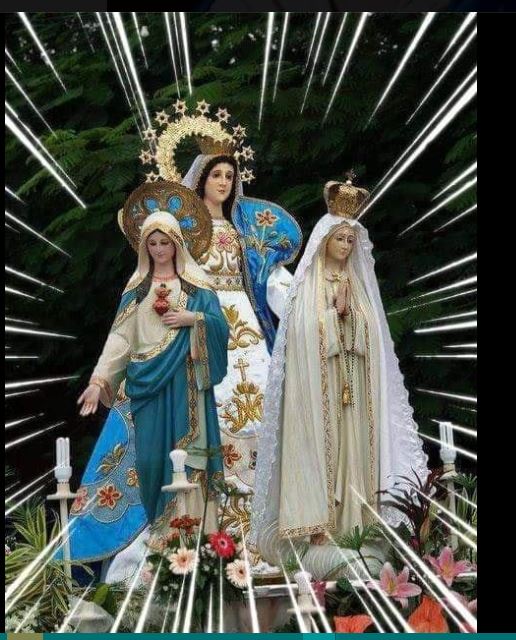
The images help me to focus on the particular mystery that I am contemplating as I say the Hail Mary on each bead.
Pray on Mondays Joyful, on Tuesdays Sorrowful, on Wednesdays Glorious, on Thursdays Luminous, on Fridays Sorrowful, on Saturdays Joyful, on Sundays Glorious Mysteries in union with millions of faithful believers on this Earth.
Joyful Mysteries
Luminous Mysteries
Sorrowful Mysteries
Glorious Mysteries
Prayers of the Rosary
Links to “How to pray the rosary” Popular Catholic Prayers
The Creed
I believe in God the father all mighty, creator of heaven and earth, and Jesus Christ, His only son,Who was conceived by the Holy Spirit, born of the Virgin Mary, suffered under Pontius Pilate, was crucified, died, and was buried,
He descended into hell; the third day He arose again from the dead; He ascended into Heaven, sitteth at the right hand of God, the Father Almighty, from thence He shall come to judge the living and the dead.
I believe in the Holy Spirit, the Holy Catholic Church, the communion of saints, the forgiveness of sins, the resurrection of the body, and life everlasting. Amen.
Our Father, Who art in Heaven, hallowed b e Thy name, Thy Kingdom come, Thy will be done on earth as it is in Heaven.
Give us this day our daily bread; and forgive us our trespasses as we forgive those who trespass against us; and lead us not into temptation, but deliver us from evil. Amen.
(this prayer is optional and may be said after all Glory Be to the Fathers…..)
O my Jesus, forgive us our sins. Save us from the fires of hell.
Lead all souls to heaven, especially those who are in most need of thy mercy.
Console the souls in Purgatory, particularly those most abandoned. Amen
Hail Mary, full of grace, the Lord is with thee, blessed art thou amongst women and blessed is the fruit of thy womb, Jesus.
Holy Mary Mother of God, pray for us sinners now and at the hour of our death. Amen.
Hail Holy Queen, Mother of Mercy, our life our sweetness and our hope.
To thee do we cry, poor banished children of Eve;
To thee do we send up our sighs, mourning and weeping in this valley of tears.
Turn then, most gracious advocate, thine eyes of mercy toward us and after this our exile show unto us the blessed fruit of thy womb, Jesus.
O clement, O loving, O sweet Virgin Mary!
That we maybe made worthy of the promises of Christ.
O God, whose only begotten Son, by His life, death, and resurrection, has purchased for us the rewards of eternal salvation.
Grant, we beseech Thee, that while meditating on these mysteries of the most holy Rosary of the Blessed Virgin Mary,
that we may imitate what they contain and obtain what they promise, through Christ our Lord. Amen.
Most Holy Trinity – Father, Son, and Holy Spirit – I adore thee profoundly. I offer Thee the most precious Body, Blood, Soul and Divinity of Jesus Christ, present in all the tabernacles of the world, in reparation for the outrages, sacrileges and indifference’s whereby He is offended. And through the infinite merits of His Most Sacred Heart and the Immaculate Heart of Mary, I beg of Thee the conversion of poor sinners.
Saint Michael, the Archangel, defend us in battle. Be our safeguard against the wickedness and snares of the devil. May God rebuke him, we humbly pray; and do you, O Prince of the heavenly host, by the power of God cast into hell Satan and all the evil spirits who wander through the world seeking the ruin of souls.
Amen.
 Thurzo Gizella Bible Study
Leave a comment