

We all, with open face beholding as in a glass the glory of the Lord, are changed into the same image from glory to glory, even as by the Spirit of the Lord. 2 Corinthians 3:18 KJV
Bible verses for today, 1 Chroonicles 4-6, Matthew 12:1-21, finish the Bible in one year. (The Catholic Bible, the original one that includes all the books not included in Bibles used by other Christians.)
Watch and Listen here: and for explanations For the Rosary Julie Green Prophecies, Catholic Answers, Daily Readings,
Listen to the verses, as you enjoy the clips and pictures and a song at the end. Also look for the weekly review on the “Gizella Price” channel, YouTube or on Rumble.
A Christian’s goal should be to create the Kingdom of God here on earth, as it is in Heaven. Not only, to get to Heaven.
Prophesies by Julie Green. Click the date following: 9/1/22 August 2022 Post July 2022 Posts October Posts 11/24/22 video, 11/22 all 12/22 all 1/23 all
Go Here to see how many of Julie Green’s prophesies are being fulfilled every day.
My other websites: Catholic, Prophets today, For Kids
Read Today’s Bible Verses following here:
1 Chronicles 4
1* The sons of Judah were: Perez, Hezron, Carmi, Hur, and Shobal.a
2Reaiah, the son of Shobal, became the father of Jahath, and Jahath became the father of Ahumai and Lahad. These were the clans of the Zorathites.
3These were the sons of Hareph, the father of Etam: Jezreel, Ishma, and Idbash; their sister was named Hazzelelponi.
4Penuel was the father of Gedor, and Ezer the father of Hushah. These were the sons of Hur, the firstborn of Ephrathah, the father of Bethlehem.
5Ashhur, the father of Tekoa, had two wives, Helah and Naarah.b
6Naarah bore him Ahuzzam, Hepher, the Temenites, and the Ahashtarites. These were the sons of Naarah.
7The sons of Helah were Zereth, Izhar, Ethnan, and Koz.
8Koz became the father of Anub and Zobebah, as well as of the clans of Aharhel, son of Harum.
9Jabez was the most distinguished of his brothers. His mother had named him Jabez, saying, “I bore him with pain.”
10Jabez prayed to the God of Israel: “Oh, that you may truly bless me and extend my boundaries! May your hand be with me and make me free of misfortune, without pain!” And God granted his prayer.
11Chelub, the brother of Shuhah, became the father of Mehir, who was the father of Eshton.
12Eshton became the father of Bethrapha, Paseah, and Tehinnah, the father of the city of Nahash. These were the men of Recah.
13The sons of Kenaz were Othniel and Seraiah. The sons of Othniel were Hathath and Meonothai;c
14Meonothai became the father of Ophrah. Seraiah became the father of Joab, the father of Geharashim, so called because they were artisans.
15The sons of Caleb, son of Jephunneh, were Ir, Elah, and Naam. The sons of Elah: Kenaz.d
16The sons of Jehallelel were Ziph, Ziphah, Tiria, and Asarel.
17The sons of Ezrah were Jether, Mered, Epher, and Jalon. Jether became the father of Miriam, Shammai, and Ishbah, the father of Eshtemoa.e
18Mered’s Egyptian wife bore Jered, the father of Gedor, Heber, the father of Soco, and Jekuthiel, the father of Zanoah. These were the sons of Bithiah, the daughter of Pharaoh, whom Mered married.
19The sons of his Jewish wife, the sister of Naham, the father of Keilah, were Shimon the Garmite and Ishi the Maacathite.
20The sons of Shimon were Amnon, Rinnah, Benhanan, and Tilon. The son of Ishi was Zoheth and the son of Zoheth….
21The sons of Shelah, son of Judah, were: Er, the father of Lecah; Laadah, the father of Mareshah; the clans of the linen weavers’ guild in Bethashbea;f
22Jokim; the people of Cozeba; and Joash and Saraph, who held property in Moab, but returned to Bethlehem. (These are events of old.)
23They were potters and inhabitants of Netaim and Gederah, where they lived in the king’s service.
24The sons of Simeon were Nemuel, Jamin, Jachin, Zerah, and Shaul,g
25whose son was Shallum, whose son was Mibsam, whose son was Mishma.
26The sons of Mishma were his son Hammuel, whose son was Zaccur, whose son was Shimei.
27Shimei had sixteen sons and six daughters. His brothers, however, did not have many sons, and as a result all their clans did not equal the number of the Judahites.
28They dwelt in Beer-sheba, Moladah, Hazar-shual,
31Beth-marcaboth, Hazar-susim, Bethbiri, and Shaaraim. Until the reign of David, these were their cities
32and their villages. Etam, also, and Ain, Rimmon, Tochen, and Ashan—five cities,h
33together with all their outlying villages as far as Baal. Here is where they dwelt, and so it was inscribed of them in their family records.
34Meshobab, Jamlech, Joshah, son of Amaziah,
35Joel, Jehu, son of Joshibiah, son of Seraiah, son of Asiel,
36Elioenai, Jaakobah, Jeshohaiah, Asaiah, Adiel, Jesimiel, Benaiah,
37Ziza, son of Shiphi, son of Allon, son of Jedaiah, son of Shimri, son of Shemaiah—
38these just named were princes in their clans, and their ancestral houses spread out to such an extenti
39that they went to the approaches of Gedor,* east of the valley, seeking pasture for their flocks.
40They found abundant and good pastures, and the land was spacious, quiet, and peaceful—for the Hamites dwelt there formerly.
41They who have just been listed by name set out during the reign of Hezekiah, king of Judah, and attacked their tents and also the Meunites who were there. They put them under the ban that is still in force to this day and dwelt in their place because they found pasture there for their flocks.j
42Five hundred of them (the Simeonites) went to Mount Seir, with Pelatiah, Neariah, Rephaiah, and Uzziel, sons of Ishi, at their head.
43They attacked the surviving Amalekites who had escaped, and have lived there to the present day.k
1 Chronicles 5
1* The sons of Reuben, the firstborn of Israel. (He was indeed the firstborn, but because he defiled the couch of his father his birthright was given to the sons of Joseph, son of Israel, so that he is not listed in the family records according to his birthright.a
2Judah, in fact, became powerful among his brothers, so that the ruler came from him, though the birthright had been Joseph’s.)b
3The sons of Reuben, the firstborn of Israel, were Hanoch, Pallu, Hezron, and Carmi.c
4His son was Joel, whose son was Shemaiah, whose son was Gog, whose son was Shimei,
5whose son was Micah, whose son was Reaiah, whose son was Baal,
6whose son was Beerah, whom Tilgath-pileser, the king of Assyria, took into exile; he was a prince of the Reubenites.d
7His brothers who belonged to his clans, when they were listed in the family records according to their descendants, were: Jeiel, the chief, and Zechariah,
8and Bela, son of Azaz, son of Shema, son of Joel. The Reubenites lived in Aroer and as far as Nebo and Baal-meon;e
9toward the east they dwelt as far as the wilderness which extends from the Euphrates River, for they had much livestock in the land of Gilead.f
10In Saul’s time they waged war with the Hagrites, and when they had defeated them they dwelt in their tents throughout the region east of Gilead.g
11The Gadites lived alongside them in the land of Bashan as far as Salecah.h
12Joel was chief, Shapham was second in command, and Janai was judge in Bashan.i
13Their brothers, according to their ancestral houses, were: Michael, Meshullam, Sheba, Jorai, Jacan, Zia, and Eber—seven.
14These were the sons of Abihail, son of Huri, son of Jaroah, son of Gilead, son of Michael, son of Jeshishai, son of Jahdo, son of Buz.
15Ahi, son of Abdiel, son of Guni, was the head of their ancestral houses.
16They dwelt in Gilead, in Bashan and its towns, and in all the pasture lands of Sirion to the borders.
17All were listed in the family records in the time of Jotham, king of Judah, and of Jeroboam, king of Israel.
18The Reubenites, Gadites, and the half-tribe of Manasseh were warriors, men who bore shield and sword and who drew the bow, trained in warfare—forty-four thousand seven hundred and sixty men fit for military service.
19When they waged war against the Hagrites and against Jetur, Naphish, and Nodab,j
20they received help so that the Hagrites and all who were with them were delivered into their power. For during the battle they cried out to God, and he heard them because they had put their trust in him.k
21Along with one hundred thousand persons they also captured their livestock: fifty thousand camels, two hundred fifty thousand sheep, and two thousand donkeys.
22Many were slain and fell; for “From God the victory.” They dwelt in their place until the time of the exile.l
23The half-tribe of Manasseh lived in the land of Bashan as far as Baal-hermon, Senir, and Mount Hermon; they were numerous.
24The following were the heads of their ancestral houses: Epher, Ishi, Eliel, Azriel, Jeremiah, Hodaviah, and Jahdiel—men who were warriors, famous men, and heads over their ancestral houses.
25However, they acted treacherously toward the God of their ancestors by prostituting themselves to follow the gods of the peoples of the land, whom God had destroyed before them.m
26Therefore the God of Israel stirred up against them the anger of Pul,* king of Assyria, and the anger of Tilgath-pilneser [sic], king of Assyria, who deported the Reubenites, the Gadites, and the half-tribe of Manasseh and brought them to Halah, Habor, and Hara, and to the river Gozan, where they have remained to this day.n
Levi.*
27The sons of Levi were Gershon, Kohath, and Merari.o
28The sons of Kohath were Amram, Izhar, Hebron, and Uzziel.p
29The children of Amram were Aaron, Moses, and Miriam. The sons of Aaron were Nadab, Abihu, Eleazar, and Ithamar.q
30* Eleazar became the father of Phinehas. Phinehas became the father of Abishua.
31Abishua became the father of Bukki. Bukki became the father of Uzzi.
32Uzzi became the father of Zerahiah. Zerahiah became the father of Meraioth.
33Meraioth became the father of Amariah. Amariah became the father of Ahitub.
34Ahitub became the father of Zadok. Zadok became the father of Ahimaaz.
35Ahimaaz became the father of Azariah. Azariah became the father of Johanan.
36Johanan became the father of Azariah, who served as priest in the temple Solomon built in Jerusalem.
37Azariah became the father of Amariah. Amariah became the father of Ahitub.
38Ahitub became the father of Zadok. Zadok became the father of Shallum.
39Shallum became the father of Hilkiah. Hilkiah became the father of Azariah.
40Azariah became the father of Seraiah. Seraiah became the father of Jehozadak.
41Jehozadak was one of those who went into the exile which the LORD inflicted on Judah and Jerusalem through Nebuchadnezzar.
1 Chronicles 6
1The sons of Levi were Gershon, Kohath, and Merari.a
2The sons of Gershon were named Libni and Shimei.b
3The sons of Kohath were Amram, Izhar, Hebron, and Uzziel.c
4The sons of Merari were Mahli and Mushi.d
These were the clans of Levi, according to their ancestors.
5Of Gershon: his son Libni, whose son was Jahath, whose son was Zimmah,
6whose son was Joah, whose son was Iddo, whose son was Zerah, whose son was Jetherai.
7The sons of Kohath: his son Amminadab, whose son was Korah, whose son was Assir,
8whose son was Elkanah, whose son was Ebiasaph, whose son was Assir,
9whose son was Tahath, whose son was Uriel, whose son was Uzziah, whose son was Shaul.
10The sons of Elkanah were Amasai and Ahimoth,
11whose son was Elkanah, whose son was Zophai, whose son was Nahath,
12whose son was Eliab, whose son was Jeroham, whose son was Elkanah, whose son was Samuel.
13The sons of Samuel were Joel, the firstborn, and Abijah, the second.
14The sons of Merari: Mahli, whose son was Libni, whose son was Shimei, whose son was Uzzah,e
15whose son was Shimea, whose son was Haggiah, whose son was Asaiah.
16The following were established by David for the service of song* in the LORD’s house at the time when the ark had a resting place.
17They served as singers before the tabernacle of the tent of meeting until Solomon built the house of the LORD in Jerusalem, and they performed their services according to the order prescribed for them.
18Those who so performed are the following, together with their sons.
Among the Kohathites: Heman, the chanter, son of Joel, son of Samuel,
19son of Elkanah, son of Jeroham, son of Eliel, son of Toah,
20son of Zuph, son of Elkanah, son of Mahath, son of Amasi,
21son of Elkanah, son of Joel, son of Azariah, son of Zephaniah,
22son of Tahath, son of Assir, son of Ebiasaph, son of Korah,f
23son of Izhar, son of Kohath, son of Levi, son of Israel.
24His brother Asaph stood at his right hand. Asaph was the son of Berechiah, son of Shimea,
25son of Michael, son of Baaseiah, son of Malchijah,
26son of Ethni, son of Zerah, son of Adaiah,
27son of Ethan, son of Zimmah,g son of Shimei,
28son of Jahath, son of Gershon, son of Levi.
29Their brothers, the Merarites, stood at the left: Ethan, son of Kishi, son of Abdi, son of Malluch,
30son of Hashabiah, son of Amaziah, son of Hilkiah,
31son of Amzi, son of Bani, son of Shemer,
32son of Mahli, son of Mushi, son of Merari, son of Levi.h
33Their brother Levites were appointed to all the other services of the tabernacle of the house of God.i
34However, it was Aaron and his sons who made the sacrifice on the altar for burnt offerings and on the altar of incense; they alone had charge of the holy of holies and of making atonement for Israel, as Moses, the servant of God, had commanded.j
35These were the sons of Aaron: his son Eleazar, whose son was Phinehas, whose son was Abishua,
36whose son was Bukki, whose son was Uzzi, whose son was Zerahiah,
37whose son was Meraioth, whose son was Amariah, whose son was Ahitub,
38whose son was Zadok, whose son was Ahimaaz.
39* The following were their dwelling places, by encampments in their territories. To the sons of Aaron who belonged to the clan of the Kohathites, since the lot fell to them,
40was assigned Hebron in the land of Judah, with its adjacent pasture lands.
41However, the open country and the villages belonging to the city had been given to Caleb, the son of Jephunneh.
42There were assigned to the sons of Aaron: Hebron a city of refuge, Libnah with its pasture lands, Jattir with its pasture lands, Eshtemoa with its pasture lands,
43Holon with its pasture lands, Debir with its pasture lands,
44Ashan with its pasture lands, Jetta with its pasture lands, and Beth-shemesh with its pasture lands.
45Also from the tribe of Benjamin: Gibeon with its pasture lands, Geba with its pasture lands, Almon with its pasture lands, Anathoth with its pasture lands. In all, they had thirteen cities with their pasture lands.
49The Israelites assigned these cities with their pasture lands to the Levites,
50designating them by name and assigning them by lot from the tribes of the Judahites, Simeonites, and Benjaminites.
46The other Kohathites obtained ten cities by lot for their clans from the tribe of Ephraim, from the tribe of Dan, and from the half-tribe of Manasseh.
47The clans of the Gershonites obtained thirteen cities from the tribes of Issachar, Asher, and Naphtali, and from the half-tribe of Manasseh in Bashan.
48The clans of the Merarites obtained twelve cities by lot from the tribes of Reuben, Gad, and Zebulun.
51The clans of the Kohathites obtained cities by lot from the tribe of Ephraim.
52They were assigned cities of refuge: Shechem in the mountain region of Ephraim, with its pasture lands, Gezer with its pasture lands,
53Kibzaim with its pasture lands, and Beth-horon with its pasture lands.
54From the tribe of Dan: Elteke with its pasture lands, Gibbethon with its pasture lands, Aijalon with its pasture lands, and Gath-rimmon with its pasture lands.
55From the half-tribe of Manasseh: Taanach with its pasture lands and Ibleam with its pasture lands. These belonged to the rest of the Kohathite clan.
56The clans of the Gershonites received from the half-tribe of Manasseh: Golan in Bashan with its pasture lands and Ashtaroth with its pasture lands.
57From the tribe of Issachar: Kedesh with its pasture lands, Daberath with its pasture lands,
58Ramoth with its pasture lands, and Engannim with its pasture lands.
59From the tribe of Asher: Mashal with its pasture lands, Abdon with its pasture lands,
60Hilkath with its pasture lands, and Rehob with its pasture lands.
61From the tribe of Naphtali: Kedesh in Galilee with its pasture lands, Hammon with its pasture lands, and Kiriathaim with its pasture lands.
62The rest of the Merarites received from the tribe of Zebulun: Jokneam with its pasture lands, Kartah with its pasture lands, Rimmon with its pasture lands, and Tabor with its pasture lands.
63Across the Jordan at Jericho (that is, east of the Jordan) they received from the tribe of Reuben: Bezer in the desert with its pasture lands, Jahzah with its pasture lands,
64Kedemoth with its pasture lands, and Mephaath with its pasture lands.
65From the tribe of Gad: Ramoth in Gilead with its pasture lands, Mahanaim with its pasture lands,
66Heshbon with its pasture lands, and Jazer with its pasture lands.
Matthew 12:1-21
1* At that time Jesus was going through a field of grain on the sabbath.a His disciples were hungry and began to pick the heads* of grain and eat them.b
2When the Pharisees saw this, they said to him, “See, your disciples are doing what is unlawful to do on the sabbath.”
3He said to them,* “Have you not read what Davidc did when he and his companions were hungry,
4how he went into the house of God and ate the bread of offering,d which neither he nor his companions but only the priests could lawfully eat?
5* Or have you not read in the law that on the sabbath the priests serving in the temple violate the sabbath and are innocent?e
6I say to you, something greater than the temple is here.
7* If you knew what this meant, ‘I desire mercy, not sacrifice,’f you would not have condemned these innocent men.
8* g For the Son of Man is Lord of the sabbath.”
9h Moving on from there, he went into their synagogue.
10And behold, there was a man there who had a withered hand. They questioned him, “Is it lawful to cure on the sabbath?”* so that they might accuse him.
11* He said to them, “Which one of you who has a sheep that falls into a pit on the sabbath will not take hold of it and lift it out?
12How much more valuable a person is than a sheep. So it is lawful to do good on the sabbath.”
13Then he said to the man, “Stretch out your hand.” He stretched it out, and it was restored as sound as the other.
14But the Pharisees* went out and took counsel against him to put him to death.i
The Chosen Servant.*
15When Jesus realized this, he withdrew from that place. Many [people] followed him, and he cured them all,*
16but he warned them not to make him known.
17This was to fulfill what had been spoken through Isaiah the prophet:
18“Behold, my servant whom I have chosen,j
my beloved in whom I delight;
I shall place my spirit upon him,
and he will proclaim justice to the Gentiles.
19He will not contend* or cry out,
nor will anyone hear his voice in the streets.
20A bruised reed he will not break,
a smoldering wick he will not quench,
until he brings justice to victory.
21And in his name the Gentiles will hope.”*
Sermons Rosary Prayers Catholic Answers
THE FIRST BOOK OF CHRONICLES
The Greek title, paraleipomena, means “things omitted,” or “passed over” (i.e., in the accounts found in Samuel and Kings). The Books of Chronicles, however, are much more than a supplement to Samuel and Kings; a comparison of the two histories discloses striking differences of scope and purpose. The Books of Chronicles record in some detail the lengthy span (some five hundred fifty years) from the death of King Saul to the return from the exile. Unlike today’s history writing, wherein factual accuracy and impartiality of judgment are the norm, biblical history, with rare exceptions, was less concerned with reporting in precise detail all the facts of a situation than with drawing out the meaning of those facts. Biblical history was thus primarily interpretative, and its purpose was to disclose the action of the living God in human affairs. For this reason we speak of it as “sacred history.”
These characteristics are apparent when we examine the primary objective of the Chronicler (the conventional designation for the anonymous author) in compiling his work. Given the situation which confronted the Jewish people at this time (the end of the fifth century B.C.), the Chronicler realized that Israel’s political greatness was a thing of the past. Yet, for the Chronicler, Israel’s past held the key to the people’s future. In particular, the Chronicler aimed to establish and defend the legitimate claims of the Davidic monarchy in Israel’s history, and to underscore the status of Jerusalem and its divinely established Temple worship as the center of religious life for the Jewish people. If Judaism was to survive and prosper, it would have to heed the lessons of the past and devoutly serve its God in the place where he had chosen to dwell, the Temple in Jerusalem. From the Chronicler’s point of view, the reigns of David and Solomon were the ideal to which all subsequent rule in Judah must aspire. The Chronicler was much more interested in David’s religious and cultic influence than in his political power, however. He saw David’s (and Solomon’s) primary importance as deriving rather from their roles in the establishment of Jerusalem and its Temple as the center of the true worship of the Lord. Furthermore, he presents David as the one who prescribed the Temple’s elaborate ritual (which, in point of fact, only gradually evolved in the Second Temple period) and who appointed the Levites to supervise the liturgical services there.
The Chronicler used a variety of sources in writing his history. Besides the canonical Books of Genesis, Exodus, Numbers, Joshua, and Ruth, and especially the Books of Samuel and Kings (specifically 1 Sm 31–2 Kings 25), he cites the titles of many other works which have not come down to us, e.g., “The Books of the Kings of Israel,” or “The Books of the Kings of Israel and Judah,” and “The History of Gad the Seer.” In addition, the Chronicler’s work contains early preexilic material not found in the Books of Kings.
The principal divisions of 1 Chronicles are as follows:
I. GENEALOGICAL TABLES*
The book of Matthew
THE GOSPEL ACCORDING TO MATTHEW
The position of the Gospel according to Matthew as the first of the four gospels in the New Testament reflects both the view that it was the first to be written, a view that goes back to the late second century A.D., and the esteem in which it was held by the church; no other was so frequently quoted in the noncanonical literature of earliest Christianity. Although the majority of scholars now reject the opinion about the time of its composition, the high estimation of this work remains. The reason for that becomes clear upon study of the way in which Matthew presents his story of Jesus, the demands of Christian discipleship, and the breaking-in of the new and final age through the ministry but particularly through the death and resurrection of Jesus.
The gospel begins with a narrative prologue (Mt 1:1–2:23), the first part of which is a genealogy of Jesus starting with Abraham, the father of Israel (Mt 1:1–17). Yet at the beginning of that genealogy Jesus is designated as “the son of David, the son of Abraham” (Mt 1:1). The kingly ancestor who lived about a thousand years after Abraham is named first, for this is the genealogy of Jesus Christ, the Messiah, the royal anointed one (Mt 1:16). In the first of the episodes of the infancy narrative that follow the genealogy, the mystery of Jesus’ person is declared. He is conceived of a virgin by the power of the Spirit of God (Mt 1:18–25). The first of the gospel’s fulfillment citations, whose purpose it is to show that he was the one to whom the prophecies of Israel were pointing, occurs here (Mt 1:23): he shall be named Emmanuel, for in him God is with us.
The announcement of the birth of this newborn king of the Jews greatly troubles not only King Herod but all Jerusalem (Mt 2:1–3), yet the Gentile magi are overjoyed to find him and offer him their homage and their gifts (Mt 2:10–11). Thus his ultimate rejection by the mass of his own people and his acceptance by the Gentile nations is foreshadowed. He must be taken to Egypt to escape the murderous plan of Herod. By his sojourn there and his subsequent return after the king’s death he relives the Exodus experience of Israel. The words of the Lord spoken through the prophet Hosea, “Out of Egypt I called my son,” are fulfilled in him (Mt 2:15); if Israel was God’s son, Jesus is so in a way far surpassing the dignity of that nation, as his marvelous birth and the unfolding of his story show (see Mt 3:17; 4:1–11; 11:27; 14:33; 16:16; 27:54). Back in the land of Israel, he must be taken to Nazareth in Galilee because of the danger to his life in Judea, where Herod’s son Archelaus is now ruling (Mt 2:22–23). The sufferings of Jesus in the infancy narrative anticipate those of his passion, and if his life is spared in spite of the dangers, it is because his destiny is finally to give it on the cross as “a ransom for many” (Mt 20:28). Thus the word of the angel will be fulfilled, “…he will save his people from their sins” (Mt 1:21; cf. Mt 26:28).
In Mt 4:12 Matthew begins his account of the ministry of Jesus, introducing it by the preparatory preaching of John the Baptist (Mt 3:1–12), the baptism of Jesus that culminates in God’s proclaiming him his “beloved Son” (Mt 3:13–17), and the temptation in which he proves his true sonship by his victory over the devil’s attempt to deflect him from the way of obedience to the Father (Mt 4:1–11). The central message of Jesus’ preaching is the coming of the kingdom of heaven and the need for repentance, a complete change of heart and conduct, on the part of those who are to receive this great gift of God (Mt 4:17). Galilee is the setting for most of his ministry; he leaves there for Judea only in Mt 19:1, and his ministry in Jerusalem, the goal of his journey, is limited to a few days (Mt 21:1–25:46).
In this extensive material there are five great discourses of Jesus, each concluding with the formula “When Jesus finished these words” or one closely similar (Mt 7:28; 11:1; 13:53; 19:1; 26:1). These are an important structure of the gospel. In every case the discourse is preceded by a narrative section, each narrative and discourse together constituting a “book” of the gospel. The discourses are, respectively, the “Sermon on the Mount” (Mt 5:3–7:27), the missionary discourse (Mt 10:5–42), the parable discourse (Mt 13:3–52), the “church order” discourse (Mt 18:3–35), and the eschatological discourse (Mt 24:4–25:46). In large measure the material of these discourses came to Matthew from his tradition, but his work in modifying and adding to what he had received is abundantly evident. No other evangelist gives the teaching of Jesus with such elegance and order as he.
In the “Sermon on the Mount” the theme of righteousness is prominent, and even at this early stage of the ministry the note of opposition is struck between Jesus and the Pharisees, who are designated as “the hypocrites” (Mt 6:2, 5, 16). The righteousness of his disciples must surpass that of the scribes and Pharisees; otherwise, in spite of their alleged following of Jesus, they will not enter into the kingdom of heaven (Mt 5:20). Righteousness means doing the will of the heavenly Father (Mt 7:21), and his will is proclaimed in a manner that is startling to all who have identified it with the law of Moses. The antitheses of the Sermon (Mt 5:21–48) both accept (Mt 5:21–30, 43–48) and reject (Mt 5:31–42) elements of that law, and in the former case the understanding of the law’s demands is deepened and extended. The antitheses are the best commentary on the meaning of Jesus’ claim that he has come not to abolish but to fulfill the law (Mt 5:17). What is meant by fulfillment of the law is not the demand to keep it exactly as it stood before the coming of Jesus, but rather his bringing the law to be a lasting expression of the will of God, and in that fulfillment there is much that will pass away. Should this appear contradictory to his saying that “until heaven and earth pass away” not even the smallest part of the law will pass (Mt 5:18), that time of fulfillment is not the dissolution of the universe but the coming of the new age, which will occur with Jesus’ death and resurrection. While righteousness in the new age will continue to mean conduct that is in accordance with the law, it will be conduct in accordance with the law as expounded and interpreted by Jesus (cf. Mt 28:20, “…all that I have commanded you”).
Though Jesus speaks harshly about the Pharisees in the Sermon, his judgment is not solely a condemnation of them. The Pharisees are portrayed as a negative example for his disciples, and his condemnation of those who claim to belong to him while disobeying his word is no less severe (Mt 7:21–23, 26–27).
In Mt 4:23 a summary statement of Jesus’ activity speaks not only of his teaching and proclaiming the gospel but of his “curing every disease and illness among the people”; this is repeated almost verbatim in Mt 9:35. The narrative section that follows the Sermon on the Mount (Mt 8:1–9:38) is composed principally of accounts of those merciful deeds of Jesus, but it is far from being simply a collection of stories about miraculous cures. The nature of the community that Jesus will establish is shown; it will always be under the protection of him whose power can deal with all dangers (Mt 8:23–27), but it is only for those who are prepared to follow him at whatever cost (Mt 8:16–22), not only believing Israelites but Gentiles who have come to faith in him (Mt 8:10–12). The disciples begin to have some insight, however imperfect, into the mystery of Jesus’ person. They wonder about him whom “the winds and the sea obey” (Mt 8:27), and they witness his bold declaration of the forgiveness of the paralytic’s sins (Mt 9:2). That episode of the narrative moves on two levels. When the crowd sees the cure that testifies to the authority of Jesus, the Son of Man, to forgive sins (Mt 9:6), they glorify God “who had given such authority to human beings” (Mt 9:8). The forgiveness of sins is now not the prerogative of Jesus alone but of “human beings,” that is, of the disciples who constitute the community of Jesus, the church. The ecclesial character of this narrative section could hardly be more plainly indicated.
The end of the section prepares for the discourse on the church’s mission (Mt 10:5–42). Jesus is moved to pity at the sight of the crowds who are like sheep without a shepherd (Mt 9:36), and he sends out the twelve disciples to make the proclamation with which his own ministry began, “The kingdom of heaven is at hand” (Mt 10:7; cf. Mt 4:17), and to drive out demons and cure the sick as he has done (Mt 10:1). Their mission is limited to Israel (Mt 10:5–6) as Jesus’ own was (Mt 15:24), yet in Mt 15:16 that perspective broadens and the discourse begins to speak of the mission that the disciples will have after the resurrection and of the severe persecution that will attend it (Mt 10:18). Again, the discourse moves on two levels: that of the time of Jesus and that of the time of the church.
The narrative section of the third book (Mt 11:2–12:50) deals with the growing opposition to Jesus. Hostility toward him has already been manifested (Mt 8:10; 9:3, 10–13, 34), but here it becomes more intense. The rejection of Jesus comes, as before, from Pharisees, who take “counsel against him to put him to death” (Mt 12:14) and repeat their earlier accusation that he drives out demons because he is in league with demonic power (Mt 12:22–24). But they are not alone in their rejection. Jesus complains of the lack of faith of “this generation” of Israelites (Mt 11:16–19) and reproaches the towns “where most of his mighty deeds had been done” for not heeding his call to repentance (Mt 11:20–24). This dark picture is relieved by Jesus’ praise of the Father who has enabled “the childlike” to accept him (Mt 11:25–27), but on the whole the story is one of opposition to his word and blindness to the meaning of his deeds. The whole section ends with his declaring that not even the most intimate blood relationship with him counts for anything; his only true relatives are those who do the will of his heavenly Father (Mt 12:48–50).
The narrative of rejection leads up to the parable discourse (Mt 13:3–52). The reason given for Jesus’ speaking to the crowds in parables is that they have hardened themselves against his clear teaching, unlike the disciples to whom knowledge of “the mysteries of the kingdom has been granted” (Mt 13:10–16). In Mt 13:36 he dismisses the crowds and continues the discourse to his disciples alone, who claim, at the end, to have understood all that he has said (Mt 13:51). But, lest the impression be given that the church of Jesus is made up only of true disciples, the explanation of the parable of the weeds among the wheat (Mt 13:37–43), as well as the parable of the net thrown into the sea “which collects fish of every kind” (Mt 13:47–49), shows that it is composed of both the righteous and the wicked, and that separation between the two will be made only at the time of the final judgment.
In the narrative that constitutes the first part of the fourth book of the gospel (Mt 13:54–17:27), Jesus is shown preparing for the establishment of his church with its teaching authority that will supplant the blind guidance of the Pharisees (Mt 15:13–14), whose teaching, curiously said to be that of the Sadducees also, is repudiated by Jesus as the norm for his disciples (Mt 16:6, 11–12). The church of Jesus will be built on Peter (Mt 16:18), who will be given authority to bind and loose on earth, an authority whose exercise will be confirmed in heaven (Mt 16:19). The metaphor of binding and loosing has a variety of meanings, among them that of giving authoritative teaching. This promise is made to Peter directly after he has confessed Jesus to be the Messiah, the Son of the living God (Mt 16:16), a confession that he has made as the result of revelation given to him by the heavenly Father (Mt 16:17); Matthew’s ecclesiology is based on his high christology.
Directly after that confession Jesus begins to instruct his disciples about how he must go the way of suffering and death (Mt 16:21). Peter, who has been praised for his confession, protests against this and receives from Jesus the sharpest of rebukes for attempting to deflect Jesus from his God-appointed destiny. The future rock upon whom the church will be built is still a man of “little faith” (see Mt 14:31). Both he and the other disciples must know not only that Jesus will have to suffer and die but that they too will have to follow him on the way of the cross if they are truly to be his disciples (Mt 16:24–25).
The discourse following this narrative (Mt 18:1–35) is often called the “church order” discourse, although that title is perhaps misleading since the emphasis is not on the structure of the church but on the care that the disciples must have for one another in respect to guarding each other’s faith in Jesus (Mt 18:6–7), to seeking out those who have wandered from the fold (Mt 18:10–14), and to repeated forgiving of their fellow disciples who have offended them (Mt 18:21–35). But there is also the obligation to correct the sinful fellow Christian and, should one refuse to be corrected, separation from the community is demanded (Mt 18:15–18).
The narrative of the fifth book (Mt 19:1–23:39) begins with the departure of Jesus and his disciples from Galilee for Jerusalem. In the course of their journey Jesus for the third time predicts the passion that awaits him at Jerusalem and also his resurrection (Mt 20:17–19). At his entrance into the city he is hailed as the Son of David by the crowds accompanying him (Mt 21:9). He cleanses the temple (Mt 21:12–17), and in the few days of his Jerusalem ministry he engages in a series of controversies with the Jewish religious leaders (Mt 21:23–27; 22:15–22, 23–33, 34–40, 41–46), meanwhile speaking parables against them (Mt 21:28–32, 33–46), against all those Israelites who have rejected God’s invitation to the messianic banquet (Mt 22:1–10), and against all, Jew and Gentile, who have accepted but have shown themselves unworthy of it (Mt 22:11–14). Once again, the perspective of the evangelist includes not only the time of Jesus’ ministry but that of the preaching of the gospel after his resurrection. The narrative culminates in Jesus’ denunciation of the scribes and Pharisees, reflecting not only his own opposition to them but that of Matthew’s church (Mt 23:1–36), and in Jesus’ lament over Jerusalem (Mt 23:37–39).
In the discourse of the fifth book (Mt 24:1–25:46), the last of the great structural discourses of the gospel, Jesus predicts the destruction of the temple and his own final coming. The time of the latter is unknown (Mt 24:36, 44), and the disciples are exhorted in various parables to live in readiness for it, a readiness that entails faithful attention to the duties of the interim period (Mt 24:45–25:30). The coming of Jesus will bring with it the great judgment by which the everlasting destiny of all will be determined (Mt 25:31–46).
The story of Jesus’ passion and resurrection (Mt 26:1–28:20), the climax of the gospel, throws light on all that has preceded. In Matthew “righteousness” means both the faithful response to the will of God demanded of all to whom that will is announced and also the saving activity of God for his people (see Mt 3:15; 5:6; 6:33). The passion supremely exemplifies both meanings of that central Matthean word. In Jesus’ absolute faithfulness to the Father’s will that he drink the cup of suffering (Mt 26:39), the incomparable model for Christian obedience is given; in his death “for the forgiveness of sins” (Mt 26:28), the saving power of God is manifested as never before.
Matthew’s portrayal of Jesus in his passion combines both the majestic serenity of the obedient Son who goes his destined way in fulfillment of the scriptures (Mt 26:52–54), confident of his ultimate vindication by God, and the depths of fear and abandonment that he feels in face of death (Mt 26:38–39; 27:46). These two aspects are expressed by an Old Testament theme that occurs often in the narrative, i.e., the portrait of the suffering Righteous One who complains to God in his misery, but is certain of eventual deliverance from his terrible ordeal.
The passion-resurrection of God’s Son means nothing less than the turn of the ages, a new stage of history, the coming of the Son of Man in his kingdom (Mt 28:18; cf. Mt 16:28). That is the sense of the apocalyptic signs that accompany Jesus’ death (Mt 27:51–53) and resurrection (Mt 28:2). Although the old age continues, as it will until the manifestation of Jesus’ triumph at his parousia, the final age has now begun. This is known only to those who have seen the Risen One and to those, both Jews and Gentiles, who have believed in their announcement of Jesus’ triumph and have themselves become his disciples (cf. Mt 28:19). To them he is constantly, though invisibly, present (Mt 28:20), verifying the name Emmanuel, “God is with us” (cf. Mt 1:23).
The questions of authorship, sources, and the time of composition of this gospel have received many answers, none of which can claim more than a greater or lesser degree of probability. The one now favored by the majority of scholars is the following.
The ancient tradition that the author was the disciple and apostle of Jesus named Matthew (see Mt 10:3) is untenable because the gospel is based, in large part, on the Gospel according to Mark (almost all the verses of that gospel have been utilized in this), and it is hardly likely that a companion of Jesus would have followed so extensively an account that came from one who admittedly never had such an association rather than rely on his own memories. The attribution of the gospel to the disciple Matthew may have been due to his having been responsible for some of the traditions found in it, but that is far from certain.
The unknown author, whom we shall continue to call Matthew for the sake of convenience, drew not only upon the Gospel according to Mark but upon a large body of material (principally, sayings of Jesus) not found in Mark that corresponds, sometimes exactly, to material found also in the Gospel according to Luke. This material, called “Q” (probably from the first letter of the German word Quelle, meaning “source”), represents traditions, written and oral, used by both Matthew and Luke. Mark and Q are sources common to the two other synoptic gospels; hence the name the “Two-Source Theory” given to this explanation of the relation among the synoptics.
In addition to what Matthew drew from Mark and Q, his gospel contains material that is found only there. This is often designated “M,” written or oral tradition that was available to the author. Since Mark was written shortly before or shortly after A.D. 70 (see Introduction to Mark), Matthew was composed certainly after that date, which marks the fall of Jerusalem to the Romans at the time of the First Jewish Revolt (A.D. 66–70), and probably at least a decade later since Matthew’s use of Mark presupposes a wide diffusion of that gospel. The post-A.D. 70 date is confirmed within the text by Mt 22:7, which refers to the destruction of Jerusalem.
As for the place where the gospel was composed, a plausible suggestion is that it was Antioch, the capital of the Roman province of Syria. That large and important city had a mixed population of Greek-speaking Gentiles and Jews. The tensions between Jewish and Gentile Christians there in the time of Paul (see Gal 2:1–14) in respect to Christian obligation to observe Mosaic law are partially similar to tensions that can be seen between the two groups in Matthew’s gospel. The church of Matthew, originally strongly Jewish Christian, had become one in which Gentile Christians were predominant. His gospel answers the question how obedience to the will of God is to be expressed by those who live after the “turn of the ages,” the death and resurrection of Jesus.
The principal divisions of the Gospel according to Matthew are the following:
- The Infancy Narrative (1:1–2:23)
- The Proclamation of the Kingdom (3:1–7:29)
- Ministry and Mission in Galilee (8:1–11:1)
- Opposition from Israel (11:2–13:53)
- Jesus, the Kingdom, and the Church (13:54–18:35)
- Ministry in Judea and Jerusalem (19:1–25:46)
- The Passion and Resurrection (26:1–28:20)
I. THE INFANCY NARRATIVE
Sermons on the Book of Matthew
SERMONS ON THE BOOK OF 1 Chronicles
Catholic Daily Readings at every Mass
You can also read it, if you watch this on You Tube, under the videos
Sermons Rosary Prayers Catholic Answers Scriptural Rosary
Prophesies by Julie Green. Click the date following: December 22 Posts, November 22 Posts, September Posts, August 2022 Post July 2022 Posts October Posts video,
Go Here to see how many of Julie Green’s prophesies are being fulfilled every day.
Prophetic words given on November 24, 2022
See prophesy blog for Jan 2nd 2023.
Dr. Myles Munroe
I am including a video by Dr. Myles Munroe, I’ve listened to him back in the nineties, and rediscovered him recently. Now his perspective seems to be a good way to also look at scripture. In Pursuit of Purpose – Book Highlights
Sermons Rosary Prayers Catholic Answers
Called to Communion Dr. David Anders

Rosary Mysteries
The images help me to focus on the particular mystery that I am contemplating as I say the Hail Mary on each bead.
Pray on Mondays Joyful, on Tuesdays Sorrowful, on Wednesdays Glorious, on Thursdays Luminous, on Fridays Sorrowful, on Saturdays Joyful, on Sundays Glorious Mysteries in union with millions of faithful believers on this Earth.
Joyful Mysteries
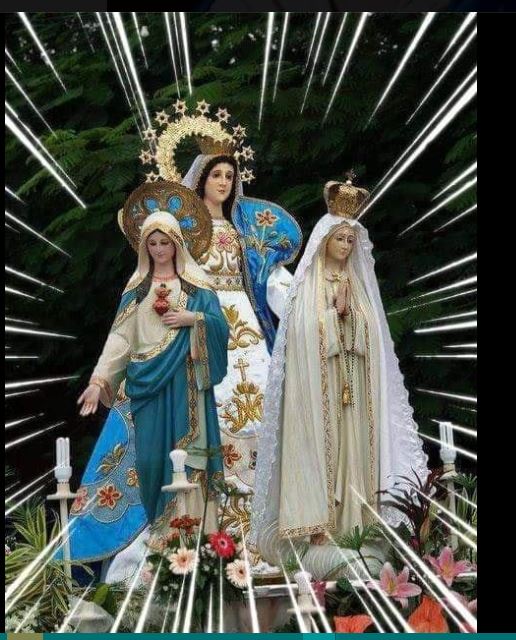
Luminous Mysteries
Sorrowful Mysteries
Glorious Mysteries
Prayers of the Rosary
Links to “How to pray the rosary” Popular Catholic Prayers
The Creed
I believe in God the father all mighty, creator of heaven and earth, and Jesus Christ, His only son,Who was conceived by the Holy Spirit, born of the Virgin Mary, suffered under Pontius Pilate, was crucified, died, and was buried,
He descended into hell; the third day He arose again from the dead; He ascended into Heaven, sitteth at the right hand of God, the Father Almighty, from thence He shall come to judge the living and the dead.
I believe in the Holy Spirit, the Holy Catholic Church, the communion of saints, the forgiveness of sins, the resurrection of the body, and life everlasting. Amen.
Our Father, Who art in Heaven, hallowed b e Thy name, Thy Kingdom come, Thy will be done on earth as it is in Heaven.
Give us this day our daily bread; and forgive us our trespasses as we forgive those who trespass against us; and lead us not into temptation, but deliver us from evil. Amen.
(this prayer is optional and may be said after all Glory Be to the Fathers…..)
O my Jesus, forgive us our sins. Save us from the fires of hell.
Lead all souls to heaven, especially those who are in most need of thy mercy.
Console the souls in Purgatory, particularly those most abandoned. Amen
Hail Mary, full of grace, the Lord is with thee, blessed art thou amongst women and blessed is the fruit of thy womb, Jesus.
Holy Mary Mother of God, pray for us sinners now and at the hour of our death. Amen.
Hail Holy Queen, Mother of Mercy, our life our sweetness and our hope.
To thee do we cry, poor banished children of Eve;
To thee do we send up our sighs, mourning and weeping in this valley of tears.
Turn then, most gracious advocate, thine eyes of mercy toward us and after this our exile show unto us the blessed fruit of thy womb, Jesus.
O clement, O loving, O sweet Virgin Mary!
That we maybe made worthy of the promises of Christ.
O God, whose only begotten Son, by His life, death, and resurrection, has purchased for us the rewards of eternal salvation.
Grant, we beseech Thee, that while meditating on these mysteries of the most holy Rosary of the Blessed Virgin Mary,
that we may imitate what they contain and obtain what they promise, through Christ our Lord. Amen.
Most Holy Trinity – Father, Son, and Holy Spirit – I adore thee profoundly. I offer Thee the most precious Body, Blood, Soul and Divinity of Jesus Christ, present in all the tabernacles of the world, in reparation for the outrages, sacrileges and indifference’s whereby He is offended. And through the infinite merits of His Most Sacred Heart and the Immaculate Heart of Mary, I beg of Thee the conversion of poor sinners.
Saint Michael, the Archangel, defend us in battle. Be our safeguard against the wickedness and snares of the devil. May God rebuke him, we humbly pray; and do you, O Prince of the heavenly host, by the power of God cast into hell Satan and all the evil spirits who wander through the world seeking the ruin of souls.
Amen.
 Thurzo Gizella Bible Study
Leave a comment