

But we were gentle among you, like a mother caring for her little children. 1 Thessalonians 2:7 NIV
Bible verses for today, 1 Kings 16-18, Matthew 6:1-16 finish the Bible in one year. (The Catholic Bible, the original one that includes all the books not included in Bibles used by other Christians.)
Watch and Listen here: and for explanations For the Rosary Julie Green Prophecies, Catholic Answers, Daily Readings,
Listen to the verses, as you enjoy the clips and pictures and a song at the end. Also look for the weekly review on the “Gizella Price” channel, YouTube or on Rumble.
A Christian’s goal should be to create the Kingdom of God here on earth, as it is in Heaven. Not only, to get to Heaven.
Prophesies by Julie Green. Click the date following: 9/1/22 August 2022 Post July 2022 Posts October Posts 11/24/22 video, 11/22 all 12/22 all 1/23 all
Go Here to see how many of Julie Green’s prophesies are being fulfilled every day.
My other websites: Catholic, Prophets today, For Kids
Read Today’s Bible Verses following here:
1 Kings 16
The word of the LORD came to Jehu, son of Hanani, against Baasha:
2Inasmuch as I exalted you from the dust and made you ruler of my people Israel, but you have walked in the way of Jeroboam and have caused my people Israel to sin, provoking me to anger by their sins,
3a I will burn up what is left of Baasha and his house; I will make your house like that of Jeroboam, son of Nebat:
4b One of Baasha’s line who dies in the city,
dogs will devour;
One who dies in the field,
the birds of the sky will devour.
5The rest of the acts of Baasha, what he did and his valor, are recorded in the book of the chronicles of the kings of Israel.
6Baasha rested with his ancestors; he was buried in Tirzah, and his son Elah succeeded him as king.
7(Through the prophet Jehu, son of Hanani, the word of the LORD came against Baasha and his house, because of all the evil Baasha did in the sight of the LORD, provoking him to anger by his deeds so that he became like the house of Jeroboam, and because of what he destroyed.)
8In the twenty-sixth year of Asa, king of Judah, Elah, son of Baasha, became king of Israel in Tirzah for two years.
9His servant Zimri, commander of half his chariots, plotted against him. As he was in Tirzah, drinking to excess in the house of Arza, master of his palace in Tirzah,
10c Zimri entered; he struck and killed him in the twenty-seventh year of Asa, king of Judah, and succeeded him as king.
11Once he was king, seated on the throne, he killed the whole house of Baasha, not sparing a single male relative or friend of his.
12d Zimri destroyed the entire house of Baasha, according to the word the LORD spoke against Baasha through Jehu the prophet,
13because of all the sins which Baasha and his son Elah committed and caused Israel to commit, provoking the LORD, the God of Israel, to anger by their idols.
14The rest of the acts of Elah, with all that he did, are recorded in the book of the chronicles of the kings of Israel.
15In the twenty-seventh year of Asa, king of Judah, Zimri became king for seven days in Tirzah.
The army was encamped at Gibbethon of the Philistines
16when they heard, “Zimri has formed a conspiracy and has killed the king.” So that day in the camp all Israel made Omri, commander of the army, king of Israel.
17Omri and all Israel with him marched up from Gibbethon and besieged Tirzah.
18When Zimri saw that the city was captured, he entered the citadel of the king’s house and burned it down over him. He died
19because of the sins he had committed, doing what was evil in the LORD’s sight by walking in the way of Jeroboam and the sin he had caused Israel to commit.
20The rest of the acts of Zimri, with the conspiracy he carried out, are recorded in the book of the chronicles of the kings of Israel.
21At that time the people of Israel were divided in two, half following Tibni, son of Ginath, to make him king, and half for Omri.
22The partisans of Omri prevailed over those of Tibni, son of Ginath. Tibni died and Omri became king.
23In the thirty-first year of Asa, king of Judah, Omri became king of Israel for twelve years; the first six of them he reigned in Tirzah.
24He then bought the mountain of Samaria from Shemer for two silver talents and built upon the mountain the city he named Samaria, after Shemer, the former owner.
25But Omri did what was evil in the LORD’s sight, more than any of his predecessors.
26In every way he imitated the sinful conduct of Jeroboam, son of Nebat, and the sin he had caused Israel to commit, thus provoking the LORD, the God of Israel, to anger by their idols.
27The rest of the acts of Omri, what he did and his valor, are recorded in the book of the chronicles of the kings of Israel.
28Omri rested with his ancestors; he was buried in Samaria, and Ahab his son succeeded him as king.
29Ahab, son of Omri, became king of Israel in the thirty-eighth year of Asa, king of Judah. Ahab, son of Omri, reigned over Israel in Samaria for twenty-two years.
30Ahab, son of Omri, did what was evil in the LORD’s sight more than any of his predecessors.
31It was not enough for him to follow the sins of Jeroboam, son of Nebat. He even married Jezebel, daughter of Ethbaal, king of the Sidonians, and began to serve Baal, and worship him.
32Ahab set up an altar to Baal in the house of Baal which he built in Samaria,
33and also made an asherah. Ahab did more to provoke the LORD, the God of Israel, to anger than any of the kings of Israel before him.
34e During his reign, Hiel from Bethel rebuilt Jericho. At the cost of Abiram, his firstborn son, he laid the foundation, and at the cost of Segub, his youngest son, he set up the gates, according to the word of the LORD spoken through Joshua, son of Nun.*
1 Kings 17
Elijah Proclaims a Drought.*
1Elijah the Tishbite,* a from Tishbe in Gilead, said to Ahab: “As the LORD, the God of Israel, lives, whom I serve, during these years there shall be no dew or rain except at my word.”
2The word of the LORD came to Elijah:
3Leave here, go east and hide in the Wadi Cherith, east of the Jordan.
4You shall drink of the wadi, and I have commanded ravens to feed you there.
5So he left and did as the LORD had commanded. He left and remained by the Wadi Cherith, east of the Jordan.
6b Ravens brought him bread and meat in the morning, and bread and meat in the evening, and he drank from the wadi.
7After some time, however, the wadi ran dry, because no rain had fallen in the land.
8c So the word of the LORD came to him:
9Arise, go to Zarephath of Sidon and stay there. I have commanded a widow there to feed you.
10He arose and went to Zarephath. When he arrived at the entrance of the city, a widow was there gathering sticks; he called out to her, “Please bring me a small cupful of water to drink.”
11She left to get it, and he called out after her, “Please bring along a crust of bread.”
12She said, “As the LORD, your God, lives, I have nothing baked; there is only a handful of flour in my jar and a little oil in my jug. Just now I was collecting a few sticks, to go in and prepare something for myself and my son; when we have eaten it, we shall die.”
13Elijah said to her, “Do not be afraid. Go and do as you have said. But first make me a little cake and bring it to me. Afterwards you can prepare something for yourself and your son.
14For the LORD, the God of Israel, says: The jar of flour shall not go empty, nor the jug of oil run dry, until the day when the LORD sends rain upon the earth.”
15She left and did as Elijah had said. She had enough to eat for a long time—he and she and her household.
16The jar of flour did not go empty, nor the jug of oil run dry, according to the word of the LORD spoken through Elijah.
17d Some time later the son of the woman, the owner of the house, fell sick, and his sickness grew more severe until he stopped breathing.
18So she said to Elijah, “Why have you done this to me, man of God? Have you come to me to call attention to my guilt and to kill my son?”
19Elijah said to her, “Give me your son.” Taking him from her lap, he carried him to the upper room where he was staying, and laid him on his own bed.
20He called out to the LORD: “LORD, my God, will you afflict even the widow with whom I am staying by killing her son?”
21Then he stretched himself out upon the child three times and he called out to the LORD: “LORD, my God, let the life breath return to the body of this child.”
22The LORD heard the prayer of Elijah; the life breath returned to the child’s body and he lived.
23Taking the child, Elijah carried him down into the house from the upper room and gave him to his mother. Elijah said, “See! Your son is alive.”
24The woman said to Elijah, “Now indeed I know that you are a man of God, and it is truly the word of the LORD that you speak.”
1 Kings 18
Elijah Ends the Drought.*
1Long afterward, in the third year, the word of the LORD came to Elijah: Go, present yourself to Ahab, that I may send rain upon the earth.
2So Elijah went to present himself to Ahab.
Now the famine in Samaria was severe,
3and Ahab had summoned Obadiah, master of his palace, who greatly revered the LORD.
4When Jezebel was slaughtering the prophets of the LORD, Obadiah took a hundred prophets, hid them away by fifties in caves, and supplied them with food and water.
5Ahab said to Obadiah, “Go through the land to all sources of water and to all the wadies. We may find grass and keep the horses and mules alive, so that we shall not have to slaughter any of the beasts.”
6Dividing the land to explore between them, Ahab went one way by himself, Obadiah another way by himself.
7As Obadiah was on his way, Elijah met him. Recognizing him, Obadiah fell prostrate and asked, “Is it you, my lord Elijah?”
8He said to him, “Yes. Go tell your lord, ‘Elijah is here!’”*
9But Obadiah said, “What sin has your servant committed, that you are handing me over to Ahab to be killed?
10As the LORD, your God, lives, there is no nation or kingdom where my lord has not sent in search of you. When they replied, ‘He is not here,’ he made each kingdom and nation swear they could not find you.
11And now you say, ‘Go tell your lord: Elijah is here!’
12After I leave you, the spirit of the LORD will carry you to some place I do not know, and when I go to inform Ahab and he does not find you, he will kill me—though your servant has revered the LORD from his youth!
13Have you not been told, my lord, what I did when Jezebel was murdering the prophets of the LORD—that I hid a hundred of the prophets of the LORD, fifty each in caves, and supplied them with food and water?
14And now you say, ‘Go tell your lord: Elijah is here!’ He will kill me!”
15Elijah answered, “As the LORD of hosts lives, whom I serve, I will present myself to him today.”
16So Obadiah went to meet Ahab and informed him, and Ahab came to meet Elijah.
17When Ahab saw Elijah, he said to him, “Is it you, you disturber of Israel?”
18He answered, “It is not I who disturb Israel, but you and your father’s house, by forsaking the commands of the LORD and you by following the Baals.
19Now summon all Israel to me on Mount Carmel, as well as the four hundred and fifty prophets of Baal and the four hundred prophets of Asherah who eat at Jezebel’s table.”
20So Ahab summoned all the Israelites and had the prophets gather on Mount Carmel.
21Elijah approached all the people and said, “How long will you straddle the issue? If the LORD is God, follow him; if Baal, follow him.” But the people did not answer him.
22So Elijah said to the people, “I am the only remaining prophet of the LORD, and there are four hundred and fifty prophets of Baal.
23Give us two young bulls. Let them choose one, cut it into pieces, and place it on the wood, but start no fire. I shall prepare the other and place it on the wood, but shall start no fire.
24You shall call upon the name of your gods, and I will call upon the name of the LORD. The God who answers with fire is God.” All the people answered, “We agree!”
25Elijah then said to the prophets of Baal, “Choose one young bull and prepare it first, for there are more of you. Call upon your gods, but do not start the fire.”
26Taking the young bull that was turned over to them, they prepared it and called upon Baal from morning to noon, saying, “Baal, answer us!” But there was no sound, and no one answering. And they hopped around the altar they had prepared.
27When it was noon, Elijah taunted them: “Call louder, for he is a god; he may be busy doing his business, or may be on a journey. Perhaps he is asleep and must be awakened.”
28They called out louder and slashed themselves with swords and spears according to their ritual until blood gushed over them.
29Noon passed and they remained in a prophetic state until the time for offering sacrifice. But there was no sound, no one answering, no one listening.
30Then Elijah said to all the people, “Come here to me.” When they drew near to him, he repaired the altar of the LORD which had been destroyed.
31He took twelve stones, for the number of tribes of the sons of Jacob, to whom the LORD had said: Israel shall be your name.
32He built the stones into an altar to the name of the LORD, and made a trench around the altar large enough for two measures of grain.
33When he had arranged the wood, he cut up the young bull and laid it on the wood.
34He said, “Fill four jars with water and pour it over the burnt offering and over the wood.” “Do it again,” he said, and they did it again. “Do it a third time,” he said, and they did it a third time.
35The water flowed around the altar; even the trench was filled with the water.
36At the time for offering sacrifice, Elijah the prophet came forward and said, “LORD, God of Abraham, Isaac, and Israel, let it be known this day that you are God in Israel and that I am your servant and have done all these things at your command.
37a Answer me, LORD! Answer me, that this people may know that you, LORD, are God and that you have turned their hearts back to you.”
38The LORD’s fire came down and devoured the burnt offering, wood, stones, and dust, and lapped up the water in the trench.
39Seeing this, all the people fell prostrate and said, “The LORD is God! The LORD is God!”
40b Then Elijah said to them, “Seize the prophets of Baal. Let none of them escape!” They seized them, and Elijah brought them down to the Wadi Kishon and there he slaughtered them.
41Elijah then said to Ahab, “Go up, eat and drink, for there is the sound of a heavy rain.”
42So Ahab went up to eat and drink, while Elijah went up to the top of Carmel, crouched down to the earth, and put his head between his knees.
43He said to his servant, “Go up and look out to sea.” He went up and looked, but reported, “There is nothing.” Seven times he said, “Go look again!”
44And the seventh time the youth reported, “There is a cloud as small as a man’s hand rising from the sea.” Elijah said, “Go and say to Ahab, ‘Harness up and go down the mountain before the rain stops you.’”
45All at once the sky grew dark with clouds and wind, and a heavy rain fell. Ahab mounted his chariot and headed for Jezreel.
46But the hand of the LORD was on Elijah. He girded up his clothing and ran before Ahab as far as the approaches to Jezreel.
Matthew 6:1-16
Teaching About Almsgiving.*
1“[But] take care not to perform righteous deeds in order that people may see them;a otherwise, you will have no recompense from your heavenly Father.
2When you give alms, do not blow a trumpet before you, as the hypocrites* do in the synagogues and in the streets to win the praise of others. Amen, I say to you, they have received their reward.b
3But when you give alms, do not let your left hand know what your right is doing,
4so that your almsgiving may be secret. And your Father who sees in secret will repay you.
5“When you pray, do not be like the hypocrites, who love to stand and pray in the synagogues and on street corners so that others may see them. Amen, I say to you, they have received their reward.
6But when you pray, go to your inner room, close the door, and pray to your Father in secret. And your Father who sees in secret will repay you.
7* In praying, do not babble like the pagans, who think that they will be heard because of their many words.*
8Do not be like them. Your Father knows what you need before you ask him.
9* “This is how you are to pray:c
Our Father in heaven,*
hallowed be your name,
10your kingdom come,*
your will be done,
on earth as in heaven.d
11* e Give us today our daily bread;
12and forgive us our debts,*
as we forgive our debtors;f
13and do not subject us to the final test,*
but deliver us from the evil one.g
14* If you forgive others their transgressions, your heavenly Father will forgive you.h
15But if you do not forgive others, neither will your Father forgive your transgressions.i
16“When you fast,* do not look gloomy like the hypocrites. They neglect their appearance, so that they may appear to others to be fasting. Amen, I say to you, they have received their reward.
Sermons Rosary Prayers Catholic Answers
THE BOOKS OF KINGS
The two Books of Kings are regarded by many as the last part of a work commonly known as the Deuteronomistic History. The latter tells the story of Israel from its settlement in the land (Joshua and Judges) through the transition from judgeship to monarchy under Samuel, Saul, and David (1 and 2 Samuel) to the reign of Solomon, the disintegration of the united kingdom into the kingdoms of Israel and Judah and the eventual downfall of both kingdoms (1 and 2 Kings). The Deuteronomistic History along with the Pentateuch forms a single historical narrative stretching from creation to exile.
The Books of Kings can be approached in several ways. They contain history and are an important source of information about the Israelite kingdoms. They are also narrative that calls for careful reading; historical accuracy is sometimes sacrificed to the demands of compelling characterization and dramatic tension. Most importantly, both historical presentation and narrative creativity are shaped by a particular religious worldview.
The multifaceted character of the work means that it has a variety of focal points. The historical events themselves, of course, are important, but the patterns according to which the author organizes those events give a unity to the author’s historical reconstruction. The northern kings are condemned without exception, and the royal line degenerates from the divine election of Jeroboam I through a succession of short-lived dynasties to the bloodbath of Jehu’s coup d’état, and finally dies out in a series of assassinations. (It must be admitted that the author at times skews the story to preserve the pattern: the relatively prosperous forty-one-year reign of Jeroboam II is dismissed in seven verses!) Judah’s kings, on the other hand, follow a cyclic pattern of infidelity followed by reform, with each reformer king (Asa, Joash, Hezekiah, Josiah) greater than the last. Unfortunately the apostate kings also progress in wickedness, until the evil of Manasseh is so great that even Josiah’s fidelity cannot turn away the Lord’s wrath (2 Kgs 23:26).
As a literary work, the Books of Kings are admirable. Some of the brilliance is accessible only in Hebrew: wordplays, the sounds and rhythms of poetic passages, verbal allusions to other passages of the Hebrew Bible. Scenes are drawn with a vibrancy and immediacy that English cannot reproduce without sounding overdone. But other literary techniques survive translation: symmetrical structures for narrative units (and the disruptions of symmetry at significant points), rich ambiguities (see 1 Kgs 3:26), foreshadowings (such as the way the prophet of Bethel and the man of God of Judah in 1 Kgs 13 portend the destinies of their respective kingdoms). Characterization is rich and complex (Solomon, Jeroboam, Elijah, Ahab, Elisha, Jehu, etc.), revealing deep insight into human nature.
In offering a theological interpretation of history, 1–2 Kings upholds a double principle: the justification of the political disintegration of the Davidic empire, and the necessity of the religious unity of the Lord’s people. This double principle is, practically speaking, unrealistic; see Jeroboam I’s reasonable assessment in 1 Kgs 12:26–27. But for the Deuteronomistic historian, that is irrelevant. Just as the separation of the kingdoms is the Lord’s will (1 Kgs 12:22–24), so too is the centralization of worship at the Temple in Jerusalem (1 Kgs 9:3; see Dt 12). 1–2 Kings reflects that double principle in its organization. The story of each king is told integrally, whether the king is of Israel or Judah: both lines of kings are legitimate. But the stories of the two lines are recounted in the order in which each king came to the throne, irrespective of which kingdom he ruled: there is only one people of God, though they are under two different royal jurisdictions. Moreover, each king is evaluated on theological grounds, with no allowance made for political or economic successes or failures. All Israelite kings are condemned because they did not reverse Jeroboam I’s sin of setting up sanctuaries outside Jerusalem. Judahite kings are condemned for apostasy or praised for reform, as the case may be; but a continuing source of irritation to the Deuteronomistic historian is the failure of even the praiseworthy kings to do anything about local shrines outside Jerusalem (the “high places”).
Into the stories of the kings, almost as a counterpoint, are woven numerous stories of prophets, named and great (Elijah, Elisha, Isaiah), and less known or anonymous (1 Kgs 13; 22). Many of the stories are anecdotal, reflecting the everyday life of prophets and prophetic guilds (1 Kgs 17; 2 Kgs 4). But the volatile dynamics of prophetic involvement in the political realm are prominent: prophets in opposition to kings (1 Kgs 14; 21; 2 Kgs 9), prophets in support of kings (1 Kgs 20:1–34; 2 Kgs 19–20; 22:14–20). This too is part of the theological worldview of the Deuteronomistic historian. The destiny of Israel is in God’s hand. Through prophets, the divine will is made known on earth to kings and people and the future consequences of their response to God’s will are spelled out. It is perhaps indicative of the importance prophets have in 1 and 2 Kings that the structural center of the two books is the story of Elisha’s succession to Elijah’s prophetic ministry (2 Kgs 2), and that this is one of the few passages in Kings that occurs outside the account of any king’s reign. Behind the temporal realm of kings and reigns lies the continuing realm of the divine word and its servants, the prophets.
1–2 Kings draws on older sources (perhaps on archival records, certainly on works called “The Book of the Chronicles of the Kings”; see, for example, 1 Kgs 14:19, 29), which it uses for its own theological purpose. The so-called Deuteronomistic History itself underwent a complex process of editorial revision whose stages are disputed by scholars. There may have been an edition sometime late in the reign of Josiah (640–609 B.C.), but in the form we have it the work comes from the time of the exile (see 2 Kgs 25:27–30). In its turn the Deuteronomistic History was one of the sources used by the Chronicler in postexilic times to compile the history presented in 1 and 2 Chronicles. Though Chronicles has little interest in the Northern Kingdom, much of the material in Kings about the kingdom of Judah reappears, sometimes in altered form, in Chronicles.
The Books of Kings may be divided as follows:
- The Reign of Solomon (1 Kgs 1:1–11:43)
- The Reign of Jeroboam (1 Kgs 12:1–14:20)
- Kings of Judah and Israel (1 Kgs 14:21–16:34)
- The Story of Elijah (1 Kgs 17:1–19:21)
- The Story of Ahab (1 Kgs 20:1–2 Kgs 1:18)
- Elisha Succeeds Elijah (2 Kgs 2:1–25)
- Stories of Elisha and Joram (2 Kgs 3:1–9:13)
- The End of the Omrid Dynasty (2 Kgs 9:14–11:20)
- Kings of Judah and Israel (2 Kgs 12:1–17:5)
- The End of Israel (2 Kgs 17:6–41)
- The End of Judah (2 Kgs 18:1–25:30)
THE FIRST BOOK OF KINGS
I. THE REIGN OF SOLOMON*
The book of Matthew
THE GOSPEL ACCORDING TO MATTHEW
The position of the Gospel according to Matthew as the first of the four gospels in the New Testament reflects both the view that it was the first to be written, a view that goes back to the late second century A.D., and the esteem in which it was held by the church; no other was so frequently quoted in the noncanonical literature of earliest Christianity. Although the majority of scholars now reject the opinion about the time of its composition, the high estimation of this work remains. The reason for that becomes clear upon study of the way in which Matthew presents his story of Jesus, the demands of Christian discipleship, and the breaking-in of the new and final age through the ministry but particularly through the death and resurrection of Jesus.
The gospel begins with a narrative prologue (Mt 1:1–2:23), the first part of which is a genealogy of Jesus starting with Abraham, the father of Israel (Mt 1:1–17). Yet at the beginning of that genealogy Jesus is designated as “the son of David, the son of Abraham” (Mt 1:1). The kingly ancestor who lived about a thousand years after Abraham is named first, for this is the genealogy of Jesus Christ, the Messiah, the royal anointed one (Mt 1:16). In the first of the episodes of the infancy narrative that follow the genealogy, the mystery of Jesus’ person is declared. He is conceived of a virgin by the power of the Spirit of God (Mt 1:18–25). The first of the gospel’s fulfillment citations, whose purpose it is to show that he was the one to whom the prophecies of Israel were pointing, occurs here (Mt 1:23): he shall be named Emmanuel, for in him God is with us.
The announcement of the birth of this newborn king of the Jews greatly troubles not only King Herod but all Jerusalem (Mt 2:1–3), yet the Gentile magi are overjoyed to find him and offer him their homage and their gifts (Mt 2:10–11). Thus his ultimate rejection by the mass of his own people and his acceptance by the Gentile nations is foreshadowed. He must be taken to Egypt to escape the murderous plan of Herod. By his sojourn there and his subsequent return after the king’s death he relives the Exodus experience of Israel. The words of the Lord spoken through the prophet Hosea, “Out of Egypt I called my son,” are fulfilled in him (Mt 2:15); if Israel was God’s son, Jesus is so in a way far surpassing the dignity of that nation, as his marvelous birth and the unfolding of his story show (see Mt 3:17; 4:1–11; 11:27; 14:33; 16:16; 27:54). Back in the land of Israel, he must be taken to Nazareth in Galilee because of the danger to his life in Judea, where Herod’s son Archelaus is now ruling (Mt 2:22–23). The sufferings of Jesus in the infancy narrative anticipate those of his passion, and if his life is spared in spite of the dangers, it is because his destiny is finally to give it on the cross as “a ransom for many” (Mt 20:28). Thus the word of the angel will be fulfilled, “…he will save his people from their sins” (Mt 1:21; cf. Mt 26:28).
In Mt 4:12 Matthew begins his account of the ministry of Jesus, introducing it by the preparatory preaching of John the Baptist (Mt 3:1–12), the baptism of Jesus that culminates in God’s proclaiming him his “beloved Son” (Mt 3:13–17), and the temptation in which he proves his true sonship by his victory over the devil’s attempt to deflect him from the way of obedience to the Father (Mt 4:1–11). The central message of Jesus’ preaching is the coming of the kingdom of heaven and the need for repentance, a complete change of heart and conduct, on the part of those who are to receive this great gift of God (Mt 4:17). Galilee is the setting for most of his ministry; he leaves there for Judea only in Mt 19:1, and his ministry in Jerusalem, the goal of his journey, is limited to a few days (Mt 21:1–25:46).
In this extensive material there are five great discourses of Jesus, each concluding with the formula “When Jesus finished these words” or one closely similar (Mt 7:28; 11:1; 13:53; 19:1; 26:1). These are an important structure of the gospel. In every case the discourse is preceded by a narrative section, each narrative and discourse together constituting a “book” of the gospel. The discourses are, respectively, the “Sermon on the Mount” (Mt 5:3–7:27), the missionary discourse (Mt 10:5–42), the parable discourse (Mt 13:3–52), the “church order” discourse (Mt 18:3–35), and the eschatological discourse (Mt 24:4–25:46). In large measure the material of these discourses came to Matthew from his tradition, but his work in modifying and adding to what he had received is abundantly evident. No other evangelist gives the teaching of Jesus with such elegance and order as he.
In the “Sermon on the Mount” the theme of righteousness is prominent, and even at this early stage of the ministry the note of opposition is struck between Jesus and the Pharisees, who are designated as “the hypocrites” (Mt 6:2, 5, 16). The righteousness of his disciples must surpass that of the scribes and Pharisees; otherwise, in spite of their alleged following of Jesus, they will not enter into the kingdom of heaven (Mt 5:20). Righteousness means doing the will of the heavenly Father (Mt 7:21), and his will is proclaimed in a manner that is startling to all who have identified it with the law of Moses. The antitheses of the Sermon (Mt 5:21–48) both accept (Mt 5:21–30, 43–48) and reject (Mt 5:31–42) elements of that law, and in the former case the understanding of the law’s demands is deepened and extended. The antitheses are the best commentary on the meaning of Jesus’ claim that he has come not to abolish but to fulfill the law (Mt 5:17). What is meant by fulfillment of the law is not the demand to keep it exactly as it stood before the coming of Jesus, but rather his bringing the law to be a lasting expression of the will of God, and in that fulfillment there is much that will pass away. Should this appear contradictory to his saying that “until heaven and earth pass away” not even the smallest part of the law will pass (Mt 5:18), that time of fulfillment is not the dissolution of the universe but the coming of the new age, which will occur with Jesus’ death and resurrection. While righteousness in the new age will continue to mean conduct that is in accordance with the law, it will be conduct in accordance with the law as expounded and interpreted by Jesus (cf. Mt 28:20, “…all that I have commanded you”).
Though Jesus speaks harshly about the Pharisees in the Sermon, his judgment is not solely a condemnation of them. The Pharisees are portrayed as a negative example for his disciples, and his condemnation of those who claim to belong to him while disobeying his word is no less severe (Mt 7:21–23, 26–27).
In Mt 4:23 a summary statement of Jesus’ activity speaks not only of his teaching and proclaiming the gospel but of his “curing every disease and illness among the people”; this is repeated almost verbatim in Mt 9:35. The narrative section that follows the Sermon on the Mount (Mt 8:1–9:38) is composed principally of accounts of those merciful deeds of Jesus, but it is far from being simply a collection of stories about miraculous cures. The nature of the community that Jesus will establish is shown; it will always be under the protection of him whose power can deal with all dangers (Mt 8:23–27), but it is only for those who are prepared to follow him at whatever cost (Mt 8:16–22), not only believing Israelites but Gentiles who have come to faith in him (Mt 8:10–12). The disciples begin to have some insight, however imperfect, into the mystery of Jesus’ person. They wonder about him whom “the winds and the sea obey” (Mt 8:27), and they witness his bold declaration of the forgiveness of the paralytic’s sins (Mt 9:2). That episode of the narrative moves on two levels. When the crowd sees the cure that testifies to the authority of Jesus, the Son of Man, to forgive sins (Mt 9:6), they glorify God “who had given such authority to human beings” (Mt 9:8). The forgiveness of sins is now not the prerogative of Jesus alone but of “human beings,” that is, of the disciples who constitute the community of Jesus, the church. The ecclesial character of this narrative section could hardly be more plainly indicated.
The end of the section prepares for the discourse on the church’s mission (Mt 10:5–42). Jesus is moved to pity at the sight of the crowds who are like sheep without a shepherd (Mt 9:36), and he sends out the twelve disciples to make the proclamation with which his own ministry began, “The kingdom of heaven is at hand” (Mt 10:7; cf. Mt 4:17), and to drive out demons and cure the sick as he has done (Mt 10:1). Their mission is limited to Israel (Mt 10:5–6) as Jesus’ own was (Mt 15:24), yet in Mt 15:16 that perspective broadens and the discourse begins to speak of the mission that the disciples will have after the resurrection and of the severe persecution that will attend it (Mt 10:18). Again, the discourse moves on two levels: that of the time of Jesus and that of the time of the church.
The narrative section of the third book (Mt 11:2–12:50) deals with the growing opposition to Jesus. Hostility toward him has already been manifested (Mt 8:10; 9:3, 10–13, 34), but here it becomes more intense. The rejection of Jesus comes, as before, from Pharisees, who take “counsel against him to put him to death” (Mt 12:14) and repeat their earlier accusation that he drives out demons because he is in league with demonic power (Mt 12:22–24). But they are not alone in their rejection. Jesus complains of the lack of faith of “this generation” of Israelites (Mt 11:16–19) and reproaches the towns “where most of his mighty deeds had been done” for not heeding his call to repentance (Mt 11:20–24). This dark picture is relieved by Jesus’ praise of the Father who has enabled “the childlike” to accept him (Mt 11:25–27), but on the whole the story is one of opposition to his word and blindness to the meaning of his deeds. The whole section ends with his declaring that not even the most intimate blood relationship with him counts for anything; his only true relatives are those who do the will of his heavenly Father (Mt 12:48–50).
The narrative of rejection leads up to the parable discourse (Mt 13:3–52). The reason given for Jesus’ speaking to the crowds in parables is that they have hardened themselves against his clear teaching, unlike the disciples to whom knowledge of “the mysteries of the kingdom has been granted” (Mt 13:10–16). In Mt 13:36 he dismisses the crowds and continues the discourse to his disciples alone, who claim, at the end, to have understood all that he has said (Mt 13:51). But, lest the impression be given that the church of Jesus is made up only of true disciples, the explanation of the parable of the weeds among the wheat (Mt 13:37–43), as well as the parable of the net thrown into the sea “which collects fish of every kind” (Mt 13:47–49), shows that it is composed of both the righteous and the wicked, and that separation between the two will be made only at the time of the final judgment.
In the narrative that constitutes the first part of the fourth book of the gospel (Mt 13:54–17:27), Jesus is shown preparing for the establishment of his church with its teaching authority that will supplant the blind guidance of the Pharisees (Mt 15:13–14), whose teaching, curiously said to be that of the Sadducees also, is repudiated by Jesus as the norm for his disciples (Mt 16:6, 11–12). The church of Jesus will be built on Peter (Mt 16:18), who will be given authority to bind and loose on earth, an authority whose exercise will be confirmed in heaven (Mt 16:19). The metaphor of binding and loosing has a variety of meanings, among them that of giving authoritative teaching. This promise is made to Peter directly after he has confessed Jesus to be the Messiah, the Son of the living God (Mt 16:16), a confession that he has made as the result of revelation given to him by the heavenly Father (Mt 16:17); Matthew’s ecclesiology is based on his high christology.
Directly after that confession Jesus begins to instruct his disciples about how he must go the way of suffering and death (Mt 16:21). Peter, who has been praised for his confession, protests against this and receives from Jesus the sharpest of rebukes for attempting to deflect Jesus from his God-appointed destiny. The future rock upon whom the church will be built is still a man of “little faith” (see Mt 14:31). Both he and the other disciples must know not only that Jesus will have to suffer and die but that they too will have to follow him on the way of the cross if they are truly to be his disciples (Mt 16:24–25).
The discourse following this narrative (Mt 18:1–35) is often called the “church order” discourse, although that title is perhaps misleading since the emphasis is not on the structure of the church but on the care that the disciples must have for one another in respect to guarding each other’s faith in Jesus (Mt 18:6–7), to seeking out those who have wandered from the fold (Mt 18:10–14), and to repeated forgiving of their fellow disciples who have offended them (Mt 18:21–35). But there is also the obligation to correct the sinful fellow Christian and, should one refuse to be corrected, separation from the community is demanded (Mt 18:15–18).
The narrative of the fifth book (Mt 19:1–23:39) begins with the departure of Jesus and his disciples from Galilee for Jerusalem. In the course of their journey Jesus for the third time predicts the passion that awaits him at Jerusalem and also his resurrection (Mt 20:17–19). At his entrance into the city he is hailed as the Son of David by the crowds accompanying him (Mt 21:9). He cleanses the temple (Mt 21:12–17), and in the few days of his Jerusalem ministry he engages in a series of controversies with the Jewish religious leaders (Mt 21:23–27; 22:15–22, 23–33, 34–40, 41–46), meanwhile speaking parables against them (Mt 21:28–32, 33–46), against all those Israelites who have rejected God’s invitation to the messianic banquet (Mt 22:1–10), and against all, Jew and Gentile, who have accepted but have shown themselves unworthy of it (Mt 22:11–14). Once again, the perspective of the evangelist includes not only the time of Jesus’ ministry but that of the preaching of the gospel after his resurrection. The narrative culminates in Jesus’ denunciation of the scribes and Pharisees, reflecting not only his own opposition to them but that of Matthew’s church (Mt 23:1–36), and in Jesus’ lament over Jerusalem (Mt 23:37–39).
In the discourse of the fifth book (Mt 24:1–25:46), the last of the great structural discourses of the gospel, Jesus predicts the destruction of the temple and his own final coming. The time of the latter is unknown (Mt 24:36, 44), and the disciples are exhorted in various parables to live in readiness for it, a readiness that entails faithful attention to the duties of the interim period (Mt 24:45–25:30). The coming of Jesus will bring with it the great judgment by which the everlasting destiny of all will be determined (Mt 25:31–46).
The story of Jesus’ passion and resurrection (Mt 26:1–28:20), the climax of the gospel, throws light on all that has preceded. In Matthew “righteousness” means both the faithful response to the will of God demanded of all to whom that will is announced and also the saving activity of God for his people (see Mt 3:15; 5:6; 6:33). The passion supremely exemplifies both meanings of that central Matthean word. In Jesus’ absolute faithfulness to the Father’s will that he drink the cup of suffering (Mt 26:39), the incomparable model for Christian obedience is given; in his death “for the forgiveness of sins” (Mt 26:28), the saving power of God is manifested as never before.
Matthew’s portrayal of Jesus in his passion combines both the majestic serenity of the obedient Son who goes his destined way in fulfillment of the scriptures (Mt 26:52–54), confident of his ultimate vindication by God, and the depths of fear and abandonment that he feels in face of death (Mt 26:38–39; 27:46). These two aspects are expressed by an Old Testament theme that occurs often in the narrative, i.e., the portrait of the suffering Righteous One who complains to God in his misery, but is certain of eventual deliverance from his terrible ordeal.
The passion-resurrection of God’s Son means nothing less than the turn of the ages, a new stage of history, the coming of the Son of Man in his kingdom (Mt 28:18; cf. Mt 16:28). That is the sense of the apocalyptic signs that accompany Jesus’ death (Mt 27:51–53) and resurrection (Mt 28:2). Although the old age continues, as it will until the manifestation of Jesus’ triumph at his parousia, the final age has now begun. This is known only to those who have seen the Risen One and to those, both Jews and Gentiles, who have believed in their announcement of Jesus’ triumph and have themselves become his disciples (cf. Mt 28:19). To them he is constantly, though invisibly, present (Mt 28:20), verifying the name Emmanuel, “God is with us” (cf. Mt 1:23).
The questions of authorship, sources, and the time of composition of this gospel have received many answers, none of which can claim more than a greater or lesser degree of probability. The one now favored by the majority of scholars is the following.
The ancient tradition that the author was the disciple and apostle of Jesus named Matthew (see Mt 10:3) is untenable because the gospel is based, in large part, on the Gospel according to Mark (almost all the verses of that gospel have been utilized in this), and it is hardly likely that a companion of Jesus would have followed so extensively an account that came from one who admittedly never had such an association rather than rely on his own memories. The attribution of the gospel to the disciple Matthew may have been due to his having been responsible for some of the traditions found in it, but that is far from certain.
The unknown author, whom we shall continue to call Matthew for the sake of convenience, drew not only upon the Gospel according to Mark but upon a large body of material (principally, sayings of Jesus) not found in Mark that corresponds, sometimes exactly, to material found also in the Gospel according to Luke. This material, called “Q” (probably from the first letter of the German word Quelle, meaning “source”), represents traditions, written and oral, used by both Matthew and Luke. Mark and Q are sources common to the two other synoptic gospels; hence the name the “Two-Source Theory” given to this explanation of the relation among the synoptics.
In addition to what Matthew drew from Mark and Q, his gospel contains material that is found only there. This is often designated “M,” written or oral tradition that was available to the author. Since Mark was written shortly before or shortly after A.D. 70 (see Introduction to Mark), Matthew was composed certainly after that date, which marks the fall of Jerusalem to the Romans at the time of the First Jewish Revolt (A.D. 66–70), and probably at least a decade later since Matthew’s use of Mark presupposes a wide diffusion of that gospel. The post-A.D. 70 date is confirmed within the text by Mt 22:7, which refers to the destruction of Jerusalem.
As for the place where the gospel was composed, a plausible suggestion is that it was Antioch, the capital of the Roman province of Syria. That large and important city had a mixed population of Greek-speaking Gentiles and Jews. The tensions between Jewish and Gentile Christians there in the time of Paul (see Gal 2:1–14) in respect to Christian obligation to observe Mosaic law are partially similar to tensions that can be seen between the two groups in Matthew’s gospel. The church of Matthew, originally strongly Jewish Christian, had become one in which Gentile Christians were predominant. His gospel answers the question how obedience to the will of God is to be expressed by those who live after the “turn of the ages,” the death and resurrection of Jesus.
The principal divisions of the Gospel according to Matthew are the following:
- The Infancy Narrative (1:1–2:23)
- The Proclamation of the Kingdom (3:1–7:29)
- Ministry and Mission in Galilee (8:1–11:1)
- Opposition from Israel (11:2–13:53)
- Jesus, the Kingdom, and the Church (13:54–18:35)
- Ministry in Judea and Jerusalem (19:1–25:46)
- The Passion and Resurrection (26:1–28:20)
I. THE INFANCY NARRATIVE
Sermons on the Book of Matthew
SERMONS ON THE BOOK OF 1 KINGS
Catholic Daily Readings at every Mass
You can also read it, if you watch this on You Tube, under the videos
Sermons Rosary Prayers Catholic Answers Scriptural Rosary
Prophesies by Julie Green. Click the date following: December 22 Posts, November 22 Posts, September Posts, August 2022 Post July 2022 Posts October Posts video,
Go Here to see how many of Julie Green’s prophesies are being fulfilled every day.
Prophetic words given on November 24, 2022
See prophesy blog for Jan 2nd 2023.
Dr. Myles Munroe
I am including a video by Dr. Myles Munroe, I’ve listened to him back in the nineties, and rediscovered him recently. Now his perspective seems to be a good way to also look at scripture. In Pursuit of Purpose – Book Highlights
Sermons Rosary Prayers Catholic Answers
Called to Communion Dr. David Anders

Rosary Mysteries
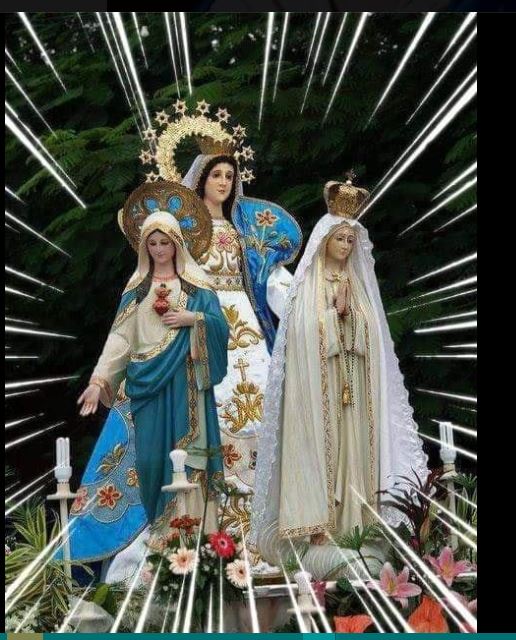
The images help me to focus on the particular mystery that I am contemplating as I say the Hail Mary on each bead.
Pray on Mondays Joyful, on Tuesdays Sorrowful, on Wednesdays Glorious, on Thursdays Luminous, on Fridays Sorrowful, on Saturdays Joyful, on Sundays Glorious Mysteries in union with millions of faithful believers on this Earth.
Joyful Mysteries
Luminous Mysteries
Sorrowful Mysteries
Glorious Mysteries
Prayers of the Rosary
Links to “How to pray the rosary” Popular Catholic Prayers
The Creed
I believe in God the father all mighty, creator of heaven and earth, and Jesus Christ, His only son,Who was conceived by the Holy Spirit, born of the Virgin Mary, suffered under Pontius Pilate, was crucified, died, and was buried,
He descended into hell; the third day He arose again from the dead; He ascended into Heaven, sitteth at the right hand of God, the Father Almighty, from thence He shall come to judge the living and the dead.
I believe in the Holy Spirit, the Holy Catholic Church, the communion of saints, the forgiveness of sins, the resurrection of the body, and life everlasting. Amen.
Our Father, Who art in Heaven, hallowed b e Thy name, Thy Kingdom come, Thy will be done on earth as it is in Heaven.
Give us this day our daily bread; and forgive us our trespasses as we forgive those who trespass against us; and lead us not into temptation, but deliver us from evil. Amen.
(this prayer is optional and may be said after all Glory Be to the Fathers…..)
O my Jesus, forgive us our sins. Save us from the fires of hell.
Lead all souls to heaven, especially those who are in most need of thy mercy.
Console the souls in Purgatory, particularly those most abandoned. Amen
Hail Mary, full of grace, the Lord is with thee, blessed art thou amongst women and blessed is the fruit of thy womb, Jesus.
Holy Mary Mother of God, pray for us sinners now and at the hour of our death. Amen.
Hail Holy Queen, Mother of Mercy, our life our sweetness and our hope.
To thee do we cry, poor banished children of Eve;
To thee do we send up our sighs, mourning and weeping in this valley of tears.
Turn then, most gracious advocate, thine eyes of mercy toward us and after this our exile show unto us the blessed fruit of thy womb, Jesus.
O clement, O loving, O sweet Virgin Mary!
That we maybe made worthy of the promises of Christ.
O God, whose only begotten Son, by His life, death, and resurrection, has purchased for us the rewards of eternal salvation.
Grant, we beseech Thee, that while meditating on these mysteries of the most holy Rosary of the Blessed Virgin Mary,
that we may imitate what they contain and obtain what they promise, through Christ our Lord. Amen.
Most Holy Trinity – Father, Son, and Holy Spirit – I adore thee profoundly. I offer Thee the most precious Body, Blood, Soul and Divinity of Jesus Christ, present in all the tabernacles of the world, in reparation for the outrages, sacrileges and indifference’s whereby He is offended. And through the infinite merits of His Most Sacred Heart and the Immaculate Heart of Mary, I beg of Thee the conversion of poor sinners.
Saint Michael, the Archangel, defend us in battle. Be our safeguard against the wickedness and snares of the devil. May God rebuke him, we humbly pray; and do you, O Prince of the heavenly host, by the power of God cast into hell Satan and all the evil spirits who wander through the world seeking the ruin of souls.
Amen.
 Thurzo Gizella Bible Study
Leave a comment