

Casting down imaginations, and every high thing that exalteth itself against the knowledge of God, and bringing into captivity every thought to the obedience of Christ. 2 Corinthians 10:5 KJV
Bible verses for today, Joshua Judges 20-21, 1 Corinthians 7:25-40 finish the Bible in one year. (The Catholic Bible, the original one that includes all the books not included in Bibles used by other Christians.)
Watch and Listen here: and for explanations For the Rosary Julie Green Prophecies, Catholic Answers, Daily Readings,
Listen to the verses, as you enjoy the clips and pictures and a song at the end. Also look for the weekly review on the “Gizella Price” channel, YouTube or on Rumble.
A Christian’s goal should be to create the Kingdom of God here on earth, as it is in Heaven. Not only, to get to Heaven.
Prophesies by Julie Green. Click the date following: 9/1/22 August 2022 Post July 2022 Posts October Posts 11/24/22 video, 11/22 all 12/22 all 1/23 all
Go Here to see how many of Julie Green’s prophesies are being fulfilled every day.
My other websites: Catholic, Prophets today, For Kids
Read Today’s Bible Verses following here:
Judges 20
1So all the Israelites came out as one, from Dan to Beer-sheba* a including the land of Gilead, and the assembly gathered to the LORD at Mizpah.
2The leaders of all the people, all the staff-bearers of Israel,* presented themselves in the assembly of the people of God—four hundred thousand foot soldiers who carried swords.
3Meanwhile, the Benjaminites heard that the Israelites had gone up to Mizpah. The Israelites asked, “How did this evil thing happen?”
4and the Levite, the husband of the murdered woman, testified: “It was at Gibeah of Benjamin, which my concubine and I had entered for the night.b
5c The lords of Gibeah rose up against me and surrounded me in the house at night. I was the one they intended to kill, but they abused my concubine and she died.
6d So I took my concubine and cut her up and sent her through every part of the territory of Israel, because of the terrible thing they had done in Israel.
7So now, all you Israelites, give your judgment and counsel in this matter.”e
8All the people rose as one to say, “None of us will leave for our tents or return to our homes.
9Now as for Gibeah, this is what we will do: We will go up against it by lot,
10taking from all the tribes of Israel ten men for every hundred, a hundred for every thousand, a thousand for every ten thousand, and procuring supplies for the soldiers who will go to exact from Gibeah of Benjamin the full measure of the terrible thing it committed in Israel.”
11So all the men of Israel gathered against the city, united as one.
12The tribes of Israel sent men throughout the tribe of Benjamin to say, “What is this evil that has occurred among you?
13Now give up the men, the scoundrels who are in Gibeah, that we may put them to death and thus purge the evil from Israel.” But the Benjaminites refused to listen to their kindred, the Israelites.
14Instead, the Benjaminites assembled from their cities at Gibeah, to march out to battle with the Israelites.
15On that day the Benjaminites mustered from their cities twenty-six thousand swordsmen, in addition to the inhabitants of Gibeah, who mustered seven hundred picked men
16* who were left-handed, every one of them able to sling a stone at a hair without missing.
17The men of Israel, without Benjamin, mustered four hundred thousand swordsmen, all of them warriors.
18They went up to Bethel and consulted God. When the Israelites asked, “Who shall go up first for us to do battle with the Benjaminites?” the LORD said: Judah first.* f
19* The Israelites rose in the morning and encamped against Gibeah.
20The men of Israel marched out to do battle with Benjamin and drew up in battle array against them at Gibeah.
21The Benjaminites marched out of Gibeah that day and felled twenty-two thousand men of Israel.
22* But the army of the men of Israel took courage and again drew up for battle in the place where they had drawn up on the previous day.
23Then the Israelites went up and wept before the LORD until evening. “Shall I again engage my brother Benjamin in battle?” they asked the LORD; and the LORD answered: Attack!
24When the Israelites drew near to the Benjaminites on the second day,
25Benjamin marched out of Gibeah against them again and felled eighteen thousand Israelites, all of them swordsmen.
26So the entire Israelite army went up and entered Bethel, where they sat weeping before the LORD. They fasted that day until evening and presented burnt offerings and communion offerings before the LORD.
27The Israelites consulted the LORD (for the ark of the covenant of the LORD was there in those days,
28and Phinehas, son of Eleazar, son of Aaron,* was standing in his presence in those days), and asked, “Shall I again go out to battle with my brother Benjamin, or shall I stop?” The LORD said: Attack! For tomorrow I will deliver him into your power.
29* g So Israel set men in ambush around Gibeah.
30When the Israelites went up against the Benjaminites on the third day, they drew up against Gibeah as on other occasions.
31When the Benjaminites marched out to meet the army, they began, as on other occasions, to strike down some of the troops along the highways, one of which goes up to Bethel and one to Gibeah in the open country; about thirty Israelites were slain.
32The Benjaminites thought, “They are routed before us as previously.” The Israelites, however, were thinking, “We will flee and draw them out from the city onto the highways.”
33And then all the men of Israel rose from their places, forming up at Baal-tamar, and the Israelites in ambush rushed from their place west of Gibeah
34and advanced against Gibeah with ten thousand picked men from all Israel. The fighting was severe, but no one knew that a disaster was closing in.
35The LORD defeated Benjamin before Israel; and on that day the Israelites killed twenty-five thousand one hundred men of Benjamin, all of them swordsmen.
36Then the Benjaminites saw that they were defeated. The men of Israel gave ground to Benjamin, trusting in the ambush they had set at Gibeah.
37Then the men in ambush, having made a sudden dash against Gibeah, marched in and put the whole city to the sword.
38The arrangement the men of Israel had with the men in ambush was that they would send up a smoke signal from the city,
39and the men of Israel would then wheel about in the battle. Benjamin, having begun by killing off some thirty of the men of Israel, thought, “Surely they are completely routed before us, as in the earlier fighting.”
40But when the signal, the column of smoke, began to rise up from the city, Benjamin looked back and there was the whole city going up in smoke toward heaven.
41Then when the men of Israel wheeled about, the men of Benjamin were thrown into confusion, for they realized that disaster was closing in on them.
42They retreated before the men of Israel in the direction of the wilderness, but the fighting kept pace with them, and those who had been in the city were spreading destruction in between.
43They surrounded the men of Benjamin, pursued them from Nohah and drove them along to a point east of Gibeah.
44Eighteen thousand from Benjamin fell, all of them warriors.
45They turned and fled into the wilderness to the crag of Rimmon. The Israelites picked off five thousand men on the highways and kept pace with them as far as Gidom, where they struck down another two thousand of them.
46The total of those from Benjamin who fell that day was twenty-five thousand swordsmen, all of them warriors.
47Six hundred men turned and fled into the wilderness to the crag of Rimmon, where they remained for four months.h
48Then the men of Israel turned back against the Benjaminites, putting them to the sword—the inhabitants of the cities, the livestock, and all they came upon.i Moreover they destroyed by fire all the cities they came upon.
Judges 21
Ensuring a Future for Benjamin.
1* The men of Israel took an oath at Mizpah: “None of us will give his daughter in marriage to anyone from Benjamin.”
2So the people went to Bethel and remained there before God until evening, raising their voices in bitter weeping.a
3They said, “LORD, God of Israel, why has this happened in Israel that today one tribe of Israel should be lacking?”
4Early the next day the people built an altar there and offered burnt offerings and communion offerings.
5Then the Israelites asked, “Are there any among all the tribes of Israel who did not come up to the LORD for the assembly?” For there was a solemn oath that anyone who did not go up to the LORD at Mizpah should be put to death.b
6The Israelites were disconsolate over their brother Benjamin and said, “Today one tribe has been cut off from Israel.
7What can we do about wives for the survivors, since we have sworn by the LORD not to give them any of our daughters in marriage?”
8And when they asked, “Is there one among the tribes of Israel who did not come up to the LORD in Mizpah?” they found that none of the men of Jabesh-gilead had come to the encampment for the assembly.
9A roll call of the people was taken, and none of the inhabitants of Jabesh-gileadc was present.
10So the assembly sent twelve thousand warriors there with orders, “Go put the inhabitants of Jabesh-gilead to the sword.
11This is what you are to do: Every male and every woman who has had relations with a male you shall put under the ban.”* d
12Finding among the inhabitants of Jabesh-gilead four hundred young virgin women, who had not had relations with a man, they brought them to the camp at Shiloh, in the land of Canaan.e
13Then the whole assembly sent word to the Benjaminites at the crag of Rimmon,f offering them peace.
14* So Benjamin returned at that time, and they were given as wives the women of Jabesh-gilead who had been spared; but these proved to be not enough for them.
15The people had regrets about Benjamin because the LORD had made a breach among the tribes of Israel.g
16The elders of the assembly said, “What shall we do for wives for the survivors? For the women of Benjamin have been annihilated.”h
17They said, “There must be heirs for the survivors of Benjamin, so that a tribe will not be wiped out from Israel.
18Yet we cannot give them any of our daughters in marriage.” For the Israelites had taken an oath, “Cursed be he who gives a wife to Benjamin!”
19Then they thought of the yearly feast of the LORD at Shiloh,i north of Bethel, east of the highway that goes up from Bethel to Shechem, and south of Lebonah.
20And they instructed the Benjaminites, “Go and set an ambush in the vineyards.
21When you see the women of Shiloh come out to join in the dances, come out of the vineyards and catch a wife for each of you from the women of Shiloh; then go on to the land of Benjamin.
22When their fathers or their brothers come to complain to us, we shall say to them, ‘Release them to us as a kindness, since we did not take a woman for every man in battle. Nor did you yourselves give your daughters to them, thus incurring guilt.’”*
23The Benjaminites did this; they carried off wives for each of them from the dancers they had seized, and they went back each to his own heritage, where they rebuilt the cities and settled them.
24At that time the Israelites dispersed from there for their own tribes and clans; they set out from there each to his own heritage.
25* In those days there was no king in Israel; everyone did what was right in their own sight.j
1 Corinthians 7 25-40
25Now in regard to virgins, I have no commandment from the Lord,* but I give my opinion as one who by the Lord’s mercy is trustworthy.
26So this is what I think best because of the present distress: that it is a good thing for a person to remain as he is.i
27Are you bound to a wife? Do not seek a separation. Are you free of a wife? Then do not look for a wife.
28If you marry, however, you do not sin, nor does an unmarried woman sin if she marries; but such people will experience affliction in their earthly life, and I would like to spare you that.
29* I tell you, brothers, the time is running out. From now on, let those having wives act as not having them,j
30those weeping as not weeping, those rejoicing as not rejoicing, those buying as not owning,
31those using the world as not using it fully. For the world in its present form is passing away.
32I should like you to be free of anxieties. An unmarried man is anxious about the things of the Lord, how he may please the Lord.
33But a married man is anxious about the things of the world, how he may please his wife,k
34and he is divided. An unmarried woman or a virgin is anxious about the things of the Lord, so that she may be holy in both body and spirit. A married woman, on the other hand, is anxious about the things of the world, how she may please her husband.l
35I am telling you this for your own benefit, not to impose a restraint upon you, but for the sake of propriety and adherence to the Lord without distraction.m
36* If anyone thinks he is behaving improperly toward his virgin, and if a critical moment has come* and so it has to be, let him do as he wishes. He is committing no sin; let them get married.
37The one who stands firm in his resolve, however, who is not under compulsion but has power over his own will, and has made up his mind to keep his virgin, will be doing well.
38So then, the one who marries his virgin does well; the one who does not marry her will do better.
39* A wife is bound to her husband as long as he lives. But if her husband dies, she is free to be married to whomever she wishes, provided that it be in the Lord.n
40She is more blessed, though, in my opinion, if she remains as she is, and I think that I too have the Spirit of God.o
Sermons Rosary Prayers Catholic Answers
The complete Book of Judges
THE BOOK OF JUDGES
The Hebrew word translated “Judges” in the English title of the book refers not to specialized judicial officers or magistrates but to leaders in general. According to the biblical narrative these judges led Israel from the end of the conquest of Canaan until the beginning of the monarchy. The period of the Judges, therefore, extended from the death of Joshua (Jos 24:29–31; cf. Jgs 1:1) until the installation of Saul as Israel’s first king by the prophet Samuel, who was also the last judge (see 1 Sm 7:15–17).
The Book of Judges begins with two introductory passages. The first (chap. 1) gives a description of the situation in Canaan after the Israelite conquest. It emphasizes the continued existence of the indigenous inhabitants of Canaan in many parts of the land because of Israel’s inability to drive them out completely. The second passage (2:1–3:6) is a thematic introduction to the period of the Judges, describing a cyclical pattern of infidelity, oppression, “crying out,” and deliverance (see note on 2:10–19).
The main part of the book (3:7–16:31) consists of a series of stories about thirteen leaders whose careers are described in greater or lesser detail. The exploits of six of these—Othniel, Ehud, Deborah, Gideon, Jephthah, and Samson—are related at length, and all are shown to have delivered Israel from oppression or danger. They are customarily called “major judges,” whereas the other six—Shamgar, Tola, Jair, Ibzan, Elon, and Abdon—who appear only in brief notices, are designated “minor judges.” The thirteenth, Abimelech, is included in neither group, since his story is essentially a continuation of that of Gideon and his career is presented as deplorable, a cautionary tale of royal ambition.
The final section of the book consists of two episodes, one about the migration of the tribe of Dan (chaps. 17–18) and the other about an intertribal war directed against the tribe of Benjamin (chaps. 19–21). These stories illustrate the religious and political disorder that prevailed at the time when, as yet, “there was no king in Israel” (see note on 17:6).
The principal contribution of the Deuteronomistic historian to the Book of Judges is the thematic introduction to—and theological evaluation of—the period of the Judges in 2:1–3:6, as well as editorial comments structuring the narrative throughout, e.g., 3:7; 4:1; etc. The historian drew the stories of the judges themselves from older sources, which could have existed in written form but derive ultimately from oral tradition.
Thus the principal divisions of the book in outline are as follows:
- The Situation in Canaan Following the Israelite Conquest (1:1–3:6)
- Stories of the Judges (3:7–16:31)
- Further Stories of the Tribes of Dan and Benjamin (17:1–21:25)
The book of 1 Corinthians
THE FIRST LETTER TO THE CORINTHIANS
Paul’s first letter to the church of Corinth provides us with a fuller insight into the life of an early Christian community of the first generation than any other book of the New Testament. Through it we can glimpse both the strengths and the weaknesses of this small group in a great city of the ancient world, men and women who had accepted the good news of Christ and were now trying to realize in their lives the implications of their baptism. Paul, who had founded the community and continued to look after it as a father, responds both to questions addressed to him and to situations of which he had been informed. In doing so, he reveals much about himself, his teaching, and the way in which he conducted his work of apostleship. Some things are puzzling because we have the correspondence only in one direction. For the person studying this letter, it seems to raise as many questions as it answers, but without it our knowledge of church life in the middle of the first century would be much poorer.
Paul established a Christian community in Corinth about the year 51, on his second missionary journey. The city, a commercial crossroads, was a melting pot full of devotees of various pagan cults and marked by a measure of moral depravity not unusual in a great seaport. The Acts of the Apostles suggests that moderate success attended Paul’s efforts among the Jews in Corinth at first, but that they soon turned against him (Acts 18:1–8). More fruitful was his year and a half spent among the Gentiles (Acts 18:11), which won to the faith many of the city’s poor and underprivileged (1 Cor 1:26). After his departure the eloquent Apollos, an Alexandrian Jewish Christian, rendered great service to the community, expounding “from the scriptures that the Messiah is Jesus” (Acts 18:24–28).
While Paul was in Ephesus on his third journey (1 Cor 16:8; Acts 19:1–20), he received disquieting news about Corinth. The community there was displaying open factionalism, as certain members were identifying themselves exclusively with individual Christian leaders and interpreting Christian teaching as a superior wisdom for the initiated few (1 Cor 1:10–4:21). The community lacked the decisiveness to take appropriate action against one of its members who was living publicly in an incestuous union (1 Cor 5:1–13). Other members engaged in legal conflicts in pagan courts of law (1 Cor 6:1–11); still others may have participated in religious prostitution (1 Cor 6:12–20) or temple sacrifices (1 Cor 10:14–22).
The community’s ills were reflected in its liturgy. In the celebration of the Eucharist certain members discriminated against others, drank too freely at the agape, or fellowship meal, and denied Christian social courtesies to the poor among the membership (1 Cor 11:17–22). Charisms such as ecstatic prayer, attributed freely to the impulse of the holy Spirit, were more highly prized than works of charity (1 Cor 13:1–2, 8), and were used at times in a disorderly way (1 Cor 14:1–40). Women appeared at the assembly without the customary head-covering (1 Cor 11:3–16), and perhaps were quarreling over their right to address the assembly (1 Cor 14:34–35).
Still other problems with which Paul had to deal concerned matters of conscience discussed among the faithful members of the community: the eating of meat that had been sacrificed to idols (1 Cor 8:1–13), the use of sex in marriage (1 Cor 7:1–7), and the attitude to be taken by the unmarried toward marriage in view of the possible proximity of Christ’s second coming (1 Cor 7:25–40). There was also a doctrinal matter that called for Paul’s attention, for some members of the community, despite their belief in the resurrection of Christ, were denying the possibility of general bodily resurrection.
To treat this wide spectrum of questions, Paul wrote this letter from Ephesus about the year 56. The majority of the Corinthian Christians may well have been quite faithful. Paul writes on their behalf to guard against the threats posed to the community by the views and conduct of various minorities. He writes with confidence in the authority of his apostolic mission, and he presumes that the Corinthians, despite their deficiencies, will recognize and accept it. On the other hand, he does not hesitate to exercise his authority as his judgment dictates in each situation, even going so far as to promise a direct confrontation with recalcitrants, should the abuses he scores remain uncorrected (1 Cor 4:18–21).
The letter illustrates well the mind and character of Paul. Although he is impelled to insist on his office as founder of the community, he recognizes that he is only one servant of God among many and generously acknowledges the labors of Apollos (1 Cor 3:5–8). He provides us in this letter with many valuable examples of his method of theological reflection and exposition. He always treats the questions at issue on the level of the purity of Christian teaching and conduct. Certain passages of the letter are of the greatest importance for the understanding of early Christian teaching on the Eucharist (1 Cor 10:14–22; 11:17–34) and on the resurrection of the body (1 Cor 15:1–58).
Paul’s authorship of 1 Corinthians, apart from a few verses that some regard as later interpolations, has never been seriously questioned. Some scholars have proposed, however, that the letter as we have it contains portions of more than one original Pauline letter. We know that Paul wrote at least two other letters to Corinth (see 1 Cor 5:9; 2 Cor 2:3–4) in addition to the two that we now have; this theory holds that the additional letters are actually contained within the two canonical ones. Most commentators, however, find 1 Corinthians quite understandable as a single coherent work.
The principal divisions of the First Letter to the Corinthians are the following:
- Address (1:1–9)
- Disorders in the Corinthian Community (1:10–6:20)
- Answers to the Corinthians’ Questions (7:1–11:1)
- Problems in Liturgical Assemblies (11:2–14:40)
- The Resurrection (15:1–58)
- Conclusion (16:1–24)
Sermons on the Book of 1 Corinthians
SERMONS ON THE BOOK OF Judges
Catholic Daily Readings at every Mass
You can also read it, if you watch this on You Tube, under the videos
Sermons Rosary Prayers Catholic Answers Scriptural Rosary
Prophesies by Julie Green. Click the date following: December 22 Posts, November 22 Posts, September Posts, August 2022 Post July 2022 Posts October Posts video,
Go Here to see how many of Julie Green’s prophesies are being fulfilled every day.
Prophetic words given on November 24, 2022
See prophesy blog for Jan 2nd 2023.
Dr. Myles Munroe
I am including a video by Dr. Myles Munroe, I’ve listened to him back in the nineties, and rediscovered him recently. Now his perspective seems to be a good way to also look at scripture. In Pursuit of Purpose – Book Highlights
Sermons Rosary Prayers Catholic Answers
Called to Communion Dr. David Anders

Rosary Mysteries
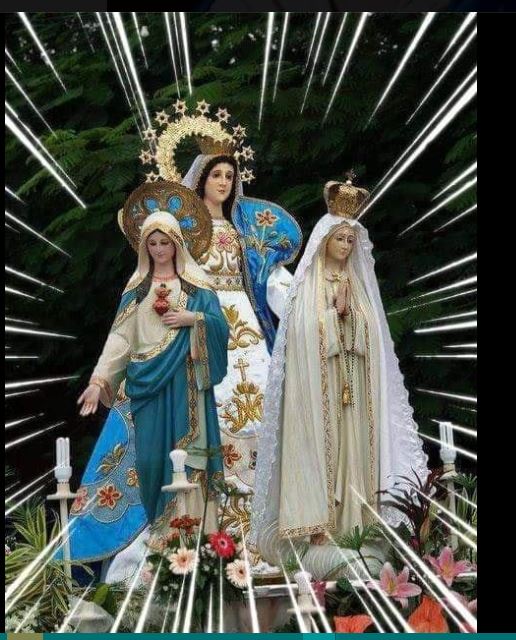
The images help me to focus on the particular mystery that I am contemplating as I say the Hail Mary on each bead.
Pray on Mondays Joyful, on Tuesdays Sorrowful, on Wednesdays Glorious, on Thursdays Luminous, on Fridays Sorrowful, on Saturdays Joyful, on Sundays Glorious Mysteries in union with millions of faithful believers on this Earth.
Joyful Mysteries
Luminous Mysteries
Sorrowful Mysteries
Glorious Mysteries
Prayers of the Rosary
Links to “How to pray the rosary” Popular Catholic Prayers
The Creed
I believe in God the father all mighty, creator of heaven and earth, and Jesus Christ, His only son,Who was conceived by the Holy Spirit, born of the Virgin Mary, suffered under Pontius Pilate, was crucified, died, and was buried,
He descended into hell; the third day He arose again from the dead; He ascended into Heaven, sitteth at the right hand of God, the Father Almighty, from thence He shall come to judge the living and the dead.
I believe in the Holy Spirit, the Holy Catholic Church, the communion of saints, the forgiveness of sins, the resurrection of the body, and life everlasting. Amen.
Our Father, Who art in Heaven, hallowed b e Thy name, Thy Kingdom come, Thy will be done on earth as it is in Heaven.
Give us this day our daily bread; and forgive us our trespasses as we forgive those who trespass against us; and lead us not into temptation, but deliver us from evil. Amen.
(this prayer is optional and may be said after all Glory Be to the Fathers…..)
O my Jesus, forgive us our sins. Save us from the fires of hell.
Lead all souls to heaven, especially those who are in most need of thy mercy.
Console the souls in Purgatory, particularly those most abandoned. Amen
Hail Mary, full of grace, the Lord is with thee, blessed art thou amongst women and blessed is the fruit of thy womb, Jesus.
Holy Mary Mother of God, pray for us sinners now and at the hour of our death. Amen.
Hail Holy Queen, Mother of Mercy, our life our sweetness and our hope.
To thee do we cry, poor banished children of Eve;
To thee do we send up our sighs, mourning and weeping in this valley of tears.
Turn then, most gracious advocate, thine eyes of mercy toward us and after this our exile show unto us the blessed fruit of thy womb, Jesus.
O clement, O loving, O sweet Virgin Mary!
That we maybe made worthy of the promises of Christ.
O God, whose only begotten Son, by His life, death, and resurrection, has purchased for us the rewards of eternal salvation.
Grant, we beseech Thee, that while meditating on these mysteries of the most holy Rosary of the Blessed Virgin Mary,
that we may imitate what they contain and obtain what they promise, through Christ our Lord. Amen.
Most Holy Trinity – Father, Son, and Holy Spirit – I adore thee profoundly. I offer Thee the most precious Body, Blood, Soul and Divinity of Jesus Christ, present in all the tabernacles of the world, in reparation for the outrages, sacrileges and indifference’s whereby He is offended. And through the infinite merits of His Most Sacred Heart and the Immaculate Heart of Mary, I beg of Thee the conversion of poor sinners.
Saint Michael, the Archangel, defend us in battle. Be our safeguard against the wickedness and snares of the devil. May God rebuke him, we humbly pray; and do you, O Prince of the heavenly host, by the power of God cast into hell Satan and all the evil spirits who wander through the world seeking the ruin of souls.
Amen.
 Thurzo Gizella Bible Study
Leave a comment