

There is a way that seems right to a man, but in the end it leads to death. Proverbs 14:12 NIV
Bible verses for today, Joshua Judges 13-16, 1 Corinthians 6, finish the Bible in one year. (The Catholic Bible, the original one that includes all the books not included in Bibles used by other Christians.)
Watch and Listen here: and for explanations For the Rosary Julie Green Prophecies, Catholic Answers, Daily Readings,
Listen to the verses, as you enjoy the clips and pictures and a song at the end. Also look for the weekly review on the “Gizella Price” channel, YouTube or on Rumble.
A Christian’s goal should be to create the Kingdom of God here on earth, as it is in Heaven. Not only, to get to Heaven.
Prophesies by Julie Green. Click the date following: 9/1/22 August 2022 Post July 2022 Posts October Posts 11/24/22 video, 11/22 all 12/22 all 1/23 all
Go Here to see how many of Julie Green’s prophesies are being fulfilled every day.
My other websites: Catholic, Prophets today, For Kids
Read Today’s Bible Verses following here:
Judges 13
1a The Israelites again did what was evil in the sight of the LORD, who therefore delivered them into the power of the Philistines for forty years.
2There was a certain man from Zorah, of the clan of the Danites,* whose name was Manoah. His wife was barren and had borne no children.b
3c An angel of the LORD appeared to the woman and said to her: Though you are barren and have had no children, you will conceive and bear a son.
4d Now, then, be careful to drink no wine or beer and to eat nothing unclean,
5for you will conceive and bear a son. No razor shall touch his head, for the boy is to be a nazirite for God* from the womb. It is he who will begin to save Israel from the power of the Philistines.
6The woman went and told her husband, “A man of God came to me; he had the appearance of an angel of God, fearsome indeed. I did not ask him where he came from, nor did he tell me his name.
7But he said to me, ‘You will conceive and bear a son. So drink no wine or beer, and eat nothing unclean. For the boy shall be a nazirite for God from the womb, until the day of his death.’”
8Manoah then prayed to the LORD. “Please, my Lord,” he said, “may the man of God whom you sent return to us to teach us what to do for the boy who is to be born.”
9God heard the prayer of Manoah, and the angel of God came again to the woman as she was sitting in the field; but her husband Manoah was not with her.
10The woman ran quickly and told her husband. “The man who came to me the other day has appeared to me,” she said to him;
11so Manoah got up and followed his wife. When he reached the man, he said to him, “Are you the one who spoke to my wife?” I am, he answered.
12Then Manoah asked, “Now, when what you say comes true, what rules must the boy follow? What must he do?”
13The angel of the LORD answered Manoah: Your wife must be careful about all the things of which I spoke to her.
14She must not eat anything that comes from the vine, she must not drink wine or beer, and she must not eat anything unclean. Let her observe all that I have commanded her.
15Then Manoah said to the angel of the LORD, “Permit us to detain you, so that we may prepare a young goat for you.”
16But the angel of the LORD answered Manoah: Though you detained me, I would not eat your food. But if you want to prepare a burnt offering, then offer it up to the LORD. For Manoah did not know that he was the angel of the LORD.
17* Then Manoah said to the angel of the LORD, “What is your name, that we may honor you when your words come true?”
18e The angel of the LORD answered him: Why do you ask my name? It is wondrous.
19f Then Manoah took a young goat with a grain offering and offered it on the rock to the LORD, who works wonders. While Manoah and his wife were looking on,
20as the flame rose to the heavens from the altar, the angel of the LORD ascended in the flame of the altar. When Manoah and his wife saw this, they fell on their faces to the ground;
21but the angel of the LORD was seen no more by Manoah and his wife.g Then Manoah, realizing that it was the angel of the LORD,
22said to his wife, “We will certainly die,* for we have seen God.”
23But his wife said to him, “If the LORD had meant to kill us, he would not have accepted a burnt offering and grain offering from our hands! Nor would he have let us see all this, or hear what we have heard.”
24The woman bore a son and named him Samson, and when the boy grew up the LORD blessed him.
25The spirit of the LORD came upon him for the first timeh in Mahaneh-dan, between Zorah and Eshtaol.
Judges 14
1Samson went down to Timnah where he saw one of the Philistine women.
2On his return he told his father and mother, “I saw in Timnah a woman, a Philistine. Get her for me as a wife.”
3a His father and mother said to him, “Is there no woman among your kinsfolk or among all your people, that you must go and take a woman from the uncircumcised Philistines?” But Samson answered his father, “Get her for me, for she is the one I want.”
4b Now his father and mother did not know that this had been brought about by the LORD, who was seeking an opportunity against the Philistines;* for at that time they ruled over Israel.c
5So Samson went down to Timnah with his father and mother. When he turned aside to the vineyards of Timnah, a young lion came roaring out toward him.
6d But the spirit of the LORD rushed upon Samson, and he tore the lion apart barehanded,e as one tears a young goat. Without telling his father or mother what he had done,
7he went down and spoke to the woman. He liked her.
8Later, when he came back to marry her, he turned aside to look at the remains of the lion, and there was a swarm of bees in the lion’s carcass, and honey.
9So he scooped the honey out into his hands and ate it as he went along. When he came to his father and mother, he gave them some to eat, but he did not tell them that he had scooped the honey from the lion’s carcass.
10His father also went down to the woman, and Samson gave a feast there, since it was customary for the young men to do this.
11Out of their fear of him, they brought thirty men to be his companions.
12Samson said to them, “Let me propose a riddle to you. If within the seven days of the feast you solve it for me, I will give you thirty linen tunics and thirty sets of garments.
13But if you cannot answer it for me, you must give me thirty tunics and thirty sets of garments.” “Propose your riddle,” they responded, “and we will listen to it.”
14So he said to them,
“Out of the eater came food,
out of the strong came sweetness.”
For three days they were unable to answer the riddle,
15and on the fourth day they said to Samson’s wife,f “Trick your husband into solving the riddle for us, or we will burn you and your family.g Did you invite us here to reduce us to poverty?”
16* h So Samson’s wife wept at his side and said, “You just hate me! You do not love me! You proposed a riddle to my people, but did not tell me the answer.” He said to her, “If I did not tell even my father or my mother, must I tell you?”
17But she wept beside him during the seven days the feast lasted, and on the seventh day, he told her the answer, because she pressed him, and she explained the riddle to her people.i
18On the seventh day, before the sun set, the men of the city said to him,
“What is sweeter than honey,
what is stronger than a lion?”
He replied to them,
“If you had not plowed with my heifer,
you would not have solved my riddle.”
19j The spirit of the LORD rushed upon him, and he went down to Ashkelon, where he killed thirty of their men and stripped them; he gave their garments to those who had answered the riddle. Then he went off to his own family in anger,
20and Samson’s wife was married to the companion who had been his best man.k
Judges 15
Samson Defeats the Philistines.
1After some time, in the season of the wheat harvest, Samson visited his wife, bringing a young goat. But when he said, “Let me go into my wife’s room,” her father would not let him go in.
2He said, “I thought you hated her, so I gave her to your best man. Her younger sister is better; you may have her instead.”
3Samson said to him, “This time I am guiltless if I harm the Philistines.”
4So Samson went and caught three hundred jackals, and turning them tail to tail, he took some torches and tied one between each pair of tails.
5He then kindled the torches and set the jackals loose in the standing grain of the Philistines, thus burning both the shocks and standing grain, the vineyards and olive groves.
6a When the Philistines asked, “Who has done this?” they were told, “Samson, the son-in-law of the Timnite, because his wife was taken and given to his best man.” So the Philistines went up and destroyed her and her family by fire.b
7Samson said to them, “If this is how you act, I will not stop until I have taken revenge on you.”
8And he struck them hip and thigh—a great slaughter. Then he went down and stayed in a cleft of the crag of Etam.
9The Philistines went up and encamped in Judah, deploying themselves against Lehi.c
10When the men of Judah asked, “Why have you come up against us?” they answered, “To take Samson prisoner; to do to him as he has done to us.”
11Three thousand men of Judah went down to the cleft of the crag of Etam and said to Samson, “Do you not know that the Philistines are our rulers? Why, then, have you done this to us?” He answered them, “As they have done to me, so have I done to them.”
12They said to him, “We have come down to bind you and deliver you to the Philistines.” Samson said to them, “Swear to me that you will not attack me yourselves.”
13“No,” they replied, “we will only bind you and hand you over to them. We will certainly not kill you.” So they bound him with two new ropes and brought him up from the crag.
14When he reached Lehi, and the Philistines came shouting to meet him,d the spirit of the LORD rushed upon him: the ropes around his arms became like flax that is consumed by fire, and his bonds melted away from his hands.
15Coming upon the fresh jawbone of an ass, he reached out, grasped it, and with it killed a thousand men.e
16Then Samson said,
“With the jawbone of an ass
I have piled them in a heap;
With the jawbone of an ass
I have slain a thousand men.”
17As he finished speaking he threw the jawbone from him; and so that place was named Ramath-lehi.*
18Being very thirsty, he cried to the LORD and said, “You have put this great victory into the hand of your servant. Must I now die of thirst and fall into the hands of the uncircumcised?”
19Then God split the cavity in Lehi, and water issued from it, and Samson drank till his spirit returned and he revived. Hence it is called En-hakkore* in Lehi to this day.
20Samson judged Israel for twenty years in the days of the Philistines.f
Judges 16
Once Samson went to Gaza, where he saw a prostitute and visited her.
2The people of Gaza were told, “Samson has come here,” and they surrounded him with an ambush at the city gate all night long. And all the night they waited, saying, “At morning light we will kill him.”
3Samson lay there until midnight. Then he rose at midnight, seized the doors of the city gate and the two gateposts, and tore them loose, bar and all. He hoisted them on his shoulders and carried them to the top of the ridge opposite Hebron.
4After that he fell in love with a woman in the Wadi Sorek whose name was Delilah.
5a The lords of the Philistines came up to her and said, “Trick him and find out where he gets his great strength, and how we may overcome and bind him so as to make him helpless. Then for our part, we will each give you eleven hundred pieces of silver.”
6So Delilah said to Samson, “Tell me where you get your great strength and how you may be bound so as to be made helpless.”
7“If they bind me with seven fresh bowstrings that have not dried,” Samson answered her, “I shall grow weaker and be like anyone else.”
8So the lords of the Philistines brought her seven fresh bowstrings that had not dried, and she bound him with them.
9She had men lying in wait in the room, and she said to him, “The Philistines are upon you, Samson!” But he snapped the bowstrings as a thread of tow is snapped by a whiff of flame; and his strength remained unexplained.
10Delilah said to Samson, “You have mocked me and told me lies. Now tell me how you may be bound.”
11“If they bind me tight with new ropes, with which no work has been done,” he answered her, “I shall grow weaker and be like anyone else.”
12So Delilah took new ropes and bound him with them. Then she said to him, “The Philistines are upon you, Samson!” For there were men lying in wait in the room. But he snapped the ropes off his arms like thread.
13Delilah said to Samson again, “Up to now you have mocked me and told me lies. Tell me how you may be bound.” He said to her, “If you weave the seven locks of my hair into the web and fasten them with the pin, I shall grow weaker and be like anyone else.”
14So when he went to bed, Delilah took the seven locks of his hair and wove them into the web, and fastened them with the pin. Then she said, “The Philistines are upon you, Samson!” Awakening from his sleep, he pulled out both the loom and the web.
15b Then she said to him, “How can you say ‘I love you’ when your heart is not mine? Three times already you have mocked me, and not told me where you get your great strength!”
16c She pressed him continually and pestered him till he was deathly weary of it.
17So he told her all that was in his heart and said, “No razor has touched my head, for I have been a nazirite for God from my mother’s womb.d If I am shaved, my strength will leave me, and I shall grow weaker and be like anyone else.”
18When Delilah realized that he had told her all that was in his heart, she summoned the lords of the Philistines, saying, “Come up this time, for he has told me all that is in his heart.” So the lords of the Philistines came to her and brought the money with them.e
19She put him to sleep on her lap, and called for a man who shaved off the seven locks of his hair. He immediately became helpless, for his strength had left him.*
20When she said “The Philistines are upon you, Samson!” he woke from his sleep and thought, “I will go out as I have done time and again and shake myself free.” He did not realize that the LORD had left him.
21But the Philistines seized him and gouged out his eyes. Then they brought him down to Gaza and bound him with bronze fetters, and he was put to grinding grain in the prison.
22But the hair of his head began to grow as soon as it was shaved.
23f The lords of the Philistines assembled to offer a great sacrifice to their god Dagon* and to celebrate. They said, “Our god has delivered Samson our enemy into our power.”
24When the people saw him, they praised their god. For they said,
“Our god has delivered into our power
our enemy, the ravager of our land,
the one who has multiplied our slain.”
25When their spirits were high, they said, “Call Samson that he may amuse us.” So they called Samson from the prison, and he provided amusement for them. They made him stand between the columns,
26and Samson said to the attendant who was holding his hand, “Put me where I may touch the columns that support the temple, so that I may lean against them.”
27The temple was full of men and women: all the lords of the Philistines were there, and from the roof about three thousand men and women looked on as Samson provided amusement.
28Samson cried out to the LORD and said, “Lord GOD, remember me! Strengthen me only this once that I may avenge myself on the Philistines at one blow for my two eyes.”
29Samson grasped the two middle columns on which the temple rested and braced himself against them, one at his right, the other at his left.
30Then saying, “Let me die with the Philistines!” Samson pushed hard, and the temple fell upon the lords and all the people who were in it. Those he killed by his dying were more than those he had killed during his lifetime.
31His kinsmen and all his father’s house went down and bore him up for burial in the grave of Manoah his father between Zorah and Eshtaol. He had judged Israel for twenty years.g
1 Corinthians 6
Lawsuits before Unbelievers.*
1How can any one of you with a case against another dare to bring it to the unjust for judgment instead of to the holy ones?
2Do you not know that the holy ones will judge the world? If the world is to be judged by you, are you unqualified for the lowest law courts?a
3Do you not know that we will judge angels? Then why not everyday matters?
4If, therefore, you have courts for everyday matters, do you seat as judges people of no standing in the church?
5I say this to shame you. Can it be that there is not one among you wise enough to be able to settle a case between brothers?
6But rather brother goes to court against brother, and that before unbelievers?
7Now indeed [then] it is, in any case, a failure on your part that you have lawsuits against one another. Why not rather put up with injustice? Why not rather let yourselves be cheated?b
8Instead, you inflict injustice and cheat, and this to brothers.
9* Do you not know that the unjust will not inherit the kingdom of God? Do not be deceived; neither fornicators nor idolaters nor adulterers nor boy prostitutes* nor sodomitesc
10nor thieves nor the greedy nor drunkards nor slanderers nor robbers will inherit the kingdom of God.
11That is what some of you used to be; but now you have had yourselves washed, you were sanctified, you were justified in the name of the Lord Jesus Christ and in the Spirit of our God.d
Sexual Immorality.*
12“Everything is lawful for me,”* but not everything is beneficial. “Everything is lawful for me,” but I will not let myself be dominated by anything.e
13“Food for the stomach and the stomach for food,” but God will do away with both the one and the other. The body, however, is not for immorality, but for the Lord, and the Lord is for the body;
14God raised the Lord and will also raise us by his power.f
15Do you not know that your bodies are members of Christ? Shall I then take Christ’s members and make them the members of a prostitute?* Of course not!g
16[Or] do you not know that anyone who joins himself to a prostitute becomes one body with her? For “the two,” it says, “will become one flesh.”h
17But whoever is joined to the Lord becomes one spirit with him.i
18Avoid immorality. Every other sin a person commits is outside the body, but the immoral person sins against his own body.*
19Do you not know that your body is a temple* of the holy Spirit within you, whom you have from God, and that you are not your own?j
20For you have been purchased at a price. Therefore, glorify God in your body.k
Sermons Rosary Prayers Catholic Answers
The complete Book of Judges
THE BOOK OF JUDGES
The Hebrew word translated “Judges” in the English title of the book refers not to specialized judicial officers or magistrates but to leaders in general. According to the biblical narrative these judges led Israel from the end of the conquest of Canaan until the beginning of the monarchy. The period of the Judges, therefore, extended from the death of Joshua (Jos 24:29–31; cf. Jgs 1:1) until the installation of Saul as Israel’s first king by the prophet Samuel, who was also the last judge (see 1 Sm 7:15–17).
The Book of Judges begins with two introductory passages. The first (chap. 1) gives a description of the situation in Canaan after the Israelite conquest. It emphasizes the continued existence of the indigenous inhabitants of Canaan in many parts of the land because of Israel’s inability to drive them out completely. The second passage (2:1–3:6) is a thematic introduction to the period of the Judges, describing a cyclical pattern of infidelity, oppression, “crying out,” and deliverance (see note on 2:10–19).
The main part of the book (3:7–16:31) consists of a series of stories about thirteen leaders whose careers are described in greater or lesser detail. The exploits of six of these—Othniel, Ehud, Deborah, Gideon, Jephthah, and Samson—are related at length, and all are shown to have delivered Israel from oppression or danger. They are customarily called “major judges,” whereas the other six—Shamgar, Tola, Jair, Ibzan, Elon, and Abdon—who appear only in brief notices, are designated “minor judges.” The thirteenth, Abimelech, is included in neither group, since his story is essentially a continuation of that of Gideon and his career is presented as deplorable, a cautionary tale of royal ambition.
The final section of the book consists of two episodes, one about the migration of the tribe of Dan (chaps. 17–18) and the other about an intertribal war directed against the tribe of Benjamin (chaps. 19–21). These stories illustrate the religious and political disorder that prevailed at the time when, as yet, “there was no king in Israel” (see note on 17:6).
The principal contribution of the Deuteronomistic historian to the Book of Judges is the thematic introduction to—and theological evaluation of—the period of the Judges in 2:1–3:6, as well as editorial comments structuring the narrative throughout, e.g., 3:7; 4:1; etc. The historian drew the stories of the judges themselves from older sources, which could have existed in written form but derive ultimately from oral tradition.
Thus the principal divisions of the book in outline are as follows:
- The Situation in Canaan Following the Israelite Conquest (1:1–3:6)
- Stories of the Judges (3:7–16:31)
- Further Stories of the Tribes of Dan and Benjamin (17:1–21:25)
The book of 1 Corinthians
THE FIRST LETTER TO THE CORINTHIANS
Paul’s first letter to the church of Corinth provides us with a fuller insight into the life of an early Christian community of the first generation than any other book of the New Testament. Through it we can glimpse both the strengths and the weaknesses of this small group in a great city of the ancient world, men and women who had accepted the good news of Christ and were now trying to realize in their lives the implications of their baptism. Paul, who had founded the community and continued to look after it as a father, responds both to questions addressed to him and to situations of which he had been informed. In doing so, he reveals much about himself, his teaching, and the way in which he conducted his work of apostleship. Some things are puzzling because we have the correspondence only in one direction. For the person studying this letter, it seems to raise as many questions as it answers, but without it our knowledge of church life in the middle of the first century would be much poorer.
Paul established a Christian community in Corinth about the year 51, on his second missionary journey. The city, a commercial crossroads, was a melting pot full of devotees of various pagan cults and marked by a measure of moral depravity not unusual in a great seaport. The Acts of the Apostles suggests that moderate success attended Paul’s efforts among the Jews in Corinth at first, but that they soon turned against him (Acts 18:1–8). More fruitful was his year and a half spent among the Gentiles (Acts 18:11), which won to the faith many of the city’s poor and underprivileged (1 Cor 1:26). After his departure the eloquent Apollos, an Alexandrian Jewish Christian, rendered great service to the community, expounding “from the scriptures that the Messiah is Jesus” (Acts 18:24–28).
While Paul was in Ephesus on his third journey (1 Cor 16:8; Acts 19:1–20), he received disquieting news about Corinth. The community there was displaying open factionalism, as certain members were identifying themselves exclusively with individual Christian leaders and interpreting Christian teaching as a superior wisdom for the initiated few (1 Cor 1:10–4:21). The community lacked the decisiveness to take appropriate action against one of its members who was living publicly in an incestuous union (1 Cor 5:1–13). Other members engaged in legal conflicts in pagan courts of law (1 Cor 6:1–11); still others may have participated in religious prostitution (1 Cor 6:12–20) or temple sacrifices (1 Cor 10:14–22).
The community’s ills were reflected in its liturgy. In the celebration of the Eucharist certain members discriminated against others, drank too freely at the agape, or fellowship meal, and denied Christian social courtesies to the poor among the membership (1 Cor 11:17–22). Charisms such as ecstatic prayer, attributed freely to the impulse of the holy Spirit, were more highly prized than works of charity (1 Cor 13:1–2, 8), and were used at times in a disorderly way (1 Cor 14:1–40). Women appeared at the assembly without the customary head-covering (1 Cor 11:3–16), and perhaps were quarreling over their right to address the assembly (1 Cor 14:34–35).
Still other problems with which Paul had to deal concerned matters of conscience discussed among the faithful members of the community: the eating of meat that had been sacrificed to idols (1 Cor 8:1–13), the use of sex in marriage (1 Cor 7:1–7), and the attitude to be taken by the unmarried toward marriage in view of the possible proximity of Christ’s second coming (1 Cor 7:25–40). There was also a doctrinal matter that called for Paul’s attention, for some members of the community, despite their belief in the resurrection of Christ, were denying the possibility of general bodily resurrection.
To treat this wide spectrum of questions, Paul wrote this letter from Ephesus about the year 56. The majority of the Corinthian Christians may well have been quite faithful. Paul writes on their behalf to guard against the threats posed to the community by the views and conduct of various minorities. He writes with confidence in the authority of his apostolic mission, and he presumes that the Corinthians, despite their deficiencies, will recognize and accept it. On the other hand, he does not hesitate to exercise his authority as his judgment dictates in each situation, even going so far as to promise a direct confrontation with recalcitrants, should the abuses he scores remain uncorrected (1 Cor 4:18–21).
The letter illustrates well the mind and character of Paul. Although he is impelled to insist on his office as founder of the community, he recognizes that he is only one servant of God among many and generously acknowledges the labors of Apollos (1 Cor 3:5–8). He provides us in this letter with many valuable examples of his method of theological reflection and exposition. He always treats the questions at issue on the level of the purity of Christian teaching and conduct. Certain passages of the letter are of the greatest importance for the understanding of early Christian teaching on the Eucharist (1 Cor 10:14–22; 11:17–34) and on the resurrection of the body (1 Cor 15:1–58).
Paul’s authorship of 1 Corinthians, apart from a few verses that some regard as later interpolations, has never been seriously questioned. Some scholars have proposed, however, that the letter as we have it contains portions of more than one original Pauline letter. We know that Paul wrote at least two other letters to Corinth (see 1 Cor 5:9; 2 Cor 2:3–4) in addition to the two that we now have; this theory holds that the additional letters are actually contained within the two canonical ones. Most commentators, however, find 1 Corinthians quite understandable as a single coherent work.
The principal divisions of the First Letter to the Corinthians are the following:
- Address (1:1–9)
- Disorders in the Corinthian Community (1:10–6:20)
- Answers to the Corinthians’ Questions (7:1–11:1)
- Problems in Liturgical Assemblies (11:2–14:40)
- The Resurrection (15:1–58)
- Conclusion (16:1–24)
Sermons on the Book of 1 Corinthians
SERMONS ON THE BOOK OF Judges
Catholic Daily Readings at every Mass
You can also read it, if you watch this on You Tube, under the videos
Sermons Rosary Prayers Catholic Answers Scriptural Rosary
Prophesies by Julie Green. Click the date following: December 22 Posts, November 22 Posts, September Posts, August 2022 Post July 2022 Posts October Posts video,
Go Here to see how many of Julie Green’s prophesies are being fulfilled every day.
Prophetic words given on November 24, 2022
See prophesy blog for Jan 2nd 2023.
Dr. Myles Munroe
I am including a video by Dr. Myles Munroe, I’ve listened to him back in the nineties, and rediscovered him recently. Now his perspective seems to be a good way to also look at scripture. In Pursuit of Purpose – Book Highlights
Sermons Rosary Prayers Catholic Answers
Called to Communion Dr. David Anders

Rosary Mysteries
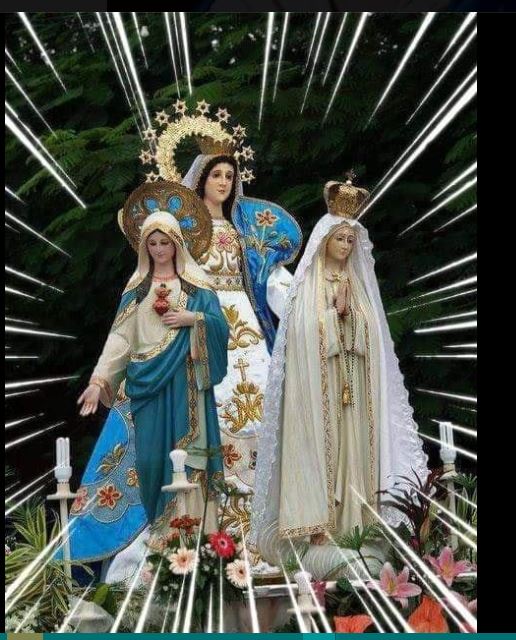
The images help me to focus on the particular mystery that I am contemplating as I say the Hail Mary on each bead.
Pray on Mondays Joyful, on Tuesdays Sorrowful, on Wednesdays Glorious, on Thursdays Luminous, on Fridays Sorrowful, on Saturdays Joyful, on Sundays Glorious Mysteries in union with millions of faithful believers on this Earth.
Joyful Mysteries
Luminous Mysteries
Sorrowful Mysteries
Glorious Mysteries
Prayers of the Rosary
Links to “How to pray the rosary” Popular Catholic Prayers
The Creed
I believe in God the father all mighty, creator of heaven and earth, and Jesus Christ, His only son,Who was conceived by the Holy Spirit, born of the Virgin Mary, suffered under Pontius Pilate, was crucified, died, and was buried,
He descended into hell; the third day He arose again from the dead; He ascended into Heaven, sitteth at the right hand of God, the Father Almighty, from thence He shall come to judge the living and the dead.
I believe in the Holy Spirit, the Holy Catholic Church, the communion of saints, the forgiveness of sins, the resurrection of the body, and life everlasting. Amen.
Our Father, Who art in Heaven, hallowed b e Thy name, Thy Kingdom come, Thy will be done on earth as it is in Heaven.
Give us this day our daily bread; and forgive us our trespasses as we forgive those who trespass against us; and lead us not into temptation, but deliver us from evil. Amen.
(this prayer is optional and may be said after all Glory Be to the Fathers…..)
O my Jesus, forgive us our sins. Save us from the fires of hell.
Lead all souls to heaven, especially those who are in most need of thy mercy.
Console the souls in Purgatory, particularly those most abandoned. Amen
Hail Mary, full of grace, the Lord is with thee, blessed art thou amongst women and blessed is the fruit of thy womb, Jesus.
Holy Mary Mother of God, pray for us sinners now and at the hour of our death. Amen.
Hail Holy Queen, Mother of Mercy, our life our sweetness and our hope.
To thee do we cry, poor banished children of Eve;
To thee do we send up our sighs, mourning and weeping in this valley of tears.
Turn then, most gracious advocate, thine eyes of mercy toward us and after this our exile show unto us the blessed fruit of thy womb, Jesus.
O clement, O loving, O sweet Virgin Mary!
That we maybe made worthy of the promises of Christ.
O God, whose only begotten Son, by His life, death, and resurrection, has purchased for us the rewards of eternal salvation.
Grant, we beseech Thee, that while meditating on these mysteries of the most holy Rosary of the Blessed Virgin Mary,
that we may imitate what they contain and obtain what they promise, through Christ our Lord. Amen.
Most Holy Trinity – Father, Son, and Holy Spirit – I adore thee profoundly. I offer Thee the most precious Body, Blood, Soul and Divinity of Jesus Christ, present in all the tabernacles of the world, in reparation for the outrages, sacrileges and indifference’s whereby He is offended. And through the infinite merits of His Most Sacred Heart and the Immaculate Heart of Mary, I beg of Thee the conversion of poor sinners.
Saint Michael, the Archangel, defend us in battle. Be our safeguard against the wickedness and snares of the devil. May God rebuke him, we humbly pray; and do you, O Prince of the heavenly host, by the power of God cast into hell Satan and all the evil spirits who wander through the world seeking the ruin of souls.
Amen.
 Thurzo Gizella Bible Study
Leave a comment