

Every day they continued to meet together in the temple courts. They broke bread in their homes and are together with glad and sincere hearts. Acts 2:46 NIV
Bible verses for today, Joshua Joshua 20-24, 1 Corinthians 1-25 finish the Bible in one year. (The Catholic Bible, the original one that includes all the books not included in Bibles used by other Christians.)
Watch and Listen here: and for explanations For the Rosary Julie Green Prophecies, Catholic Answers, Daily Readings,
Listen to the verses, as you enjoy the clips and pictures and a song at the end. Also look for the weekly review on the “Gizella Price” channel, YouTube or on Rumble.
A Christian’s goal should be to create the Kingdom of God here on earth, as it is in Heaven. Not only, to get to Heaven.
Prophesies by Julie Green. Click the date following: 9/1/22 August 2022 Post July 2022 Posts October Posts 11/24/22 video, 11/22 all 12/22 all 1/23 all
Go Here to see how many of Julie Green’s prophesies are being fulfilled every day.
My other websites: Catholic, Prophets today, For Kids
Read Today’s Bible Verses following here:
Joshua 20
2Tell the Israelites: Designate for yourselves the cities of refuge of which I spoke to you through Moses,
3to which anyone guilty of inadvertent and unintentional homicide may flee for asylum from the avenger of blood.
4To one of these cities the killer shall flee, and standing at the entrance of the city gate, shall plead his case in the hearing of the elders of the city, who must receive him and assign him a place in which to live among them.
5Though the avenger of blood pursues him, they shall not deliver up to him the one who killed a neighbor unintentionally, when there had been no hatred previously.
6Once he has stood judgment before the community, he shall live on in that city until the death of the high priest who is in office at the time. Then the killer may return home to the city from where he originally fled.
7So they set apart Kedesh in Galilee in the mountain region of Naphtali, Shechem in the mountain region of Ephraim, and Kiriath-arba (that is, Hebron) in the mountain region of Judah.b
8And beyond the Jordan east of Jericho they designated Bezer in the wilderness on the tableland in the tribe of Reuben, Ramoth in Gilead in the tribe of Gad, and Golan in Bashan in the tribe of Manasseh.c
9These are the designated cities to which any Israelite or alien residing among them who had killed a person unintentionally might flee to escape death at the hand of the avenger of blood, until the killer could appear before the community.
Joshua 21
1The heads of the Levite families* approached Eleazar the priest, Joshua, son of Nun, and the heads of families of the other tribes of the Israelitesa
2at Shiloh in the land of Canaan, and said to them, “The LORD commanded, through Moses, that cities be given us to dwell in, with pasture lands for our livestock.”b
3Out of their own heritage, according to the command of the LORD, the Israelites gave the Levites the following cities with their pasture lands.
4When the first lot among the Levites fell to the clans of the Kohathites, the descendants of Aaron the priest obtained by lot from the tribes of Judah, Simeon, and Benjamin, thirteen cities.
5From the clans of the tribe of Ephraim, from the tribe of Dan, and from the half-tribe of Manasseh, the rest of the Kohathites obtained by lot ten cities.c
6From the clans of the tribe of Issachar, from the tribe of Asher, from the tribe of Naphtali, and from the half-tribe of Manasseh, the Gershonites obtained by lot thirteen cities.
7From the tribes of Reuben, Gad, and Zebulun, the clans of the Merarites obtained twelve cities.
8These cities with their pasture lands the Israelites gave by lot to the Levites, as the LORD had commanded through Moses.
9d From the tribes of the Judahites and Simeonites they gave the following cities
10and assigned them to the descendants of Aaron in the Kohathite clan of the Levites, since the first lot fell to them:
11first, Kiriath-arba (Arba was the father of Anak), that is, Hebron, in the mountain region of Judah, with the adjacent pasture lands,
12although the open country and villages belonging to the city had been given to Caleb, son of Jephunneh, as his holding.e
13Thus to the descendants of Aaron the priest were given the city of refuge for homicides at Hebron, with its pasture lands; also, Libnah with its pasture lands,
14Jattir with its pasture lands, Eshtemoa with its pasture lands,
15Holon with its pasture lands, Debir with its pasture lands,
16Ain with its pasture lands, Juttah with its pasture lands, and Beth-shemesh with its pasture lands: nine cities from these two tribes.
17From the tribe of Benjamin they obtained Gibeon with its pasture lands, Geba with its pasture lands,
18Anathothf with its pasture lands, and Almon with its pasture lands: four cities.
19These cities which with their pasture lands belonged to the priestly descendants of Aaron, were thirteen in all.
Cities of the Other Kohathites.
20g The rest of the Kohathite clans among the Levites obtained by lot, from the tribe of Ephraim, four cities.
21They were assigned, with its pasture lands, the city of refuge for homicides at Shechem in the mountain region of Ephraim; also Gezer with its pasture lands,
22Kibzaim with its pasture lands, and Beth-horon with its pasture lands.
23From the tribe of Dan they obtained Elteke with its pasture lands, Gibbethon with its pasture lands,
24Aijalon with its pasture lands, and Gath-rimmon with its pasture lands: four cities.
25From the half-tribe of Manasseh, Taanach with its pasture lands, and Gath-rimmon with its pasture lands: two cities.
26These cities which with their pasture lands belonged to the rest of the Kohathite clans were ten in all.
27h The Gershonite clan of the Levites received from the half-tribe of Manasseh the city of refuge for homicides at Golan in Bashan, with its pasture lands; and also Beth-Astharoth with its pasture lands: two cities.
28From the tribe of Issachar they obtained Kishion with its pasture lands, Daberath with its pasture lands,
29Jarmuth with its pasture lands, and En-gannim with its pasture lands: four cities.
30From the tribe of Asher, Mishal with its pasture lands, Abdon with its pasture lands,
31Helkath with its pasture lands, and Rehob with its pasture lands: four cities.
32From the tribe of Naphtali, the city of refuge for homicides at Kedesh in Galilee, with its pasture lands; also Hammath with its pasture lands, and Kartan with its pasture lands: three cities.
33The cities which belonged to the Gershonite clans, with their pasture lands, were thirteen in all.
34i The Merarite clans, the last of the Levites, received, from the tribe of Zebulun, Jokneam with its pasture lands, Kartah with its pasture lands,
35Dimnah with its pasture lands, and Nahalal with its pasture lands: four cities.
36Also, across the Jordan, from the tribe of Reuben, the city of refuge for homicides at Bezer with its pasture lands, Jahaz with its pasture lands,
37Kedemoth with its pasture lands, and Mephaath with its pasture lands: four cities.
38From the tribe of Gad, the city of refuge for homicides at Ramoth in Gilead with its pasture lands, Mahanaim with its pasture lands,
39Heshbon with its pasture lands, and Jazer with its pasture lands: four cities in all.
40The cities allotted to the Merarite clans, the last of the Levites, were therefore twelve in all.
41Thus the total number of citiesj within the territory of the Israelites which, with their pasture lands, belonged to the Levites, was forty-eight.
42With each and every one of these cities went the pasture lands round about it.
43And so the LORD gave Israel the entire land he had sworn to their ancestors he would give them.k Once they had taken possession of it, and dwelt in it,
44the LORD gave them peace on every side, just as he had promised their ancestors. Not one of their enemies could withstand them; the LORD gave all their enemies into their power.
45Not a single word of the blessingl that the LORD had promised to the house of Israel failed; it all came true.
Joshua 22
1At that time Joshua summoned the Reubenites, the Gadites, and the half-tribe of Manasseh
2and said to them:a “You have observed all that Moses, the servant of the LORD, commanded you, and have listened to my voice in everything I commanded you.
3For many years now, even until today, you have not abandoned your allies, but have taken care to observe the commands of the LORD, your God.
4Now that the LORD, your God, has settled your allies as he promised them, you may return to your tents, to your own land, which Moses, the servant of the LORD, gave you, across the Jordan.b
5But be very careful to observe the commandment and the law which Moses, the servant of the LORD, commanded you: love the LORD, your God,c follow him in all his ways, keep his commandments, hold fast to him, and serve him with your whole heart and your whole self.”
6Joshua then blessed them and sent them away, and they went to their tents.
7(For, to half of the tribe of Manasseh Moses had assigned land in Bashan;d and to the other half Joshua had given a portion along with their allies west of the Jordan.) When Joshua sent them away to their tents and blessed them,
8he said, “Now that you are returning to your own tents with great wealth, with abundant livestock, with silver, gold, bronze and iron, and with a very large supply of clothing, divide these spoils of your enemies with your allies there.”e
9So the Reubenites, the Gadites, and the half-tribe of Manasseh left the other Israelites at Shiloh in the land of Canaan and returned to the land of Gilead, their own land, which they had received according to the LORD’s command through Moses.f
10When the Reubenites, the Gadites, and the half-tribe of Manasseh came to the region of the Jordan in the land of Canaan, they built an altar there at the Jordan, an impressively large altar.
11The other Israelites heard the report:g “The Reubenites, the Gadites, and the half-tribe of Manasseh have built an altar” in the region of the Jordan facing the land of Canaan,* across from the Israelites.
12When the Israelites heard this, they assembled at Shiloh, as the entire Israelite community to take military action against them.*
Accusation of the Western Tribes.
13The Israelites sent Phinehas, son of Eleazar the priest, to the Reubenites, the Gadites, and the half-tribe of Manasseh in the land of Gilead,h
14and with him ten leaders, one from each tribe of Israel, each one the head of an ancestral house among the clans of Israel.
15When these came to the Reubenites, the Gadites, and the half-tribe of Manasseh in the land of Gilead, they said to them:
16“Thus says the whole community of the LORD: What act of treachery is this you have committed against the God of Israel? This day you have turned from following the LORD; by building an altar of your own you have rebelled against the LORD this day.
17Is the iniquity of Peor not enough, by which we made ourselves impure, even to this day, and a plague came upon the community of the LORD?i
18If today you turn away from following the LORD, and rebel against the LORD, tomorrow he will be angry with the whole community of Israel!
19If you consider the land you now possess unclean,* cross over to the land the LORD possesses, where the tabernacle of the LORD stands, and share that with us. But do not rebel against the LORD, nor involve us in rebellion, by building an altar of your own in addition to the altar of the LORD, our God.
20When Achan, son of Zerah,j acted treacherously by violating the ban, was it not upon the entire community of Israel that wrath fell? Though he was but a single man, he did not perish alone* for his guilt!”
21The Reubenites, the Gadites, and the half-tribe of Manasseh replied to the heads of the Israelite clans:
22“The LORD is the God of gods. The LORD, the God of gods,* knows and Israel shall know. If now we have acted out of rebellion or treachery against the LORD, our God, do not try to save us this day,
23and if we have built an altar of our own to turn from following the LORD, or to sacrifice burnt offerings, grain offerings, or communion sacrifices upon it, the LORD himself will exact the penalty.
24We did it rather out of our anxious concern lest in the future your children should say to our children: ‘What have you to do with the LORD, the God of Israel?
25For the LORD has placed the Jordan as a boundary between you and us, you Reubenites and Gadites. You have no share in the LORD.’ Thus your children would prevent ours from revering the LORD.
26So we thought, ‘Let us act for ourselves by building this altar of our own’—not for burnt offerings or sacrifice,
27k but as witness between us and you and our descendants, that we have the right to provide for the service of the LORD in his presence with our burnt offerings, sacrifices, and communion sacrifices. Now in the future your children cannot say to our children, ‘You have no share in the LORD.’
28Our thought was that, if in the future they should speak thus to us or to our descendants, we could answer: ‘Look at the copy of the altar of the LORD which our ancestors made, not for burnt offerings or for sacrifices, but to witness* between you and us.’
29Far be it from us to rebel against the LORD or to turn now from following the LORD by building an altar for burnt offering, grain offering, or sacrifice in addition to the altar of the LORD, our God, which stands before his tabernacle.”
30When Phinehas the priest and the leaders of the community, the heads of the Israelite clans, heard what the Reubenites, the Gadites, and the Manassites had to say, they were satisfied.
31Phinehas, son of Eleazar the priest, said to the Reubenites, the Gadites, and the Manassites, “Today we know that the LORD is in our midst. Since you have not rebelled against the LORD by this act of treachery, you have delivered the Israelites from the hand of the LORD.”
32Phinehas, son of Eleazar the priest, and the leaders returned from the Reubenites and the Gadites in the land of Gilead to the Israelites in the land of Canaan, and reported the matter to them.
33The report satisfied the Israelites, who blessed God and decided not to take military action against the Reubenites and Gadites nor to ravage the land where they lived.
34The Reubenites and the Gadites gave the altar its name* as a witness among them that the LORD is God.
Joshua 23
1Many years later, after the LORD had given the Israelites rest from all their enemies round about them, and when Joshua was old and advanced in years,a
2he summoned all Israel, including their elders, leaders, judges, and officers, and said to them: “I am old and advanced in years.b
3You have seen all that the LORD, your God, has done for you against all these nations; for it has been the LORD, your God, who fought for you.
4c See, I have apportioned among your tribes as their heritage the nations that survive, as well as those I destroyed, between the Jordan and the Great Sea in the west.
5The LORD, your God, will drive them out and dispossess them at your approach, so that you will take possession of their land as the LORD, your God, promised you.
6Therefore be strong and be careful to observe all that is written in the book of the law of Moses, never turning from it right or left,d
7or mingling with these nations that survive among you. You must not invoke their gods by name, or swear by them, or serve them, or bow down to them,e
8but you must hold fast to the LORD, your God, as you have done up to this day.
9At your approach the LORD has dispossessed great and strong nations; not one has withstood you up to this day.
10One of you puts to flight a thousand, because it is the LORD, your God, himself who fights for you,f as he promised you.
11As for you, take great care to love the LORD, your God.
12For if you ever turn away from him and join with the remnant of these nations that survive among you, by intermarrying and intermingling with them,g
13know for certain that the LORD, your God, will no longer dispossess these nations at your approach. Instead they will be a snare and a trap for you, a scourge for your sides and thorns for your eyes, until you perish from this good land which the LORD, your God, has given you.h
14“Today, as you see, I am going the way of all the earth.* So now acknowledge with your whole heart and soul that not one of all the promises the LORD, your God, made concerning you has failed. Every one has come true for you; not one has failed.
15i But just as every promise the LORD, your God, made to you has come true for you, so will he bring upon you every threat,* even so far as to exterminate you from this good land which the LORD, your God, has given you.
16If you transgress the covenant of the LORD, your God, which he enjoined on you, to go and serve other gods and bow down to them, the anger of the LORD will flare up against you and you will quickly perish from the good land he has given you.”
Joshua 24
1a Joshua gathered together all the tribes of Israel at Shechem, summoning the elders, leaders, judges, and officers of Israel. When they stood in ranks before God,
2Joshua addressed all the people: “Thus says the LORD, the God of Israel: In times past your ancestors, down to Terah,b father of Abraham and Nahor, lived beyond the River* and served other gods.
3But I brought your father Abraham from the region beyond the River and led him through the entire land of Canaan.c I made his descendants numerous, and gave him Isaac.
4To Isaac I gave Jacob and Esau.d To Esau I assigned the mountain region of Seir to possess, while Jacob and his children went down to Egypt.
5“Then I sent Moses and Aaron, and struck Egypt with the plagues and wonders that I wrought in her midst.e Afterward I led you out.
6And when I led your ancestors out of Egypt, you came to the sea, and the Egyptians pursued your ancestors to the Red Sea with chariots and charioteers.f
7When they cried out to the LORD,g he put darkness between you and the Egyptians, upon whom he brought the sea so that it covered them. Your eyes saw what I did to Egypt. After you dwelt a long time in the wilderness,
8h I brought you into the land of the Amorites who lived east of the Jordan. They fought against you, but I delivered them into your power. You took possession of their land, and I destroyed them at your approach.
9i Then Balak, son of Zippor, king of Moab, prepared to war against Israel. He summoned Balaam, son of Beor, to curse you,
10j but I would not listen to Balaam. Instead, he had to bless you, and I delivered you from his power.
11Once you crossed the Jordank and came to Jericho, the citizens of Jericho fought against you, but I delivered them also into your power.
12And I sent the hornets* ahead of you which drove them—the Amorites, Perizzites, Canaanites, Hittites, Girgashites, Hivites, and Jebusites—out of your way; it was not your sword or your bow.l
13I gave you a land you did not till and cities you did not build, to dwell in; you ate of vineyards and olive groves you did not plant.m
14n “Now, therefore, fear the LORD and serve him completely and sincerely. Cast out the gods your ancestors served beyond the River and in Egypt, and serve the LORD.
15o If it is displeasing to you to serve the LORD, choose today whom you will serve, the gods your ancestors served beyond the River or the gods of the Amorites in whose country you are dwelling. As for me and my household, we will serve the LORD.”
16But the people answered, “Far be it from us to forsake the LORD to serve other gods.
17For it was the LORD, our God, who brought us and our ancestors up out of the land of Egypt, out of the house of slavery. He performed those great signs before our very eyes and protected us along our entire journey and among all the peoples through whom we passed.
18At our approach the LORD drove out all the peoples, including the Amorites who dwelt in the land. Therefore we also will serve the LORD, for he is our God.”
19Joshua in turn said to the people, “You may not be able to serve the LORD, for he is a holy God; he is a passionate Godp who will not forgive your transgressions or your sins.
20If you forsake the LORD and serve strange gods, he will then do evil to you and destroy you, after having done you good.”
21But the people answered Joshua, “No! We will serve the LORD.”
22Joshua therefore said to the people, “You are witnesses against yourselves that you have chosen to serve the LORD.” They replied, “We are witnesses!”
23“Now, therefore, put away the foreign gods that are among you and turn your hearts to the LORD, the God of Israel.”
24Then the people promised Joshua, “We will serve the LORD, our God, and will listen to his voice.”
25So Joshua made a covenant with the people that day and made statutes and ordinances for them at Shechem.
26Joshua wrote these words in the book of the law of God. Then he took a large stone and set it up there under the terebinth that was in the sanctuary of the LORD.q
27And Joshua said to all the people, “This stone shall be our witness,r for it has heard all the words which the LORD spoke to us. It shall be a witness against you, should you wish to deny your God.”
28Then Joshua dismissed the people, each to their own heritage.s
29t After these events, Joshua, son of Nun, servant of the LORD, died at the age of a hundred and ten,
30and they buried him within the borders of his heritage at Timnath-serahu in the mountain region of Ephraim north of Mount Gaash.*
31Israel served the LORD during the entire lifetime of Joshua, and of those elders who outlived Joshua and who knew all the work the LORD had done for Israel.
32v The bones of Joseph,* which the Israelites had brought up from Egypt, were buried in Shechem in the plot of ground Jacob had bought from the sons of Hamor, father of Shechem, for a hundred pieces of money. This was a heritage of the descendants of Joseph.
33When Eleazar, son of Aaron, also died, he was buried on the hill which had been given to his son Phinehasw in the mountain region of Ephraim.
1 Corinthians 1 -25
1Paul, called to be an apostle of Christ Jesus by the will of God,* and Sosthenes our brother,a
2to the church of God that is in Corinth, to you who have been sanctified in Christ Jesus, called to be holy, with all those everywhere who call upon the name of our Lord Jesus Christ, their Lord and ours.b
3Grace to you and peace from God our Father and the Lord Jesus Christ.
4I give thanks to my God always on your account for the grace of God bestowed on you in Christ Jesus,
5that in him you were enriched in every way, with all discourse and all knowledge,
6as the testimony* to Christ was confirmed among you,
7so that you are not lacking in any spiritual gift as you wait for the revelation of our Lord Jesus Christ.c
8He will keep you firm to the end, irreproachable on the day of our Lord Jesus [Christ].d
9God is faithful, and by him you were called to fellowship with his Son, Jesus Christ our Lord.e
II. Disorders in the Corinthian Community
10I urge you, brothers, in the name of our Lord Jesus Christ, that all of you agree in what you say, and that there be no divisions among you, but that you be united in the same mind and in the same purpose.f
11For it has been reported to me about you, my brothers, by Chloe’s people, that there are rivalries among you.
12I mean that each of you is saying, “I belong to* Paul,” or “I belong to Apollos,” or “I belong to Cephas,” or “I belong to Christ.”g
13* Is Christ divided? Was Paul crucified for you? Or were you baptized in the name of Paul?
14I give thanks [to God] that I baptized none of you except Crispus and Gaius,h
15so that no one can say you were baptized in my name.
16(I baptized the household of Stephanas also; beyond that I do not know whether I baptized anyone else.)i
17* For Christ did not send me to baptize but to preach the gospel, and not with the wisdom of human eloquence,* so that the cross of Christ might not be emptied of its meaning.j
18The message of the cross is foolishness to those who are perishing, but to us who are being saved it is the power of God.k
19For it is written:
“I will destroy the wisdom of the wise,
and the learning of the learned I will set aside.”l
20Where is the wise one? Where is the scribe? Where is the debater of this age? Has not God made the wisdom of the world foolish?m
21* For since in the wisdom of God the world did not come to know God through wisdom, it was the will of God through the foolishness of the proclamation to save those who have faith.
22For Jews demand signs and Greeks look for wisdom,n
23but we proclaim Christ crucified, a stumbling block to Jews and foolishness to Gentiles,o
24but to those who are called, Jews and Greeks alike, Christ the power of God and the wisdom of God.
25For the foolishness of God is wiser than human wisdom, and the weakness of God is stronger than human strength.
The complete Book of Joshua
THE BOOK OF JOSHUA
The Book of Joshua presents a narrative of the way Israel took possession of the land of Canaan, making it the land of Israel. This process is swift and inexorable, and is followed by an orderly division and disposition of the land among the twelve tribes, with a concluding ceremony of covenant renewal.
The theological message of the book is unmistakable. God has been faithful to the promise of the land. If Israel relies totally on the Lord for victory; if Israel is united as a people; if the law of herem is kept and no one grows rich from victory in war—then and only then will Israel possess the land.
The Israelites are led by Joshua, the successor of Moses, and the book is at pains to show not only how Joshua carries on the work of Moses but how the “conquest” of Canaan is continuous with the exodus from Egypt. This is seen in the repeated insistence that, as the Lord was with Moses, so he is with Joshua; and, especially, in the crossing of the Jordan River, which is patterned after the crossing of the Red Sea.
The book preserves older traditions of Israel’s settlement in the land, especially in the division of the land among the tribes. As with Deuteronomy and the whole Deuteronomistic History (see introduction to Deuteronomy), the fall of the Northern Kingdom in 722/721 B.C. shows its influence throughout. As addressed to the needs of a late preexilic audience, then, the book should be read not so much as imparting information about how Israel took over the land of Canaan, many centuries before the composition of the book, as teaching a lesson about how Israel is to avoid losing the land.
Modern readers may be put off by the description of battles and their aftermath, the destruction of everyone and everything in the cities taken under the “ban” (herem). The ban was practiced in the ancient Near East, in Israel and elsewhere, but in Joshua the wholesale destruction of the Canaanites is an idealization of the deuteronomic idea that pagans are to be wiped out so they will not be an occasion for apostasy from the Lord (cf. Dt 7:1–6); note in particular the artificial, formalized description of destruction of towns in Jos 10:28–39. It should be remembered that by the time the book was written, the Canaanites were long gone. Progressive revelation throughout Israel’s history produced far more lofty ideals, as when the prophets see all the nations embracing faith in Yahweh, being joined to Israel, and living in peace with one another (Is 2:2–4; 19:23–25; 45:22–25; Zec 8:22–23), and the New Testament teaches us to love even our enemies (Mt 5:43–45).
A comparison of Joshua with the account of Israel’s early history found in the first chapter of the Book of Judges shows that Israel’s emergence as the dominant presence in the land was a slow and piecemeal affair, not achieved at one stroke and with great ease: the Book of Joshua, with its highly idealized depiction of the “conquest,” is a theologically programmatic cautionary tale about what the people are to do and not do in order to avoid the fate of the Northern Kingdom in losing the land.
The Book of Joshua may be divided as follows:
- Conquest of Canaan (1:1–12:24)
- Division of the Land (13:1–21:45)
- Return of the Transjordan Tribes and Joshua’s Farewell (22:1–24:33)
The book of 1 Corinthians
THE FIRST LETTER TO THE CORINTHIANS
Paul’s first letter to the church of Corinth provides us with a fuller insight into the life of an early Christian community of the first generation than any other book of the New Testament. Through it we can glimpse both the strengths and the weaknesses of this small group in a great city of the ancient world, men and women who had accepted the good news of Christ and were now trying to realize in their lives the implications of their baptism. Paul, who had founded the community and continued to look after it as a father, responds both to questions addressed to him and to situations of which he had been informed. In doing so, he reveals much about himself, his teaching, and the way in which he conducted his work of apostleship. Some things are puzzling because we have the correspondence only in one direction. For the person studying this letter, it seems to raise as many questions as it answers, but without it our knowledge of church life in the middle of the first century would be much poorer.
Paul established a Christian community in Corinth about the year 51, on his second missionary journey. The city, a commercial crossroads, was a melting pot full of devotees of various pagan cults and marked by a measure of moral depravity not unusual in a great seaport. The Acts of the Apostles suggests that moderate success attended Paul’s efforts among the Jews in Corinth at first, but that they soon turned against him (Acts 18:1–8). More fruitful was his year and a half spent among the Gentiles (Acts 18:11), which won to the faith many of the city’s poor and underprivileged (1 Cor 1:26). After his departure the eloquent Apollos, an Alexandrian Jewish Christian, rendered great service to the community, expounding “from the scriptures that the Messiah is Jesus” (Acts 18:24–28).
While Paul was in Ephesus on his third journey (1 Cor 16:8; Acts 19:1–20), he received disquieting news about Corinth. The community there was displaying open factionalism, as certain members were identifying themselves exclusively with individual Christian leaders and interpreting Christian teaching as a superior wisdom for the initiated few (1 Cor 1:10–4:21). The community lacked the decisiveness to take appropriate action against one of its members who was living publicly in an incestuous union (1 Cor 5:1–13). Other members engaged in legal conflicts in pagan courts of law (1 Cor 6:1–11); still others may have participated in religious prostitution (1 Cor 6:12–20) or temple sacrifices (1 Cor 10:14–22).
The community’s ills were reflected in its liturgy. In the celebration of the Eucharist certain members discriminated against others, drank too freely at the agape, or fellowship meal, and denied Christian social courtesies to the poor among the membership (1 Cor 11:17–22). Charisms such as ecstatic prayer, attributed freely to the impulse of the holy Spirit, were more highly prized than works of charity (1 Cor 13:1–2, 8), and were used at times in a disorderly way (1 Cor 14:1–40). Women appeared at the assembly without the customary head-covering (1 Cor 11:3–16), and perhaps were quarreling over their right to address the assembly (1 Cor 14:34–35).
Still other problems with which Paul had to deal concerned matters of conscience discussed among the faithful members of the community: the eating of meat that had been sacrificed to idols (1 Cor 8:1–13), the use of sex in marriage (1 Cor 7:1–7), and the attitude to be taken by the unmarried toward marriage in view of the possible proximity of Christ’s second coming (1 Cor 7:25–40). There was also a doctrinal matter that called for Paul’s attention, for some members of the community, despite their belief in the resurrection of Christ, were denying the possibility of general bodily resurrection.
To treat this wide spectrum of questions, Paul wrote this letter from Ephesus about the year 56. The majority of the Corinthian Christians may well have been quite faithful. Paul writes on their behalf to guard against the threats posed to the community by the views and conduct of various minorities. He writes with confidence in the authority of his apostolic mission, and he presumes that the Corinthians, despite their deficiencies, will recognize and accept it. On the other hand, he does not hesitate to exercise his authority as his judgment dictates in each situation, even going so far as to promise a direct confrontation with recalcitrants, should the abuses he scores remain uncorrected (1 Cor 4:18–21).
The letter illustrates well the mind and character of Paul. Although he is impelled to insist on his office as founder of the community, he recognizes that he is only one servant of God among many and generously acknowledges the labors of Apollos (1 Cor 3:5–8). He provides us in this letter with many valuable examples of his method of theological reflection and exposition. He always treats the questions at issue on the level of the purity of Christian teaching and conduct. Certain passages of the letter are of the greatest importance for the understanding of early Christian teaching on the Eucharist (1 Cor 10:14–22; 11:17–34) and on the resurrection of the body (1 Cor 15:1–58).
Paul’s authorship of 1 Corinthians, apart from a few verses that some regard as later interpolations, has never been seriously questioned. Some scholars have proposed, however, that the letter as we have it contains portions of more than one original Pauline letter. We know that Paul wrote at least two other letters to Corinth (see 1 Cor 5:9; 2 Cor 2:3–4) in addition to the two that we now have; this theory holds that the additional letters are actually contained within the two canonical ones. Most commentators, however, find 1 Corinthians quite understandable as a single coherent work.
The principal divisions of the First Letter to the Corinthians are the following:
- Address (1:1–9)
- Disorders in the Corinthian Community (1:10–6:20)
- Answers to the Corinthians’ Questions (7:1–11:1)
- Problems in Liturgical Assemblies (11:2–14:40)
- The Resurrection (15:1–58)
- Conclusion (16:1–24)
Sermons on the Book of 1 Corinthians
SERMONS ON THE BOOK OF Joshua
Catholic Daily Readings at every Mass
You can also read it, if you watch this on You Tube, under the videos
Sermons Rosary Prayers Catholic Answers Scriptural Rosary
Prophesies by Julie Green. Click the date following: December 22 Posts, November 22 Posts, September Posts, August 2022 Post July 2022 Posts October Posts video,
Go Here to see how many of Julie Green’s prophesies are being fulfilled every day.
Prophetic words given on November 24, 2022
See prophesy blog for Jan 2nd 2023.
Dr. Myles Munroe
I am including a video by Dr. Myles Munroe, I’ve listened to him back in the nineties, and rediscovered him recently. Now his perspective seems to be a good way to also look at scripture. In Pursuit of Purpose – Book Highlights
Sermons Rosary Prayers Catholic Answers
Called to Communion Dr. David Anders

Rosary Mysteries
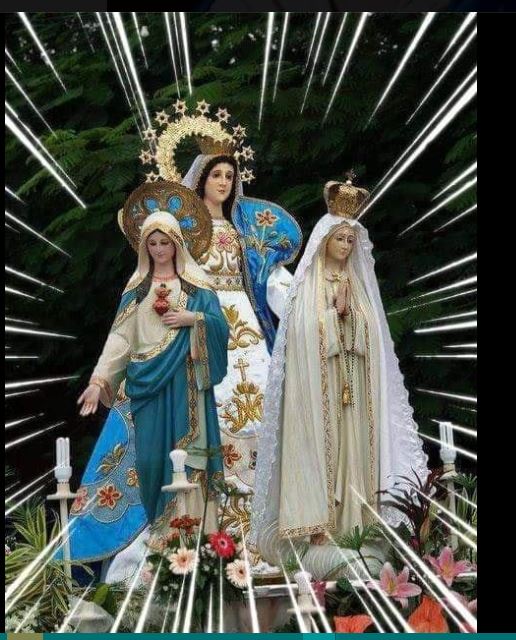
The images help me to focus on the particular mystery that I am contemplating as I say the Hail Mary on each bead.
Pray on Mondays Joyful, on Tuesdays Sorrowful, on Wednesdays Glorious, on Thursdays Luminous, on Fridays Sorrowful, on Saturdays Joyful, on Sundays Glorious Mysteries in union with millions of faithful believers on this Earth.
Joyful Mysteries
Luminous Mysteries
Sorrowful Mysteries
Glorious Mysteries
Prayers of the Rosary
Links to “How to pray the rosary” Popular Catholic Prayers
The Creed
I believe in God the father all mighty, creator of heaven and earth, and Jesus Christ, His only son,Who was conceived by the Holy Spirit, born of the Virgin Mary, suffered under Pontius Pilate, was crucified, died, and was buried,
He descended into hell; the third day He arose again from the dead; He ascended into Heaven, sitteth at the right hand of God, the Father Almighty, from thence He shall come to judge the living and the dead.
I believe in the Holy Spirit, the Holy Catholic Church, the communion of saints, the forgiveness of sins, the resurrection of the body, and life everlasting. Amen.
Our Father, Who art in Heaven, hallowed b e Thy name, Thy Kingdom come, Thy will be done on earth as it is in Heaven.
Give us this day our daily bread; and forgive us our trespasses as we forgive those who trespass against us; and lead us not into temptation, but deliver us from evil. Amen.
(this prayer is optional and may be said after all Glory Be to the Fathers…..)
O my Jesus, forgive us our sins. Save us from the fires of hell.
Lead all souls to heaven, especially those who are in most need of thy mercy.
Console the souls in Purgatory, particularly those most abandoned. Amen
Hail Mary, full of grace, the Lord is with thee, blessed art thou amongst women and blessed is the fruit of thy womb, Jesus.
Holy Mary Mother of God, pray for us sinners now and at the hour of our death. Amen.
Hail Holy Queen, Mother of Mercy, our life our sweetness and our hope.
To thee do we cry, poor banished children of Eve;
To thee do we send up our sighs, mourning and weeping in this valley of tears.
Turn then, most gracious advocate, thine eyes of mercy toward us and after this our exile show unto us the blessed fruit of thy womb, Jesus.
O clement, O loving, O sweet Virgin Mary!
That we maybe made worthy of the promises of Christ.
O God, whose only begotten Son, by His life, death, and resurrection, has purchased for us the rewards of eternal salvation.
Grant, we beseech Thee, that while meditating on these mysteries of the most holy Rosary of the Blessed Virgin Mary,
that we may imitate what they contain and obtain what they promise, through Christ our Lord. Amen.
Most Holy Trinity – Father, Son, and Holy Spirit – I adore thee profoundly. I offer Thee the most precious Body, Blood, Soul and Divinity of Jesus Christ, present in all the tabernacles of the world, in reparation for the outrages, sacrileges and indifference’s whereby He is offended. And through the infinite merits of His Most Sacred Heart and the Immaculate Heart of Mary, I beg of Thee the conversion of poor sinners.
Saint Michael, the Archangel, defend us in battle. Be our safeguard against the wickedness and snares of the devil. May God rebuke him, we humbly pray; and do you, O Prince of the heavenly host, by the power of God cast into hell Satan and all the evil spirits who wander through the world seeking the ruin of souls.
Amen.
 Thurzo Gizella Bible Study
Leave a comment