

And then shall they see the Son of man coming in the clouds with great power and glory. Mark 13:26 KJV
Bible verses for today, Joshua Joshua 15-19 1 Peter 5:finish the Bible in one year. (The Catholic Bible, the original one that includes all the books not included in Bibles used by other Christians.)
Watch and Listen here: and for explanations For the Rosary Julie Green Prophecies, Catholic Answers, Daily Readings,
Listen to the verses, as you enjoy the clips and pictures and a song at the end. Also look for the weekly review on the “Gizella Price” channel, YouTube or on Rumble.
A Christian’s goal should be to create the Kingdom of God here on earth, as it is in Heaven. Not only, to get to Heaven.
Prophesies by Julie Green. Click the date following: 9/1/22 August 2022 Post July 2022 Posts October Posts 11/24/22 video, 11/22 all 12/22 all 1/23 all
Go Here to see how many of Julie Green’s prophesies are being fulfilled every day.
My other websites: Catholic, Prophets today, For Kids
Read Today’s Bible Verses following here:
Joshua 15
1The lot for the tribe of Judah by their clans fell toward the boundary of Edom, the wilderness of Zin in the Negeb, in the extreme south.a
2b Their southern boundary ran from the end of the Salt Sea,* from the tongue of land that faces the Negeb,
3and went southward below the pass of Akrabbim, across through Zin, up to a point south of Kadesh-barnea, across to Hezron, and up to Addar; from there, looping around Karka,
4it crossed to Azmon and then joined the Wadi of Egypt* before coming out at the sea. (This is your southern boundary.)
5The eastern boundary was the Salt Sea as far as the mouth of the Jordan.
The northern boundary climbed northward from the tongue of the sea, toward the mouth of the Jordan,
6c up to Beth-hoglah, and ran north of Beth-arabah, up to Eben-Bohan-ben-Reuben.
7Thence the boundary climbed to Debir, north of the Valley of Achor,d in the direction of the Gilgal that faces the pass of Adummim, on the south side of the wadi; from there it crossed to the waters of En-shemesh and emerged at En-rogel.
8Climbing again to the Valley of Ben-hinnom* on the southern flank of the Jebusites (that is, Jerusalem), the boundary rose to the top of the mountain at the northern end of the Valley of Rephaim,e which bounds the Valley of Hinnom on the west.
9From the top of the mountain it ran to the fountain of waters of Nephtoah,f extended to the cities of Mount Ephron, and continued to Baalah, or Kiriath-jearim.
10From Baalah the boundary curved westward to Mount Seir and passed north of the ridge of Mount Jearim (that is, Chesalon); it descended to Beth-shemesh, and ran across to Timnah.
11It then extended along the northern flank of Ekron, continued through Shikkeron, and across to Mount Baalah, from there to include Jabneel, before it came out at the sea.
12The western boundary was the Great Sea* and its coast. This was the complete boundary of the Judahites by their clans.
13g As the LORD had commanded, Joshua gave Caleb, son of Jephunneh,h a portion among the Judahites, namely, Kiriath-arba (Arba was the father of Anak), that is, Hebron.
14i And Caleb dispossessed from there the three Anakim, the descendants of Anak: Sheshai, Ahiman, and Talmai.
15From there he marched up against the inhabitants of Debir,j which was formerly called Kiriath-sepher.
16Caleb said, “To the man who attacks Kiriath-sepher and captures it, I will give my daughter Achsah in marriage.”
17* Othniel captured it, the son of Caleb’s brother Kenaz; so Caleb gave him his daughter Achsah in marriage.
18When she came to him, she induced him to ask her father for some land. Then, as she alighted from the donkey, Caleb asked her, “What do you want?”
19She answered, “Give me a present! Since you have assigned to me land in the Negeb, give me also pools of water.” So he gave her the upper and the lower pools.
Cities of Judah.*
20This is the heritage of the tribe of Judahites by their clans:
21The cities of the tribe of the Judahites in the extreme southern district toward Edom were: Kabzeel, Eder, Jagur,
25Hazor-hadattah, and Kerioth-hezron (that is, Hazor);
27Hazar-gaddah, Heshmon, Beth-pelet,
28Hazar-shual, Beer-sheba, and Biziothiah;
31Ziklag, Madmannah, Sansannah,
32Lebaoth, Shilhim, and Ain and Rimmon; a total of twenty-nine cities with their villages.
33In the Shephelah: Eshtaol, Zorah, Ashnah,
34Zanoah, Engannim, Tappuah, Enam,
35Jarmuth, Adullam, Socoh, Azekah,
36Shaaraim, Adithaim, Gederah, and Gederothaim; fourteen cities and their villages.
37Zenan, Hadashah, Migdal-gad,
41Gederoth, Beth-dagon, Naamah, and Makkedah; sixteen cities and their villages.
44Keilah, Achzib, and Mareshah; nine cities and their villages.
45Ekron and its towns and villages;
46from Ekron to the sea, all the towns that lie alongside Ashdod, and their villages;
47Ashdod and its towns and villages; Gaza and its towns and villages, as far as the Wadi of Egypt and the coast of the Great Sea.
48In the mountain regions: Shamir, Jattir, Socoh,
49Dannah, Kiriath-sannah (that is, Debir),
51Goshen, Holon, and Giloh; eleven cities and their villages.
53Janim, Beth-tappuah, Aphekah,
54Humtah, Kiriath-arba (that is, Hebron), and Zior; nine cities and their villages.
57Kain, Gibbeah, and Timnah; ten cities and their villages.
59Maarath, Beth-anoth, and Eltekon; six cities and their villages. Tekoa, Ephrathah (that is, Bethlehem), Peor, Etam, Kulom, Tatam, Zores, Karim, Gallim, Bether, and Manoko; eleven cities and their villages.
60Kiriath-baal (that is, Kiriath-jearim) and Rabbah; two cities and their villages.k
61In the wilderness:* Beth-arabah, Middin, Secacah,
62Nibshan, Ir-hamelah, and En-gedi; six cities and their villages.
63But the Jebusites who lived in Jerusalem the Judahites could not dispossess; so the Jebusites dwell in Jerusalem beside the Judahites to the present day.l
Joshua 16
The Joseph Tribes.*
1The lot that fell to the Josephites extended from the Jordan at Jericho to the waters of Jericho east of the wilderness; then the boundary went up from Jericho to the heights at Bethel.*
2Leaving Bethel for Luz, it crossed the ridge to the border of the Archites at Ataroth,
3and descended westward to the border of the Japhletites, to that of the Lower Beth-horon, and to Gezer, and from there to the sea.a
4Within the heritage of Manasseh and Ephraim, sons of Joseph,
5the dividing line* for the heritage of the Ephraimites by their clans ran from east of Ataroth-addar to Upper Beth-horonb
6and thence to the sea. From Michmethathc on the north, their boundary curved eastward around Taanath-shiloh, and continued east of it to Janoah;
7from there it descended to Ataroth and Naarah, and reaching Jericho, it ended at the Jordan.
8From Tappuah the boundary ran westward to the Wadi Kanah and ended at the sea. This was the heritage of the Ephraimites by their clans,
9including the villages that belonged to each city set aside for the Ephraimites within the heritage of the Manassites.
10But they did not dispossess the Canaanites living in Gezer;d they live within Ephraim to the present day, though they have been put to forced labor.
Joshua 17
1a Now as for the lot that fell to the tribe of Manassehb as the firstborn of Joseph: since Manasseh’s eldest son, Machir, the father of Gilead, was a warrior, who had already obtained Gilead and Bashan,
2the allotment was now made to the rest of the Manassites by their clans: the descendants of Abiezer, Helek, Asriel, Shechem, Hepher, and Shemida; these are the other male children of Manasseh, son of Joseph, by their clans.
3c Furthermore, Zelophehad, son of Hepher, son of Gilead, son of Machir, son of Manasseh, had no sons, but only daughters, whose names were Mahlah, Noah, Hoglah, Milcah, and Tirzah.
4These presented themselves to Eleazar the priest, to Joshua, son of Nun, and to the leaders, saying, “The LORD commanded Moses to give us a heritage among our relatives.” So in accordance with the command of the LORD a heritage was given them among their father’s relatives.
5Thus ten shares fell to Manasseh apart from the land of Gilead and Bashan beyond the Jordan,d
6since these female descendants of Manasseh received each a portion among his sons. The land of Gilead fell to the rest of the Manassites.
7Manasseh bordered on Asher.* From Michmethath, near Shechem, another boundary ran southward to include the inhabitants of En-Tappuah,
8because the district of Tappuah belonged to Manasseh, although Tappuah itself was an Ephraimite city on the border of Manasseh.
9This same boundary continued down to the Wadi Kanah.e The cities that belonged to Ephraim from among the cities in Manasseh were those to the south of that wadi; thus the territory of Manasseh ran north of the wadi and ended at the sea.
10The land on the south belonged to Ephraim and that on the north to Manasseh; with the sea as their common boundary, they reached Asher on the north and Issachar on the east.
11f Moreover, in Issachar and in Asher Manasseh was awarded Beth-shean and its towns, Ibleam and its towns, the inhabitants of Dor and its towns, the inhabitants of Endor and its towns, the inhabitants of Taanach and its towns, the inhabitants of Megiddo and its towns (the third is Naphath-dor).
12Since the Manassites were not able to dispossess these cities, the Canaanites continued to inhabit this region.
13When the Israelites grew stronger they put the Canaanites to forced labor, but they did not dispossess them.
14The descendants of Joseph said to Joshua, “Why have you given us only one lot and one share as our heritage?g Our people are too many, because of the extent to which the LORD has blessed us.”
15Joshua answered them, “If you are too many, go up to the forest and clear out a place for yourselves there in the land of the Perizzites and Rephaim, since the mountain regions of Ephraim are so narrow.”
16For the Josephites said, “Our mountain regions are not enough for us; on the other hand, the Canaanites living in the valley region all have iron chariots, in particular those in Beth-shean and its towns, and those in the valley of Jezreel.”
17Joshua therefore said to Ephraim and Manasseh, the house of Joseph, “You are a numerous people and very strong. You shall not have merely one share,
18for the mountain region which is now forest shall be yours when you clear it. Its adjacent land shall also be yours if, despite their strength and iron chariots, you dispossess the Canaanites.”
Joshua 18
The whole community of the Israelites assembled at Shiloh, where they set up the tent of meeting; and the land was subdued before them.a
2There remained seven tribes among the Israelites that had not yet received their heritage.
3Joshua therefore said to the Israelites, “How much longer will you put off taking steps to possess the land which the LORD, the God of your ancestors, has given you?
4Choose three representatives from each of your tribes; I will send them to go throughout the land and describe it for purposes of acquiring their heritage. When they return to me
5you shall divide it into seven parts. Judah is to retain its territory in the south,b and the house of Joseph its territory in the north.
6You shall bring to me here the description of the land in seven sections. I will then cast lots for you here before the LORD, our God.
7For the Levites have no share among you,c because the priesthood of the LORD is their heritage; while Gad, Reuben, and the half-tribe of Manasseh have already received the heritage east of the Jordan which Moses, the servant of the LORD, gave them.”
8When those who were to describe the land were ready for their journey, Joshua commanded them, “Go throughout the land and describe it; return to me and I will cast lots for you here before the LORD in Shiloh.”
9So they went through the land, described its cities in writing in seven sections, and returned to Joshua in the camp at Shiloh.
10Joshua then cast lots for them before the LORD in Shiloh, and divided up the land for the Israelites into their separate shares.
11One lot fell to the tribe of Benjaminites by their clans. The territory allotted them lay between the descendants of Judah and those of Joseph.
12d Their northern boundary* began at the Jordan and went over the northern flank of Jericho, up westward into the mountains, until it reached the wilderness of Beth-aven.
13From there it crossed over to the southern flank of Luz (that is, Bethel). Then it ran down to Ataroth-addar, on the mountaintop south of Lower Beth-horon.e
14For the western border, the boundary line swung south from the mountaintop opposite Beth-horon until it reached Kiriath-baal (that is, Kiriath-jearim; this city belonged to the Judahites). This was the western boundary.
15The southern boundary began at the limits of Kiriath-jearim and projected to the spring at Nephtoah.
16f It went down to the edge of the mountain on the north of the Valley of Rephaim, where it faces the Valley of Ben-hinnom; and continuing down the Valley of Hinnom along the southern flank of the Jebusites, reached En-rogel.
17Inclining to the north, it extended to En-shemesh, and thence to Geliloth, opposite the pass of Adummim. Then it dropped to Eben-Bohan-ben-Reuben,
18across the northern flank of the Arabah overlook, down into the Arabah.
19From there the boundary continued across the northern flank of Beth-hoglah and extended northward to the tongue of the Salt Sea, toward the southern end of the Jordan. This was the southern boundary.
20The Jordan bounded it on the east. This was how the heritage of the Benjaminites by their clans was bounded on all sides.
21Now the cities belonging to the tribe of the Benjaminites by their clans were: Jericho, Beth-hoglah, Emek-keziz,
22Beth-arabah, Zemaraim, Bethel,
24Chephar-ammoni, Ophni, and Geba; twelve cities and their villages.
25Also Gibeon, Ramah, Beeroth,
28Zela, Haeleph, the Jebusite city (that is, Jerusalem), Gibeah, and Kiriath; fourteen cities and their villages. This was the heritage of the clans of Benjaminites.
Joshua 19
1The second lot fell to Simeon. The heritage of the tribe of Simeonites by their clans lay within that of the Judahites.
2a For their heritage they received Beer-sheba, Shema, Moladah,
5Ziklag, Bethmar-caboth, Hazar-susah,
6Beth-lebaoth, and Sharuhen; thirteen cities and their villages.
7Also Ain, Rimmon, Ether, and Ashan; four cities and their villages,
8besides all the villages around these cities as far as Baalath-beer (that is, Ramoth-negeb). This was the heritage of the tribe of the Simeonites by their clans.
9This heritage of the Simeonites was within the confines of the Judahites; for since the portion of the latter was too large for them, the Simeonites obtained their heritage within it.
10* The third lot fell to the Zebulunites by their clans. The boundary of their heritage was at Sarid.
11Their boundary went up west and through Mareal, reaching Dabbesheth and the wadi that is near Jokneam.
12From Sarid eastward it ran to the district of Chisloth-tabor, on to Daberath, and up to Japhia.
13From there it continued eastward to Gath-hepher and to Eth-kazin, extended to Rimmon, and turned to Neah.
14Skirting north of Hannathon, the boundary ended at the valley of Iphtahel.
15Thus, with Kattath, Nahalal, Shimron, Idalah, and Bethlehem, there were twelve cities and their villages.
16This was the heritage of the Zebulunites by their clans, these cities and their villages.
17* The fourth lot fell to Issachar. The territory of the Issacharites by their clans
18included Jezreel, Chesulloth, Shunem,
19Hapharaim, Shion, Anaharath,
21Remeth, En-gannim, En-haddah, and Beth-pazzez.
22The boundary reached Tabor, Shahazumah, and Beth-shemesh, ending at the Jordan: sixteen cities and their villages.
23This was the heritage of the Issacharites by their clans, these cities and their villages.
24* The fifth lot fell to the Asherites by their clans.
25Their territory included Helkath, Hali, Beten, Achshaph,
26Allammelech, Amad, and Mishal, and reached Carmel on the west, and Shihor-libnath.
27In the other direction, it ran eastward of Beth-dagon, reached Zebulun and the valley of Iphtahel; then north of Beth-emek and Neiel, it extended northward to Cabul,
28Ebron, Rehob,b Hammon, and Kanah, near Greater Sidon.
29Then the boundary turned back to Ramah and to the fortress city of Tyre; thence it cut back to Hosah and ended at the sea. Thus, with Mahalab, Achzib,
30Ummah, Acco, Aphek, and Rehob, there were twenty-two cities and their villages.
31This was the heritage of the tribe of the Asherites by their clans, these cities and their villages.
32* The sixth lot fell to the Naphtalites.
33Their boundary extended from Heleph, from the oak at Zaanannim, including Adami-nekeb and Jabneel, to Lakkum, and ended at the Jordan.
34In the opposite direction, westerly, it ran through Aznoth-tabor and from there extended to Hukkok; it reached Zebulun on the south, Asher on the west, and the Jordan on the east.
35The fortified cities were Ziddim, Zer, Hammath, Rakkath, Chinnereth,
38Yiron, Migdal-el, Horem, Beth-anath, and Beth-shemesh;c nineteen cities and their villages.
39This was the heritage of the tribe of the Naphtalites by their clans, these cities and their villages.
40* The seventh lot fell to the tribe of Danites by their clans.
41Their heritage was the territory of Zorah, Eshtaol, Ir-shemesh,
42Shaalabbin, Aijalon, Ithlah,d
44Eltekoh, Gibbethon, Baalath,
45Jehud, Bene-berak, Gath-rimmon,
46Me-jarkon, and Rakkon, with the coast at Joppa.
47e But the territory of the Danites was too small for them; so the Danites marched up and attacked Leshem,* which they captured and put to the sword. Once they had taken possession of Leshem, they dwelt there and named it after their ancestor Dan.
48This was the heritage of the tribe of the Danites by their clans, these cities and their villages.
49When the last of them had received the portions of the land they were to inherit, the Israelites assigned a heritage in their midst to Joshua, son of Nun.
50According to the command of the LORD, they gave him the city he requested, Timnah-serahf in the mountain region of Ephraim. He rebuilt the city and made it his home.
51These are the heritages which Eleazar the priest, Joshua, son of Nun, and the heads of families in the tribes of the Israelites apportioned by lot in the presence of the LORD, at the door of the tent of meeting in Shiloh. Thus they finished dividing the land.
1 Peter 5
Advice to Presbyters.*
1So I exhort the presbyters* among you, as a fellow presbyter and witness to the sufferings of Christ and one who has a share in the glory to be revealed.
2Tend the flock of God in your midst, [overseeing] not by constraint but willingly, as God would have it, not for shameful profit but eagerly.a
3Do not lord it over those assigned to you, but be examples to the flock.
4b And when the chief Shepherd is revealed, you will receive the unfading crown of glory.*
Advice to the Community.*
5Likewise, you younger members,* be subject to the presbyters. And all of you, clothe yourselves with humility in your dealings with one another, for:
“God opposes the proud
but bestows favor on the humble.”c
6So humble yourselves under the mighty hand of God, that he may exalt you in due time.d
7Cast all your worries upon him because he cares for you.e
8Be sober and vigilant. Your opponent the devil is prowling around like a roaring lion looking for [someone] to devour.f
9Resist him, steadfast in faith, knowing that your fellow believers throughout the world undergo the same sufferings.
10The God of all grace who called you to his eternal glory through Christ [Jesus] will himself restore, confirm, strengthen, and establish you after you have suffered a little.g
11To him be dominion forever. Amen.
V. Conclusion
12I write you this briefly through Silvanus,* whom I consider a faithful brother, exhorting you and testifying that this is the true grace of God. Remain firm in it.
13The chosen one* at Babylon sends you greeting, as does Mark, my son.
14Greet one another with a loving kiss. Peace to all of you who are in Christ.h
The complete Book of Joshua
THE BOOK OF JOSHUA
The Book of Joshua presents a narrative of the way Israel took possession of the land of Canaan, making it the land of Israel. This process is swift and inexorable, and is followed by an orderly division and disposition of the land among the twelve tribes, with a concluding ceremony of covenant renewal.
The theological message of the book is unmistakable. God has been faithful to the promise of the land. If Israel relies totally on the Lord for victory; if Israel is united as a people; if the law of herem is kept and no one grows rich from victory in war—then and only then will Israel possess the land.
The Israelites are led by Joshua, the successor of Moses, and the book is at pains to show not only how Joshua carries on the work of Moses but how the “conquest” of Canaan is continuous with the exodus from Egypt. This is seen in the repeated insistence that, as the Lord was with Moses, so he is with Joshua; and, especially, in the crossing of the Jordan River, which is patterned after the crossing of the Red Sea.
The book preserves older traditions of Israel’s settlement in the land, especially in the division of the land among the tribes. As with Deuteronomy and the whole Deuteronomistic History (see introduction to Deuteronomy), the fall of the Northern Kingdom in 722/721 B.C. shows its influence throughout. As addressed to the needs of a late preexilic audience, then, the book should be read not so much as imparting information about how Israel took over the land of Canaan, many centuries before the composition of the book, as teaching a lesson about how Israel is to avoid losing the land.
Modern readers may be put off by the description of battles and their aftermath, the destruction of everyone and everything in the cities taken under the “ban” (herem). The ban was practiced in the ancient Near East, in Israel and elsewhere, but in Joshua the wholesale destruction of the Canaanites is an idealization of the deuteronomic idea that pagans are to be wiped out so they will not be an occasion for apostasy from the Lord (cf. Dt 7:1–6); note in particular the artificial, formalized description of destruction of towns in Jos 10:28–39. It should be remembered that by the time the book was written, the Canaanites were long gone. Progressive revelation throughout Israel’s history produced far more lofty ideals, as when the prophets see all the nations embracing faith in Yahweh, being joined to Israel, and living in peace with one another (Is 2:2–4; 19:23–25; 45:22–25; Zec 8:22–23), and the New Testament teaches us to love even our enemies (Mt 5:43–45).
A comparison of Joshua with the account of Israel’s early history found in the first chapter of the Book of Judges shows that Israel’s emergence as the dominant presence in the land was a slow and piecemeal affair, not achieved at one stroke and with great ease: the Book of Joshua, with its highly idealized depiction of the “conquest,” is a theologically programmatic cautionary tale about what the people are to do and not do in order to avoid the fate of the Northern Kingdom in losing the land.
The Book of Joshua may be divided as follows:
- Conquest of Canaan (1:1–12:24)
- Division of the Land (13:1–21:45)
- Return of the Transjordan Tribes and Joshua’s Farewell (22:1–24:33)
The book of 1 Peter
THE FIRST LETTER OF PETER
This letter begins with an address by Peter to Christian communities located in five provinces of Asia Minor (1 Pt 1:1), including areas evangelized by Paul (Acts 16:6–7; 18:23). Christians there are encouraged to remain faithful to their standards of belief and conduct in spite of threats of persecution. Numerous allusions in the letter suggest that the churches addressed were largely of Gentile composition (1 Pt 1:14, 18; 2:9–10; 4:3–4), though considerable use is made of the Old Testament (1 Pt 1:24; 2:6–7, 9–10, 22; 3:10–12).
The contents following the address both inspire and admonish these “chosen sojourners” (1 Pt 1:1) who, in seeking to live as God’s people, feel an alienation from their previous religious roots and the society around them. Appeal is made to Christ’s resurrection and the future hope it provides (1 Pt 1:3–5) and to the experience of baptism as new birth (1 Pt 1:3, 23–25; 3:21). The suffering and death of Christ serve as both source of salvation and example (1 Pt 1:19; 2:21–25; 3:18). What Christians are in Christ, as a people who have received mercy and are to proclaim and live according to God’s call (1 Pt 2:9–10), is repeatedly spelled out for all sorts of situations in society (1 Pt 2:11–17), work (even as slaves, 1 Pt 2:18–20), the home (1 Pt 3:1–7), and general conduct (1 Pt 3:8–12; 4:1–11). But over all hangs the possibility of suffering as a Christian (1 Pt 3:13–17). In 1 Pt 4:12–19 persecution is described as already occurring, so that some have supposed the letter was addressed both to places where such a “trial by fire” was already present and to places where it might break out.
The letter constantly mingles moral exhortation (paraklēsis) with its catechetical summaries of mercies in Christ. Encouragement to fidelity in spite of suffering is based upon a vision of the meaning of Christian existence. The emphasis on baptism and allusions to various features of the baptismal liturgy suggest that the author has incorporated into his exposition numerous homiletic, credal, hymnic, and sacramental elements of the baptismal rite that had become traditional at an early date.
From Irenaeus in the late second century until modern times, Christian tradition regarded Peter the apostle as author of this document. Since he was martyred at Rome during the persecution of Nero between A.D. 64 and 67, it was supposed that the letter was written from Rome shortly before his death. This is supported by its reference to “Babylon” (1 Pt 5:13), a code name for Rome in the early church.
Some modern scholars, however, on the basis of a number of features that they consider incompatible with Petrine authenticity, regard the letter as the work of a later Christian writer. Such features include the cultivated Greek in which it is written, difficult to attribute to a Galilean fisherman, together with its use of the Greek Septuagint translation when citing the Old Testament; the similarity in both thought and expression to the Pauline literature; and the allusions to widespread persecution of Christians, which did not occur until at least the reign of Domitian (A.D. 81–96). In this view the letter would date from the end of the first century or even the beginning of the second, when there is evidence for persecution of Christians in Asia Minor (the letter of Pliny the Younger to Trajan, A.D. 111–12).
Other scholars believe, however, that these objections can be met by appeal to use of a secretary, Silvanus, mentioned in 1 Pt 5:12. Such secretaries often gave literary expression to the author’s thoughts in their own style and language. The persecutions may refer to local harassment rather than to systematic repression by the state. Hence there is nothing in the document incompatible with Petrine authorship in the 60s.
Still other scholars take a middle position. The many literary contacts with the Pauline literature, James, and 1 John suggest a common fund of traditional formulations rather than direct dependence upon Paul. Such liturgical and catechetical traditions must have been very ancient and in some cases of Palestinian origin.
Yet it is unlikely that Peter addressed a letter to the Gentile churches of Asia Minor while Paul was still alive. This suggests a period after the death of the two apostles, perhaps A.D. 70–90. The author would be a disciple of Peter in Rome, representing a Petrine group that served as a bridge between the Palestinian origins of Christianity and its flowering in the Gentile world. The problem addressed would not be official persecution but the difficulty of living the Christian life in a hostile, secular environment that espoused different values and subjected the Christian minority to ridicule and oppression.
The principal divisions of the First Letter of Peter are the following:
- Address (1:1–2)
- The Gift and Call of God in Baptism (1:3–2:10)
- The Christian in a Hostile World (2:11–4:11)
- Advice to the Persecuted (4:12–5:11)
- Conclusion (5:12–14)
I. Address
It is in the nature of faith to recognize the reality of what is not yet seen and is the object of hope, and the saints of the Old Testament give striking example of that faith (Heb 11:1–40). The perseverance to which the author exhorts the readers is shown forth in the earthly life of Jesus. Despite the afflictions of his ministry and the supreme trial of his suffering and death, he remained confident of the triumph that God would bring him (Heb 12:1–3). The difficulties of human life have meaning when they are accepted as God’s discipline (Heb 12:4–13), and if Christians persevere in fidelity to the word in which they have believed, they are assured of possessing forever the unshakable kingdom of God (Heb 12:14–29).
The letter concludes with specific moral commandments (Heb 13:1–17), in the course of which the author recalls again his central theme of the sacrifice of Jesus and the courage needed to associate oneself with it in faith (Heb 13:9–16).
As early as the end of the second century, the church of Alexandria in Egypt accepted Hebrews as a letter of Paul, and that became the view commonly held in the East. Pauline authorship was contested in the West into the fourth century, but then accepted. In the sixteenth century, doubts about that position were again raised, and the modern consensus is that the letter was not written by Paul. There is, however, no widespread agreement on any of the other suggested authors, e.g., Barnabas, Apollos, or Prisc(ill)a and Aquila. The document itself has no statement about its author.
Among the reasons why Pauline authorship has been abandoned are the great difference of vocabulary and style between Hebrews and Paul’s letters, the alternation of doctrinal teaching with moral exhortation, the different manner of citing the Old Testament, and the resemblance between the thought of Hebrews and that of Alexandrian Judaism. The Greek of the letter is in many ways the best in the New Testament.
Since the letter of Clement of Rome to the Corinthians, written about A.D. 96, most probably cites Hebrews, the upper limit for the date of composition is reasonably certain. While the letter’s references in the present tense to the Old Testament sacrificial worship do not necessarily show that temple worship was still going on, many older commentators and a growing number of recent ones favor the view that it was and that the author wrote before the destruction of the temple of Jerusalem in A.D. 70. In that case, the argument of the letter is more easily explained as directed toward Jewish Christians rather than those of Gentile origin, and the persecutions they have suffered in the past (cf. Heb 10:32–34) may have been connected with the disturbances that preceded the expulsion of the Jews from Rome in A.D. 49 under the emperor Claudius. These were probably caused by disputes between Jews who accepted Jesus as the Messiah and those who did not.
The principal divisions of the Letter to the Hebrews are the following:
- Introduction (1:1–4)
- The Son Higher than the Angels (1:5–2:18)
- Jesus, Faithful and Compassionate High Priest (3:1–5:10)
- Jesus’ Eternal Priesthood and Eternal Sacrifice (5:11–10:39)
- Examples, Discipline, Disobedience (11:1–12:29)
- Final Exhortation, Blessing, Greetings (13:1–25)
Sermons on the Book of Joshua
SERMONS ON THE BOOK OF 1 Peter
Catholic Daily Readings at every Mass
You can also read it, if you watch this on You Tube, under the videos
Sermons Rosary Prayers Catholic Answers Scriptural Rosary
Prophesies by Julie Green. Click the date following: December 22 Posts, November 22 Posts, September Posts, August 2022 Post July 2022 Posts October Posts video,
Go Here to see how many of Julie Green’s prophesies are being fulfilled every day.
Prophetic words given on November 24, 2022
See prophesy blog for Jan 2nd 2023.
Dr. Myles Munroe
I am including a video by Dr. Myles Munroe, I’ve listened to him back in the nineties, and rediscovered him recently. Now his perspective seems to be a good way to also look at scripture. In Pursuit of Purpose – Book Highlights
Sermons Rosary Prayers Catholic Answers
Called to Communion Dr. David Anders

Rosary Mysteries
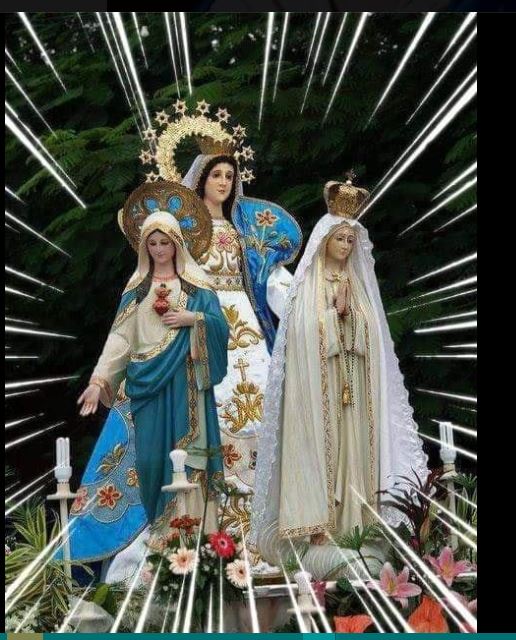
The images help me to focus on the particular mystery that I am contemplating as I say the Hail Mary on each bead.
Pray on Mondays Joyful, on Tuesdays Sorrowful, on Wednesdays Glorious, on Thursdays Luminous, on Fridays Sorrowful, on Saturdays Joyful, on Sundays Glorious Mysteries in union with millions of faithful believers on this Earth.
Joyful Mysteries
Luminous Mysteries
Sorrowful Mysteries
Glorious Mysteries
Prayers of the Rosary
Links to “How to pray the rosary” Popular Catholic Prayers
The Creed
I believe in God the father all mighty, creator of heaven and earth, and Jesus Christ, His only son,Who was conceived by the Holy Spirit, born of the Virgin Mary, suffered under Pontius Pilate, was crucified, died, and was buried,
He descended into hell; the third day He arose again from the dead; He ascended into Heaven, sitteth at the right hand of God, the Father Almighty, from thence He shall come to judge the living and the dead.
I believe in the Holy Spirit, the Holy Catholic Church, the communion of saints, the forgiveness of sins, the resurrection of the body, and life everlasting. Amen.
Our Father, Who art in Heaven, hallowed b e Thy name, Thy Kingdom come, Thy will be done on earth as it is in Heaven.
Give us this day our daily bread; and forgive us our trespasses as we forgive those who trespass against us; and lead us not into temptation, but deliver us from evil. Amen.
(this prayer is optional and may be said after all Glory Be to the Fathers…..)
O my Jesus, forgive us our sins. Save us from the fires of hell.
Lead all souls to heaven, especially those who are in most need of thy mercy.
Console the souls in Purgatory, particularly those most abandoned. Amen
Hail Mary, full of grace, the Lord is with thee, blessed art thou amongst women and blessed is the fruit of thy womb, Jesus.
Holy Mary Mother of God, pray for us sinners now and at the hour of our death. Amen.
Hail Holy Queen, Mother of Mercy, our life our sweetness and our hope.
To thee do we cry, poor banished children of Eve;
To thee do we send up our sighs, mourning and weeping in this valley of tears.
Turn then, most gracious advocate, thine eyes of mercy toward us and after this our exile show unto us the blessed fruit of thy womb, Jesus.
O clement, O loving, O sweet Virgin Mary!
That we maybe made worthy of the promises of Christ.
O God, whose only begotten Son, by His life, death, and resurrection, has purchased for us the rewards of eternal salvation.
Grant, we beseech Thee, that while meditating on these mysteries of the most holy Rosary of the Blessed Virgin Mary,
that we may imitate what they contain and obtain what they promise, through Christ our Lord. Amen.
Most Holy Trinity – Father, Son, and Holy Spirit – I adore thee profoundly. I offer Thee the most precious Body, Blood, Soul and Divinity of Jesus Christ, present in all the tabernacles of the world, in reparation for the outrages, sacrileges and indifference’s whereby He is offended. And through the infinite merits of His Most Sacred Heart and the Immaculate Heart of Mary, I beg of Thee the conversion of poor sinners.
Saint Michael, the Archangel, defend us in battle. Be our safeguard against the wickedness and snares of the devil. May God rebuke him, we humbly pray; and do you, O Prince of the heavenly host, by the power of God cast into hell Satan and all the evil spirits who wander through the world seeking the ruin of souls.
Amen.
 Thurzo Gizella Bible Study
Leave a comment