

You will surely forget your trouble, recalling it only as water gone by. Life will be brighter than noonday and darkness will become like morning. Job ll:16,17 NIV
Bible verses for today, Joshua 1-4 1 Peter 13:-22 ,finish the Bible in one year. (The Catholic Bible, the original one that includes all the books not included in Bibles used by other Christians.)
Watch and Listen here: and for explanations For the Rosary Julie Green Prophecies, Catholic Answers, Daily Readings,https://youtu.be/D4EESsl1cD4
Listen to the verses, as you enjoy the clips and pictures and a song at the end. Also look for the weekly review on the “Gizella Price” channel, YouTube or on Rumble.
A Christian’s goal should be to create the Kingdom of God here on earth, as it is in Heaven. Not only, to get to Heaven.
Prophesies by Julie Green. Click the date following: 9/1/22 August 2022 Post July 2022 Posts October Posts 11/24/22 video, 11/22 all 12/22 all 1/23 all
Go Here to see how many of Julie Green’s prophesies are being fulfilled every day.
My other websites: Catholic, Prophets today, For Kids
Read Today’s Bible Verses following here:
Joshua 1
1After Moses, the servant of the LORD, had died, the LORD said to Moses’ aide Joshua, son of Nun:
2* Moses my servant is dead. So now, you and the whole people with you, prepare to cross the Jordan to the land that I will give the Israelites.
3a Every place where you set foot I have given you, as I promised Moses.
4* All the land of the Hittites, from the wilderness and the Lebanon east to the great river Euphrates and west to the Great Sea, will be your territory.b
5No one can withstand you as long as you live. As I was with Moses, I will be with you:c I will not leave you nor forsake you.
6Be strong and steadfast, so that you may give this people possession of the land I swore to their ancestors that I would give them.
7d Only be strong and steadfast, being careful to observe the entire law which Moses my servant enjoined on you. Do not swerve from it either to the right or to the left, that you may succeed wherever you go.
8Do not let this book of the law depart from your lips. Recite it by day and by night,e that you may carefully observe all that is written in it; then you will attain your goal; then you will succeed.
9I command you: be strong and steadfast! Do not fear nor be dismayed, for the LORD, your God, is with you wherever you go.
10f So Joshua commanded the officers of the people:
11“Go through the camp and command the people, ‘Prepare your provisions, for three days from now you shall cross the Jordan here, to march in and possess the land the LORD, your God, is giving as your possession.’”
12g Joshua addressed the Reubenites, the Gadites, and the half-tribe of Manasseh:
13“Remember what Moses, the servant of the LORD, commanded you when he said, ‘The LORD, your God, is about to give you rest; he will give you this land.’
14Your wives, your children, and your livestock may remain in the land Moses gave you here beyond the Jordan. But all the warriors among you must cross over armed, ahead of your kindred, and you must help them
15until the LORD has settled your kindred, and they like you possess the land the LORD, your God, is giving them. Afterward you may return and possess your own land, which Moses, the servant of the LORD, has given you east of the Jordan.”h
16They answered Joshua, “We will do all you have commanded us, and we will go wherever you send us.
17As completely as we obeyed Moses, we will obey you. Only, may the LORD, your God, be with you as God was with Moses.
18Anyone who rebels against your orders and does not obey all your commands shall be put to death. Only be strong and steadfast.”
Joshua 2
1Then Joshua, son of Nun, secretly sent out two spies from Shittim, saying, “Go, reconnoiter the land and Jericho.” When the two reached Jericho, they went into the house of a prostitute named Rahab,a where they lodged.
2But a report was brought to the king of Jericho: “Some men came here last night, Israelites, to spy out the land.”
3So the king of Jericho sent Rahab the order, “Bring out the men who have come to you and entered your house, for they have come to spy out the entire land.”
4The womanb had taken the two men and hidden them, so she said, “True, the men you speak of came to me, but I did not know where they came from.
5At dark, when it was time to close the gate, they left, and I do not know where they went. You will have to pursue them quickly to overtake them.”
6Now, she had led them to the roof, and hidden them among her stalks of flax spread out* there.
7But the pursuers set out along the way to the fords of the Jordan. As soon as they had left to pursue them, the gate was shut.
8Before the spies lay down, Rahab went up to them on the roof
9and said:* “I know that the LORD has given you the land, that a dread of you has come upon us, and that all the inhabitants of the land tremble with fear because of you.c
10For we have heard how the LORD dried up the waters of the Red Sea before you when you came out of Egypt,d and what you did to Sihon and Og, the two kings of the Amorites beyond the Jordan, whom you destroyed under the ban.
11We heard, and our hearts melted within us; everyone is utterly dispirited because of you, since the LORD, your God, is God in heaven above and on earth below.e
12f Now then, swear to me by the LORD that, since I am showing kindness to you, you in turn will show kindness to my family.g Give me a reliable sign
13that you will allow my father and mother, brothers and sisters, and my whole family to live, and that you will deliver us from death.”
14“We pledge our lives for yours,” they answered her. “If you do not betray our mission, we will be faithful in showing kindness to you when the LORD gives us the land.”
15Then she let them down through the window with a rope; for she lived in a house built into the city wall.*
16“Go up into the hill country,” she said, “that your pursuers may not come upon you. Hide there for three days, until they return; then you may go on your way.”
17They answered her, “We are free of this oath that you made us take, unless,
18when we come into the land, you tie this scarlet cord in the window through which you are letting us down. Gather your father and mother, your brothers, and all your family into your house.
19Should any of them pass outside the doors of your house, their blood will be on their own heads, and we will be guiltless. But if anyone in your house is harmed, their blood will be on our heads.
20If, however, you betray our mission, we will be free of the oath you have made us take.”
21“Let it be as you say,” she replied, and sent them away. When they were gone, she tied the scarlet cord in the window.
22They went up into the hill country, where they stayed three days until their pursuers, who had sought them all along the road without finding them, returned.
23Then the two came back down from the hills, crossed the Jordan to Joshua, son of Nun, and told him all that had happened to them.
24They assured Joshua, “The LORD has given all this land into our power; indeed, all the inhabitants of the land tremble with fear because of us.”
Joshua 3
Preparations for Crossing the Jordan.
1Early the next morning, Joshua and all the Israelites moved from Shittim and came to the Jordan, where they stayed before crossing over.
2a Three days later the officers went through the camp
3b and issued these commands to the people: “When you see the ark of the covenant of the LORD, your God, which the levitical priests will carry, you must break camp and follow it,
4that you may know the way to take, for you have not gone over this road before. But let there be a space of two thousand cubits between you and the ark: do not come nearer to it.”
5Joshua also said to the people, “Sanctify yourselves, for tomorrow the LORD will perform wonders among you.”
6And he told the priests, “Take up the ark of the covenant and cross ahead of the people”; so they took up the ark of the covenant and went before the people.
7c Then the LORD said to Joshua: Today I will begin to exalt you in the sight of all Israel, that they may know that, as I was with Moses, so I will be with you.d
8Now command the priests carrying the ark of the covenant, “When you come to the edge of the waters of the Jordan, there take your stand.”
9So Joshua said to the Israelites, “Come here and listen to the words of the LORD, your God.”
10He continued: “By this you will know that there is a living God in your midst: he will certainly dispossess before you the Canaanites, Hittites, Hivites, Perizzites, Girgashites, Amorites, and Jebusites.e
11The ark of the covenant of the Lord of the whole earth will cross the Jordan before you.
12Now choose twelve men,f one from each of the tribes of Israel.
13When the soles of the feet of the priests carrying the ark of the LORD, the Lord of the whole earth, touch the waters of the Jordan, it will cease to flow; the water flowing down from upstream will halt in a single heap.”*
14The people set out from their tents to cross the Jordan, with the priests carrying the ark of the covenant ahead of them.
15When those bearing the ark came to the Jordan and the feet of the priests bearing the ark were immersed in the waters of the Jordan—which overflows all its banks during the entire season of the harvest—*
16the waters flowing from upstream halted, standing up in a single heapg for a very great distance indeed, from Adam, a city in the direction of Zarethan; those flowing downstream toward the Salt Sea of the Arabah disappeared entirely.* Thus the people crossed over opposite Jericho.
17The priests carrying the ark of the covenant of the LORD stood on dry ground in the Jordan riverbedh while all Israel crossed on dry ground, until the whole nation had completed the crossing of the Jordan.
Joshua 4
1After the entire nation had completed the crossing of the Jordan,
2the LORD said to Joshua: Choose twelve mena from the people, one from each tribe,
3and command them, “Take up twelve stones from this spot in the Jordan riverbed where the priests have been standing.b Carry them over with you, and place them where you are to stay tonight.”
4Summoning the twelve men he had selected from among the Israelites, one from each tribe,
5Joshua said to them: “Go to the Jordan riverbed in front of the ark of the LORD, your God; lift to your shoulders one stone apiece, so that they will equal in number the tribes of the Israelites.
6In the future, these are to be a sign among you. When your children ask you,* ‘What do these stones mean to you?’c
7you shall answer them, ‘The waters of the Jordan ceased to flow before the ark of the covenant of the LORD when it crossed the Jordan.’d Thus these stones are to serve as a perpetual memorial to the Israelites.”
8The twelve Israelites did as Joshua had commanded: they took up twelve stones from the Jordan riverbed as the LORD had said to Joshua, one for each of the tribes of the Israelites. They carried them along to the camp site, and there they placed them.
9Joshua set up the twelve stones that had been in the Jordan riverbed on the spot where the priests stood who were carrying the ark of the covenant. They are there to this day.
10* The priests carrying the ark stood in the Jordan riverbed until everything had been done that the LORD had commanded Joshua to tell the people, just as Moses had commanded Joshua. The people crossed over quickly,
11and when all the people had completed the crossing, the ark of the LORD also crossed; and the priests were now in front of them.
12The Reubenites, Gadites, and half-tribe of Manasseh, armed, marched in the vanguard of the Israelites, as Moses had ordered.
13About forty thousand troops, equipped for battle, crossed over before the LORD to the plains of Jericho for war.
14That day the LORD exalted Joshua in the sight of all Israel,e and so during his whole life they feared him as they had feared Moses.
15Then the LORD said to Joshua:
16Command the priests carrying the ark of the covenant to come up from the Jordan.
17Joshua commanded the priests, “Come up from the Jordan,”
18and when the priests carrying the ark of the covenant of the LORD had come up from the Jordan riverbed, as the soles of their feet regained the dry ground, the waters of the Jordan resumed their course and as before overflowed all its banks.
19The people came up from the Jordan on the tenth day of the first month, and camped in Gilgal on the eastern limits of Jericho.f
20At Gilgal Joshua set up the twelve stones that had been taken from the Jordan,
21saying to the Israelites, “In the future, when your children ask their parents, ‘What do these stones mean?’
22you shall inform them, ‘Israel crossed the Jordan here on dry ground.’
23For the LORD, your God, dried up the waters of the Jordan in front of you until you crossed over, just as the LORD, your God, had done at the Red Sea, drying it up in front of us until we crossed over,g
24in order that all the peoples of the earth may know that the hand of the LORD is mighty, and that you may fear the LORD, your God, forever.”h
1 Peter 3:13:22
Christian Suffering.*
13Now who is going to harm you if you are enthusiastic for what is good?
14But even if you should suffer because of righteousness, blessed are you. Do not be afraid or terrified with fear of them,
15but sanctify Christ as Lord in your hearts. Always be ready to give an explanation to anyone who asks you for a reason for your hope,f
16but do it with gentleness and reverence, keeping your conscience clear, so that, when you are maligned, those who defame your good conduct in Christ may themselves be put to shame.
17For it is better to suffer for doing good, if that be the will of God, than for doing evil.
18For Christ also suffered* for sins once, the righteous for the sake of the unrighteous, that he might lead you to God. Put to death in the flesh, he was brought to life in the spirit.g
19In it he also went to preach to the spirits in prison,*
20who had once been disobedient while God patiently waited in the days of Noah during the building of the ark, in which a few persons, eight in all, were saved through water.h
21This prefigured baptism, which saves you now. It is not a removal of dirt from the body but an appeal to God* for a clear conscience, through the resurrection of Jesus Christ,i
22who has gone into heaven and is at the right hand of God, with angels, authorities, and powers subject to him.j
The complete Book of Joshua
THE BOOK OF JOSHUA
The Book of Joshua presents a narrative of the way Israel took possession of the land of Canaan, making it the land of Israel. This process is swift and inexorable, and is followed by an orderly division and disposition of the land among the twelve tribes, with a concluding ceremony of covenant renewal.
The theological message of the book is unmistakable. God has been faithful to the promise of the land. If Israel relies totally on the Lord for victory; if Israel is united as a people; if the law of herem is kept and no one grows rich from victory in war—then and only then will Israel possess the land.
The Israelites are led by Joshua, the successor of Moses, and the book is at pains to show not only how Joshua carries on the work of Moses but how the “conquest” of Canaan is continuous with the exodus from Egypt. This is seen in the repeated insistence that, as the Lord was with Moses, so he is with Joshua; and, especially, in the crossing of the Jordan River, which is patterned after the crossing of the Red Sea.
The book preserves older traditions of Israel’s settlement in the land, especially in the division of the land among the tribes. As with Deuteronomy and the whole Deuteronomistic History (see introduction to Deuteronomy), the fall of the Northern Kingdom in 722/721 B.C. shows its influence throughout. As addressed to the needs of a late preexilic audience, then, the book should be read not so much as imparting information about how Israel took over the land of Canaan, many centuries before the composition of the book, as teaching a lesson about how Israel is to avoid losing the land.
Modern readers may be put off by the description of battles and their aftermath, the destruction of everyone and everything in the cities taken under the “ban” (herem). The ban was practiced in the ancient Near East, in Israel and elsewhere, but in Joshua the wholesale destruction of the Canaanites is an idealization of the deuteronomic idea that pagans are to be wiped out so they will not be an occasion for apostasy from the Lord (cf. Dt 7:1–6); note in particular the artificial, formalized description of destruction of towns in Jos 10:28–39. It should be remembered that by the time the book was written, the Canaanites were long gone. Progressive revelation throughout Israel’s history produced far more lofty ideals, as when the prophets see all the nations embracing faith in Yahweh, being joined to Israel, and living in peace with one another (Is 2:2–4; 19:23–25; 45:22–25; Zec 8:22–23), and the New Testament teaches us to love even our enemies (Mt 5:43–45).
A comparison of Joshua with the account of Israel’s early history found in the first chapter of the Book of Judges shows that Israel’s emergence as the dominant presence in the land was a slow and piecemeal affair, not achieved at one stroke and with great ease: the Book of Joshua, with its highly idealized depiction of the “conquest,” is a theologically programmatic cautionary tale about what the people are to do and not do in order to avoid the fate of the Northern Kingdom in losing the land.
The Book of Joshua may be divided as follows:
- Conquest of Canaan (1:1–12:24)
- Division of the Land (13:1–21:45)
- Return of the Transjordan Tribes and Joshua’s Farewell (22:1–24:33)
The book of 1 Peter
THE FIRST LETTER OF PETER
This letter begins with an address by Peter to Christian communities located in five provinces of Asia Minor (1 Pt 1:1), including areas evangelized by Paul (Acts 16:6–7; 18:23). Christians there are encouraged to remain faithful to their standards of belief and conduct in spite of threats of persecution. Numerous allusions in the letter suggest that the churches addressed were largely of Gentile composition (1 Pt 1:14, 18; 2:9–10; 4:3–4), though considerable use is made of the Old Testament (1 Pt 1:24; 2:6–7, 9–10, 22; 3:10–12).
The contents following the address both inspire and admonish these “chosen sojourners” (1 Pt 1:1) who, in seeking to live as God’s people, feel an alienation from their previous religious roots and the society around them. Appeal is made to Christ’s resurrection and the future hope it provides (1 Pt 1:3–5) and to the experience of baptism as new birth (1 Pt 1:3, 23–25; 3:21). The suffering and death of Christ serve as both source of salvation and example (1 Pt 1:19; 2:21–25; 3:18). What Christians are in Christ, as a people who have received mercy and are to proclaim and live according to God’s call (1 Pt 2:9–10), is repeatedly spelled out for all sorts of situations in society (1 Pt 2:11–17), work (even as slaves, 1 Pt 2:18–20), the home (1 Pt 3:1–7), and general conduct (1 Pt 3:8–12; 4:1–11). But over all hangs the possibility of suffering as a Christian (1 Pt 3:13–17). In 1 Pt 4:12–19 persecution is described as already occurring, so that some have supposed the letter was addressed both to places where such a “trial by fire” was already present and to places where it might break out.
The letter constantly mingles moral exhortation (paraklēsis) with its catechetical summaries of mercies in Christ. Encouragement to fidelity in spite of suffering is based upon a vision of the meaning of Christian existence. The emphasis on baptism and allusions to various features of the baptismal liturgy suggest that the author has incorporated into his exposition numerous homiletic, credal, hymnic, and sacramental elements of the baptismal rite that had become traditional at an early date.
From Irenaeus in the late second century until modern times, Christian tradition regarded Peter the apostle as author of this document. Since he was martyred at Rome during the persecution of Nero between A.D. 64 and 67, it was supposed that the letter was written from Rome shortly before his death. This is supported by its reference to “Babylon” (1 Pt 5:13), a code name for Rome in the early church.
Some modern scholars, however, on the basis of a number of features that they consider incompatible with Petrine authenticity, regard the letter as the work of a later Christian writer. Such features include the cultivated Greek in which it is written, difficult to attribute to a Galilean fisherman, together with its use of the Greek Septuagint translation when citing the Old Testament; the similarity in both thought and expression to the Pauline literature; and the allusions to widespread persecution of Christians, which did not occur until at least the reign of Domitian (A.D. 81–96). In this view the letter would date from the end of the first century or even the beginning of the second, when there is evidence for persecution of Christians in Asia Minor (the letter of Pliny the Younger to Trajan, A.D. 111–12).
Other scholars believe, however, that these objections can be met by appeal to use of a secretary, Silvanus, mentioned in 1 Pt 5:12. Such secretaries often gave literary expression to the author’s thoughts in their own style and language. The persecutions may refer to local harassment rather than to systematic repression by the state. Hence there is nothing in the document incompatible with Petrine authorship in the 60s.
Still other scholars take a middle position. The many literary contacts with the Pauline literature, James, and 1 John suggest a common fund of traditional formulations rather than direct dependence upon Paul. Such liturgical and catechetical traditions must have been very ancient and in some cases of Palestinian origin.
Yet it is unlikely that Peter addressed a letter to the Gentile churches of Asia Minor while Paul was still alive. This suggests a period after the death of the two apostles, perhaps A.D. 70–90. The author would be a disciple of Peter in Rome, representing a Petrine group that served as a bridge between the Palestinian origins of Christianity and its flowering in the Gentile world. The problem addressed would not be official persecution but the difficulty of living the Christian life in a hostile, secular environment that espoused different values and subjected the Christian minority to ridicule and oppression.
The principal divisions of the First Letter of Peter are the following:
- Address (1:1–2)
- The Gift and Call of God in Baptism (1:3–2:10)
- The Christian in a Hostile World (2:11–4:11)
- Advice to the Persecuted (4:12–5:11)
- Conclusion (5:12–14)
I. Address
It is in the nature of faith to recognize the reality of what is not yet seen and is the object of hope, and the saints of the Old Testament give striking example of that faith (Heb 11:1–40). The perseverance to which the author exhorts the readers is shown forth in the earthly life of Jesus. Despite the afflictions of his ministry and the supreme trial of his suffering and death, he remained confident of the triumph that God would bring him (Heb 12:1–3). The difficulties of human life have meaning when they are accepted as God’s discipline (Heb 12:4–13), and if Christians persevere in fidelity to the word in which they have believed, they are assured of possessing forever the unshakable kingdom of God (Heb 12:14–29).
The letter concludes with specific moral commandments (Heb 13:1–17), in the course of which the author recalls again his central theme of the sacrifice of Jesus and the courage needed to associate oneself with it in faith (Heb 13:9–16).
As early as the end of the second century, the church of Alexandria in Egypt accepted Hebrews as a letter of Paul, and that became the view commonly held in the East. Pauline authorship was contested in the West into the fourth century, but then accepted. In the sixteenth century, doubts about that position were again raised, and the modern consensus is that the letter was not written by Paul. There is, however, no widespread agreement on any of the other suggested authors, e.g., Barnabas, Apollos, or Prisc(ill)a and Aquila. The document itself has no statement about its author.
Among the reasons why Pauline authorship has been abandoned are the great difference of vocabulary and style between Hebrews and Paul’s letters, the alternation of doctrinal teaching with moral exhortation, the different manner of citing the Old Testament, and the resemblance between the thought of Hebrews and that of Alexandrian Judaism. The Greek of the letter is in many ways the best in the New Testament.
Since the letter of Clement of Rome to the Corinthians, written about A.D. 96, most probably cites Hebrews, the upper limit for the date of composition is reasonably certain. While the letter’s references in the present tense to the Old Testament sacrificial worship do not necessarily show that temple worship was still going on, many older commentators and a growing number of recent ones favor the view that it was and that the author wrote before the destruction of the temple of Jerusalem in A.D. 70. In that case, the argument of the letter is more easily explained as directed toward Jewish Christians rather than those of Gentile origin, and the persecutions they have suffered in the past (cf. Heb 10:32–34) may have been connected with the disturbances that preceded the expulsion of the Jews from Rome in A.D. 49 under the emperor Claudius. These were probably caused by disputes between Jews who accepted Jesus as the Messiah and those who did not.
The principal divisions of the Letter to the Hebrews are the following:
- Introduction (1:1–4)
- The Son Higher than the Angels (1:5–2:18)
- Jesus, Faithful and Compassionate High Priest (3:1–5:10)
- Jesus’ Eternal Priesthood and Eternal Sacrifice (5:11–10:39)
- Examples, Discipline, Disobedience (11:1–12:29)
- Final Exhortation, Blessing, Greetings (13:1–25)
Sermons on the Book of Joshua
=
SERMONS ON THE BOOK OF 1 Peter
Catholic Daily Readings at every Mass
You can also read it, if you watch this on You Tube, under the videos
Sermons Rosary Prayers Catholic Answers Scriptural Rosary
Prophesies by Julie Green. Click the date following: December 22 Posts, November 22 Posts, September Posts, August 2022 Post July 2022 Posts October Posts video,
Go Here to see how many of Julie Green’s prophesies are being fulfilled every day.
Prophetic words given on November 24, 2022
See prophesy blog for Jan 2nd 2023.
Dr. Myles Munroe
I am including a video by Dr. Myles Munroe, I’ve listened to him back in the nineties, and rediscovered him recently. Now his perspective seems to be a good way to also look at scripture. In Pursuit of Purpose – Book Highlights
Sermons Rosary Prayers Catholic Answers
Called to Communion Dr. David Anders

Rosary Mysteries
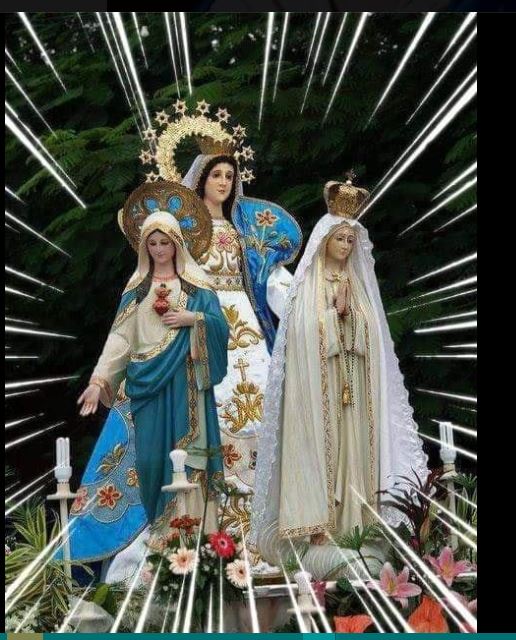
The images help me to focus on the particular mystery that I am contemplating as I say the Hail Mary on each bead.
Pray on Mondays Joyful, on Tuesdays Sorrowful, on Wednesdays Glorious, on Thursdays Luminous, on Fridays Sorrowful, on Saturdays Joyful, on Sundays Glorious Mysteries in union with millions of faithful believers on this Earth.
Joyful Mysteries
Luminous Mysteries
Sorrowful Mysteries
Glorious Mysteries
Prayers of the Rosary
Links to “How to pray the rosary” Popular Catholic Prayers
The Creed
I believe in God the father all mighty, creator of heaven and earth, and Jesus Christ, His only son,Who was conceived by the Holy Spirit, born of the Virgin Mary, suffered under Pontius Pilate, was crucified, died, and was buried,
He descended into hell; the third day He arose again from the dead; He ascended into Heaven, sitteth at the right hand of God, the Father Almighty, from thence He shall come to judge the living and the dead.
I believe in the Holy Spirit, the Holy Catholic Church, the communion of saints, the forgiveness of sins, the resurrection of the body, and life everlasting. Amen.
Our Father, Who art in Heaven, hallowed b e Thy name, Thy Kingdom come, Thy will be done on earth as it is in Heaven.
Give us this day our daily bread; and forgive us our trespasses as we forgive those who trespass against us; and lead us not into temptation, but deliver us from evil. Amen.
(this prayer is optional and may be said after all Glory Be to the Fathers…..)
O my Jesus, forgive us our sins. Save us from the fires of hell.
Lead all souls to heaven, especially those who are in most need of thy mercy.
Console the souls in Purgatory, particularly those most abandoned. Amen
Hail Mary, full of grace, the Lord is with thee, blessed art thou amongst women and blessed is the fruit of thy womb, Jesus.
Holy Mary Mother of God, pray for us sinners now and at the hour of our death. Amen.
Hail Holy Queen, Mother of Mercy, our life our sweetness and our hope.
To thee do we cry, poor banished children of Eve;
To thee do we send up our sighs, mourning and weeping in this valley of tears.
Turn then, most gracious advocate, thine eyes of mercy toward us and after this our exile show unto us the blessed fruit of thy womb, Jesus.
O clement, O loving, O sweet Virgin Mary!
That we maybe made worthy of the promises of Christ.
O God, whose only begotten Son, by His life, death, and resurrection, has purchased for us the rewards of eternal salvation.
Grant, we beseech Thee, that while meditating on these mysteries of the most holy Rosary of the Blessed Virgin Mary,
that we may imitate what they contain and obtain what they promise, through Christ our Lord. Amen.
Most Holy Trinity – Father, Son, and Holy Spirit – I adore thee profoundly. I offer Thee the most precious Body, Blood, Soul and Divinity of Jesus Christ, present in all the tabernacles of the world, in reparation for the outrages, sacrileges and indifference’s whereby He is offended. And through the infinite merits of His Most Sacred Heart and the Immaculate Heart of Mary, I beg of Thee the conversion of poor sinners.
Saint Michael, the Archangel, defend us in battle. Be our safeguard against the wickedness and snares of the devil. May God rebuke him, we humbly pray; and do you, O Prince of the heavenly host, by the power of God cast into hell Satan and all the evil spirits who wander through the world seeking the ruin of souls.
Amen.
 Thurzo Gizella Bible Study
Leave a comment