

You created my innermost being; you knit me together in my mother’s womb. Psalm 139:13 3:2 NIV
Bible verses for today, Deuteronomy 30- 32 1 Peter 2:13-25 ,finish the Bible in one year. (The Catholic Bible, the original one that includes all the books not included in Bibles used by other Christians.)
Watch and Listen here: and for explanations For the Rosary Julie Green Prophecies, Catholic Answers, Daily Readings,
Listen to the verses, as you enjoy the clips and pictures and a song at the end. Also look for the weekly review on the “Gizella Price” channel, YouTube or on Rumble.
A Christian’s goal should be to create the Kingdom of God here on earth, as it is in Heaven. Not only, to get to Heaven.
Prophesies by Julie Green. Click the date following: 9/1/22 August 2022 Post July 2022 Posts October Posts 11/24/22 video, 11/22 all 12/22 all 1/23 all
Go Here to see how many of Julie Green’s prophesies are being fulfilled every day.
My other websites: Catholic, Prophets today, For Kids
Read Today’s Bible Verses following here:
Deuteronomy 30
1* a When all these things, the blessing and the curse which I have set before you, come upon you,b and you take them to heart in any of the nations where the LORD, your God, has dispersed you,
2c and return to the LORD, your God, obeying his voice, according to all that I am commanding you today, you and your children, with your whole heart and your whole being,
3the LORD, your God, will restore your fortunes and will have compassion on you; he will again gather you from all the peoples where the LORD, your God, has scattered you.
4Though you may have been dispersed to the farthest corner of the heavens, even from there will the LORD, your God, gather you; even from there will he bring you back.d
5The LORD, your God, will then bring you into the land your ancestors once possessed, that you may possess it; and he will make you more prosperous and numerous than your ancestors.e
6The LORD, your God, will circumcise your hearts* and the hearts of your descendants,f so that you will love the LORD, your God, with your whole heart and your whole being, in order that you may live.
7The LORD, your God, will put all those curses on your enemies and the foes who pursued you.g
8You, however, shall again obey the voice of the LORD and observe all his commandments which I am giving you today.
9Then the LORD, your God, will generously increase your undertakings, the fruit of your womb, the offspring of your livestock, and the produce of your soil;h for the LORD, your God, will again take delight in your prosperity, just as he took delight in your ancestors’,
10because you will obey the voice of the LORD, your God, keeping the commandments and statutes that are written in this book of the law, when you return to the LORD, your God, with your whole heart and your whole being.
11i For this command which I am giving you today is not too wondrous or remote for you.
12It is not in the heavens, that you should say, “Who will go up to the heavens to get it for us and tell us of it, that we may do it?”
13Nor is it across the sea, that you should say, “Who will cross the sea to get it for us and tell us of it, that we may do it?”
14No, it is something very near to you, in your mouth* and in your heart, to do it.
15See, I have today set before you life and good, death and evil.j
16If you obey the commandments of the LORD, your God, which I am giving you today, loving the LORD, your God, and walking in his ways, and keeping his commandments, statutes and ordinances, you will live and grow numerous, and the LORD, your God, will bless you in the land you are entering to possess.k
17l If, however, your heart turns away and you do not obey, but are led astray and bow down to other gods and serve them,
18I tell you today that you will certainly perish; you will not have a long life on the land which you are crossing the Jordan to enter and possess.
19I call heaven and earth today to witness against you:m I have set before you life and death, the blessing and the curse. Choose life, then, that you and your descendants may live,
20by loving the LORD, your God, obeying his voice, and holding fast to him. For that will mean life for you, a long life for you to live on the land which the LORD swore to your ancestors, to Abraham, Isaac, and Jacob, to give to them.n
Deuteronomy 31
1When Moses had finished speaking these words to all Israel,
2he said to them, I am now one hundred and twenty years olda and am no longer able to go out and come in; besides, the LORD has said to me, Do not cross this Jordan.
3It is the LORD, your God, who will cross before you; he will destroy these nations before you, that you may dispossess them.b (It is Joshua who will cross before you, as the LORD promised.)
4c The LORD will deal with them just as he dealt with Sihon and Og, the kings of the Amorites, and with their country, when he destroyed them.
5When, therefore, the LORD delivers them up to you, you shall deal with them according to the whole commandment which I have given you.d
6Be strong and steadfast; have no fear or dread of them, for it is the LORD, your God, who marches with you; he will never fail you or forsake you.e
7Then Moses summoned Joshua and in the presence of all Israel said to him,f “Be strong and steadfast, for you shall bring this people into the land which the LORD swore to their ancestors he would give them; it is you who will give them possession of it.
8It is the LORD who goes before you; he will be with you and will never fail you or forsake you. So do not fear or be dismayed.”g
9h When Moses had written down this law, he gave it to the levitical priests who carry the ark of the covenant of the LORD, and to all the elders of Israel.i
10Moses commanded them, saying, On the feast of Booths,j at the prescribed time in the year for remission* which comes at the end of every seven-year period,
11when all Israel goes to appear before the LORD, your God, in the place which he will choose, you shall read this law aloud in the presence of all Israel.
12Assemble the people—men, women and children, as well as the resident aliens who live in your communities—that they may hear and so learn to fear the LORD, your God, and to observe carefully all the words of this law.
13Their children also, who do not know it yet, shall hear and learn to fear the LORD, your God, as long as you live on the land which you are about to cross the Jordan to possess.
14k The LORD said to Moses, The time is now approaching for you to die. Summon Joshua, and present yourselves at the tent of meeting that I may commission him. So Moses and Joshua went and presented themselves at the tent of meeting.
15And the LORD appeared at the tent in a column of cloud; the column of cloud stood at the entrance of the tent.
16The LORD said to Moses, Soon you will be at rest with your ancestors, and then this people will prostitute themselves* by following the foreign gods among whom they will live in the land they are about to enter.l They will forsake me and break the covenant which I have made with them.
17m At that time my anger will flare up against them; I will forsake them and hide my face from them; they will become a prey to be devoured, and much evil and distress will befall them. At that time they will indeed say, “Is it not because our God is not in our midst that these evils have befallen us?”
18Yet I will surely hide my face at that time because of all the evil they have done in turning to other gods.
19Now, write out this songn for yourselves. Teach it to the Israelites and have them recite it, so that this song may be a witness for me against the Israelites.
20For when I have brought them into the land flowing with milk and honey which I promised on oath to their ancestors, and they have eaten and are satisfied and have grown fat, if they turn to other gods and serve them, despising me and breaking my covenant,
21then, when great evil and distress befall them, this song will speak to them as a witness, for it will not be forgotten if their descendants recite it. For I know what they are inclined to do even at the present time, before I have brought them into the land which I promised on oath.
22So Moses wrote this song that same day, and he taught it to the Israelites.
23Then he commissioned Joshua, son of Nun, and said to him, Be strong and steadfast, for it is you who will bring the Israelites into the land which I promised them on oath.o I myself will be with you.
24When Moses had finished writing out on a scroll the words of this law in their entirety,
25Moses gave the Levitesp who carry the ark of the covenant of the LORD this order:
26Take this book of the law and put it beside the ark of the covenant of the LORD, your God, that there it may be a witness against you.q
27For I already know how rebellious and stiff-necked you will be. Why, even now, while I am alive among you, you have been rebels against the LORD! How much more, then, after I am dead!r
28s Assemble all your tribal elders and your officials before me, that I may speak these words for them to hear and so may call heaven and earth to witness against them.
29t For I know that after my death you are sure to act corruptly and to turn aside from the way along which I commanded you, so that evil will befall you in time to come because you have done what is evil in the LORD’s sight, and provoked him by your deeds.
30Then Moses recited the words of this song in their entirety, for the whole assembly of Israel to hear:
Deuteronomy 32
* Give ear, O heavens, and let me speak;
let the earth hear the words of my mouth!a
2May my teaching soak in like the rain,
and my utterance drench like the dew,
Like a downpour upon the grass,
like a shower upon the crops.
3For I will proclaim the name of the LORD,
praise the greatness of our God!
4The Rock—how faultless are his deeds,
how right all his ways!
A faithful God, without deceit,
just and upright is he!b
5Yet his degenerate children have treated him basely,
a twisted and crooked generation!c
6Is this how you repay the LORD,
so foolish and unwise a people?
Is he not your father who begot you,
the one who made and established you?d
7Remember the days of old,
consider the years of generations past.
Ask your father, he will inform you,
your elders, they will tell you:e
8When the Most High allotted each nation its heritage,
when he separated out human beings,f
He set up the boundaries of the peoples
after the number of the divine beings;*
9But the LORD’s portion was his people;
his allotted share was Jacob.g
10He found them in a wilderness,
a wasteland of howling desert.
He shielded them, cared for them,
guarded them as the apple of his eye.h
11As an eagle incites its nestlings,
hovering over its young,
So he spread his wings, took them,
bore them upon his pinions.i
12The LORD alone guided them,
no foreign god was with them.j
13k He had them mount the summits of the land,*
fed them the produce of its fields;
He suckled them with honey from the crags
and olive oil from the flinty rock;
14Butter from cows and milk from sheep,
with the best of lambs;
Bashan* bulls and goats,
with the cream of finest wheat;
and the foaming blood of grapes you drank.
15So Jacob ate and was satisfied,
Jeshurun* grew fat and kicked;
you became fat and gross and gorged.
They forsook the God who made them
and scorned the Rock of their salvation.l
16With strange gods they incited him,
with abominations provoked him to anger.m
17They sacrificed to demons, to “no-gods,”
to gods they had never known,
Newcomers from afar,
before whom your ancestors had never trembled.
18You were unmindful of the Rock that begot you,
you forgot the God who gave you birth.n
19The LORD saw and was filled with loathing,
provoked by his sons and daughters.o
20He said, I will hide my face from them,
and see what becomes of them.
For they are a fickle generation,
children with no loyalty in them!p
21Since they have incited me with a “no-god,”
and provoked me with their empty idols,
I will incite them with a “no-people”;*
with a foolish nation I will provoke them.q
22For by my wrath a fire is kindled
that has raged to the depths of Sheol,
It has consumed the earth with its yield,
and set on fire the foundations of the mountains.r
23I will heap evils upon them
and exhaust all my arrows against them:s
24Emaciating hunger and consuming fever
and bitter pestilence,
And the teeth of wild beasts I will send among them,
with the venom of reptiles gliding in the dust.t
25Out in the street the sword shall bereave,
and at home the terror
For the young man and the young woman alike,
the nursing babe as well as the gray beard.u
26I said: I will make an end of them
and blot out their name from human memory,
27Had I not feared the provocation by the enemy,
that their foes might misunderstand,
And say, “Our own hand won the victory;
the LORD had nothing to do with any of it.”v
28For they are a nation devoid of reason,*
having no understanding.
29If they had insight they would realize this,
they would understand their end:
30“How could one rout a thousand,
or two put ten thousand to flight,
Unless it was because their Rock sold them,
the LORD delivered them up?”
31Indeed, their “rock” is not like our Rock;
our enemies are fools.
32For their vine is from the vine of Sodom,
from the vineyards of Gomorrah.
Their grapes are grapes of poison,
and their clusters are bitter.w
33Their wine is the venom of serpents,
the cruel poison of vipers.
34Is not this stored up with me,
sealed up in my storehouses?
35Vengeance is mine and recompense,
for the time they lose their footing;
Because the day of their disaster is at hand
and their doom is rushing upon them!x
36Surely, the LORD will do justice for his people;
on his servants he will have pity.
When he sees their strength is gone,
and neither bond nor free* is left,y
37He will say, Where are their gods,z
the rock in whom they took refuge,
38Who ate the fat of their sacrifices
and drank the wine of their libations?
Let them rise up now and help you!
Let them be your protection!
39See now that I, I alone, am he,
and there is no god besides me.
It is I who bring both death and life,
I who inflict wounds and heal them,
and from my hand no one can deliver.a
40For I raise my hand to the heavens
and will say: As surely as I live forever,
41When I sharpen my flashing sword,
and my hand lays hold of judgment,
With vengeance I will repay my foes
and requite those who hate me.b
42I will make my arrows drunk with blood,
and my sword shall devour flesh—
With the blood of the slain and the captured,
from the long-haired heads of the enemy.
43Exult with him, you heavens,
bow to him, all you divine beings!
For he will avenge the blood of his servants,
take vengeance on his foes;
He will requite those who hate him,
and purge his people’s land.c
44So Moses, together with Hoshea,* son of Nun, went and spoke all the words of this song in the hearing of the people.d
45When Moses had finished speaking all these words to all Israel,
46he said to them,e Take to heart all the words that I am giving in witness against you today, words you should command your children, that they may observe carefully every word of this law.
47For this is no trivial matter for you, but rather your very life; by this word you will enjoy a long life on the land you are crossing the Jordan to possess.f
48On that very day the LORD said to Moses,
49Ascend this mountain of the Abarim,* Mount Nebo in the land of Moab facing Jericho, and view the land of Canaan, which I am giving to the Israelites as a possession.g
50Then you shall die on the mountain you are about to ascend, and shall be gathered to your people, just as your brother Aaron died on Mount Hor* and there was gathered to his people,h
51because both of you broke faith with me among the Israelites at the waters of Meribath-kadesh in the wilderness of Zin: you did not manifest my holiness among the Israelites.* i
52You may indeed see the land from a distance, but you shall not enter that land which I am giving to the Israelites.j
1 Peter 2:13-25
The complete Book of Deuteronomy
THE BOOK OF DEUTERONOMY
The title of Deuteronomy in Hebrew is Debarim, “words,” from its opening phrase. The English title comes from the Septuagint of 17:18, deuteronomion, “copy of the law”; this title is appropriate because the book replicates much of the legal content of the previous books, serving as a “second law.” It brings to a close the five books of the Torah or Pentateuch with a retrospective account of Israel’s past—the exodus, the Sinai covenant, and the wilderness wanderings—and a look into Israel’s future as they stand poised to enter the land of Canaan and begin their life as a people there.
The book consists of three long addresses by Moses. Each of these contains narrative, law, and exhortation, in varying proportions. In an expansion of the first commandment of the decalogue (Ex 20:5–6; Dt 5:9–10), Moses tells the Israelites how to make a success of their life as a people once they are settled in the land. The choice presented to Israel is to love the Lord and keep his commandments, or to serve “other gods.” That choice will determine what kind of life they will make for themselves in the land. Whichever choice they make as a people carries consequences, which Deuteronomy terms “blessing” and “curse.” Thus the book can be seen as a kind of survival manual for Israel in their life as a people: how to live and what to avoid. This gives the book its hortatory style and tone of life-or-death urgency.
One defining concern of the book is centralization of worship. As Israel’s God is one (6:4–5), so its worship must be focused in one place, which the Lord “will choose from among your tribes”; there the Lord will “make his name dwell” (see note on 12:5). Thus the privileged status of the Jerusalem Temple is asserted; all other places and all other modes of worship of the God of Israel (the local shrines, the “high places,” “under every green tree”) are proscribed.
The book was probably composed over the course of three centuries, from the eighth century to the exile and beyond. It bears some relation to “the Book of the Law” discovered in the Jerusalem Temple around 622 B.C. during the reign of King Josiah (2 Kgs 22:8–13). It gives evidence of later editing: cf. the references to exile in 4:1–40; 28:63–68; 29:21–28; 30:1–10.
Over the book looms the disaster of 722/721, the fall of the Northern Kingdom, Israel. The detailed description of siege (28:49–57) especially echoes the fate the North suffered at the hands of the Assyrian invader. The book draws the minds of its intended readers back to a time before disastrous mistakes were made and their disastrous effects felt, and serves to explain the political and theological dynamics that led to the destruction of the North as well as to warn the surviving Southern Kingdom, Judah, to reform by keeping faith with Israel’s covenant Lord.
The characteristic and highly recognizable language and theology of Deuteronomy are seen in editorial comments structuring the works that follow it in the Hebrew canon, the Books of Joshua, Judges, Samuel, and Kings. Together with Deuteronomy, these present a history of Israel from Moses to the time of the Babylonian exile. Conventionally this great multivolume work is termed the Deuteronomistic History. The Book of Deuteronomy itself was also incorporated into the Torah as its fifth volume.
The book presents three discourses by Moses, as follows:
- First Address (1:1–4:43)
- Second Address (4:44–28:69)
- Third Address (29:1–33:29)
- The Death of Moses (34:1–12)
I. FIRST ADDRESS
The book of 1 Peter
THE FIRST LETTER OF PETER
This letter begins with an address by Peter to Christian communities located in five provinces of Asia Minor (1 Pt 1:1), including areas evangelized by Paul (Acts 16:6–7; 18:23). Christians there are encouraged to remain faithful to their standards of belief and conduct in spite of threats of persecution. Numerous allusions in the letter suggest that the churches addressed were largely of Gentile composition (1 Pt 1:14, 18; 2:9–10; 4:3–4), though considerable use is made of the Old Testament (1 Pt 1:24; 2:6–7, 9–10, 22; 3:10–12).
The contents following the address both inspire and admonish these “chosen sojourners” (1 Pt 1:1) who, in seeking to live as God’s people, feel an alienation from their previous religious roots and the society around them. Appeal is made to Christ’s resurrection and the future hope it provides (1 Pt 1:3–5) and to the experience of baptism as new birth (1 Pt 1:3, 23–25; 3:21). The suffering and death of Christ serve as both source of salvation and example (1 Pt 1:19; 2:21–25; 3:18). What Christians are in Christ, as a people who have received mercy and are to proclaim and live according to God’s call (1 Pt 2:9–10), is repeatedly spelled out for all sorts of situations in society (1 Pt 2:11–17), work (even as slaves, 1 Pt 2:18–20), the home (1 Pt 3:1–7), and general conduct (1 Pt 3:8–12; 4:1–11). But over all hangs the possibility of suffering as a Christian (1 Pt 3:13–17). In 1 Pt 4:12–19 persecution is described as already occurring, so that some have supposed the letter was addressed both to places where such a “trial by fire” was already present and to places where it might break out.
The letter constantly mingles moral exhortation (paraklēsis) with its catechetical summaries of mercies in Christ. Encouragement to fidelity in spite of suffering is based upon a vision of the meaning of Christian existence. The emphasis on baptism and allusions to various features of the baptismal liturgy suggest that the author has incorporated into his exposition numerous homiletic, credal, hymnic, and sacramental elements of the baptismal rite that had become traditional at an early date.
From Irenaeus in the late second century until modern times, Christian tradition regarded Peter the apostle as author of this document. Since he was martyred at Rome during the persecution of Nero between A.D. 64 and 67, it was supposed that the letter was written from Rome shortly before his death. This is supported by its reference to “Babylon” (1 Pt 5:13), a code name for Rome in the early church.
Some modern scholars, however, on the basis of a number of features that they consider incompatible with Petrine authenticity, regard the letter as the work of a later Christian writer. Such features include the cultivated Greek in which it is written, difficult to attribute to a Galilean fisherman, together with its use of the Greek Septuagint translation when citing the Old Testament; the similarity in both thought and expression to the Pauline literature; and the allusions to widespread persecution of Christians, which did not occur until at least the reign of Domitian (A.D. 81–96). In this view the letter would date from the end of the first century or even the beginning of the second, when there is evidence for persecution of Christians in Asia Minor (the letter of Pliny the Younger to Trajan, A.D. 111–12).
Other scholars believe, however, that these objections can be met by appeal to use of a secretary, Silvanus, mentioned in 1 Pt 5:12. Such secretaries often gave literary expression to the author’s thoughts in their own style and language. The persecutions may refer to local harassment rather than to systematic repression by the state. Hence there is nothing in the document incompatible with Petrine authorship in the 60s.
Still other scholars take a middle position. The many literary contacts with the Pauline literature, James, and 1 John suggest a common fund of traditional formulations rather than direct dependence upon Paul. Such liturgical and catechetical traditions must have been very ancient and in some cases of Palestinian origin.
Yet it is unlikely that Peter addressed a letter to the Gentile churches of Asia Minor while Paul was still alive. This suggests a period after the death of the two apostles, perhaps A.D. 70–90. The author would be a disciple of Peter in Rome, representing a Petrine group that served as a bridge between the Palestinian origins of Christianity and its flowering in the Gentile world. The problem addressed would not be official persecution but the difficulty of living the Christian life in a hostile, secular environment that espoused different values and subjected the Christian minority to ridicule and oppression.
The principal divisions of the First Letter of Peter are the following:
- Address (1:1–2)
- The Gift and Call of God in Baptism (1:3–2:10)
- The Christian in a Hostile World (2:11–4:11)
- Advice to the Persecuted (4:12–5:11)
- Conclusion (5:12–14)
I. Address
It is in the nature of faith to recognize the reality of what is not yet seen and is the object of hope, and the saints of the Old Testament give striking example of that faith (Heb 11:1–40). The perseverance to which the author exhorts the readers is shown forth in the earthly life of Jesus. Despite the afflictions of his ministry and the supreme trial of his suffering and death, he remained confident of the triumph that God would bring him (Heb 12:1–3). The difficulties of human life have meaning when they are accepted as God’s discipline (Heb 12:4–13), and if Christians persevere in fidelity to the word in which they have believed, they are assured of possessing forever the unshakable kingdom of God (Heb 12:14–29).
The letter concludes with specific moral commandments (Heb 13:1–17), in the course of which the author recalls again his central theme of the sacrifice of Jesus and the courage needed to associate oneself with it in faith (Heb 13:9–16).
As early as the end of the second century, the church of Alexandria in Egypt accepted Hebrews as a letter of Paul, and that became the view commonly held in the East. Pauline authorship was contested in the West into the fourth century, but then accepted. In the sixteenth century, doubts about that position were again raised, and the modern consensus is that the letter was not written by Paul. There is, however, no widespread agreement on any of the other suggested authors, e.g., Barnabas, Apollos, or Prisc(ill)a and Aquila. The document itself has no statement about its author.
Among the reasons why Pauline authorship has been abandoned are the great difference of vocabulary and style between Hebrews and Paul’s letters, the alternation of doctrinal teaching with moral exhortation, the different manner of citing the Old Testament, and the resemblance between the thought of Hebrews and that of Alexandrian Judaism. The Greek of the letter is in many ways the best in the New Testament.
Since the letter of Clement of Rome to the Corinthians, written about A.D. 96, most probably cites Hebrews, the upper limit for the date of composition is reasonably certain. While the letter’s references in the present tense to the Old Testament sacrificial worship do not necessarily show that temple worship was still going on, many older commentators and a growing number of recent ones favor the view that it was and that the author wrote before the destruction of the temple of Jerusalem in A.D. 70. In that case, the argument of the letter is more easily explained as directed toward Jewish Christians rather than those of Gentile origin, and the persecutions they have suffered in the past (cf. Heb 10:32–34) may have been connected with the disturbances that preceded the expulsion of the Jews from Rome in A.D. 49 under the emperor Claudius. These were probably caused by disputes between Jews who accepted Jesus as the Messiah and those who did not.
The principal divisions of the Letter to the Hebrews are the following:
- Introduction (1:1–4)
- The Son Higher than the Angels (1:5–2:18)
- Jesus, Faithful and Compassionate High Priest (3:1–5:10)
- Jesus’ Eternal Priesthood and Eternal Sacrifice (5:11–10:39)
- Examples, Discipline, Disobedience (11:1–12:29)
- Final Exhortation, Blessing, Greetings (13:1–25)
Sermons on the Book of Deuteronomy
SERMONS ON THE BOOK OF 1 Peter
Catholic Daily Readings at every Mass
You can also read it, if you watch this on You Tube, under the videos
Sermons Rosary Prayers Catholic Answers Scriptural Rosary
Prophesies by Julie Green. Click the date following: December 22 Posts, November 22 Posts, September Posts, August 2022 Post July 2022 Posts October Posts video,
Go Here to see how many of Julie Green’s prophesies are being fulfilled every day.
Prophetic words given on November 24, 2022
See prophesy blog for Jan 2nd 2023.
Dr. Myles Munroe
I am including a video by Dr. Myles Munroe, I’ve listened to him back in the nineties, and rediscovered him recently. Now his perspective seems to be a good way to also look at scripture. In Pursuit of Purpose – Book Highlights
Sermons Rosary Prayers Catholic Answers
Called to Communion Dr. David Anders

Rosary Mysteries
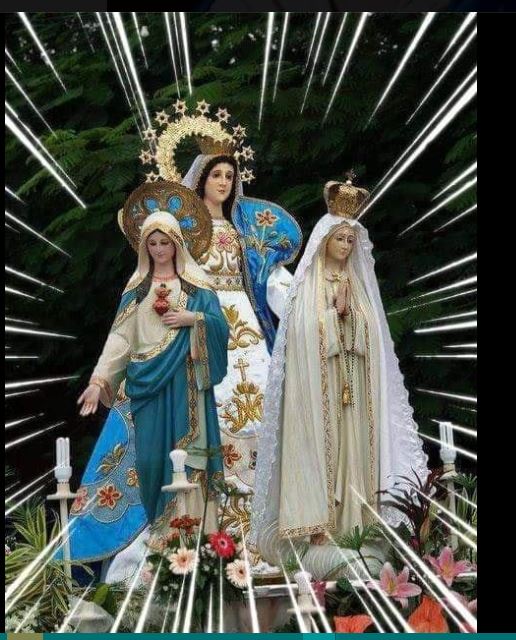
The images help me to focus on the particular mystery that I am contemplating as I say the Hail Mary on each bead.
Pray on Mondays Joyful, on Tuesdays Sorrowful, on Wednesdays Glorious, on Thursdays Luminous, on Fridays Sorrowful, on Saturdays Joyful, on Sundays Glorious Mysteries in union with millions of faithful believers on this Earth.
Joyful Mysteries
Luminous Mysteries
Sorrowful Mysteries
Glorious Mysteries
Prayers of the Rosary
Links to “How to pray the rosary” Popular Catholic Prayers
The Creed
I believe in God the father all mighty, creator of heaven and earth, and Jesus Christ, His only son,Who was conceived by the Holy Spirit, born of the Virgin Mary, suffered under Pontius Pilate, was crucified, died, and was buried,
He descended into hell; the third day He arose again from the dead; He ascended into Heaven, sitteth at the right hand of God, the Father Almighty, from thence He shall come to judge the living and the dead.
I believe in the Holy Spirit, the Holy Catholic Church, the communion of saints, the forgiveness of sins, the resurrection of the body, and life everlasting. Amen.
Our Father, Who art in Heaven, hallowed b e Thy name, Thy Kingdom come, Thy will be done on earth as it is in Heaven.
Give us this day our daily bread; and forgive us our trespasses as we forgive those who trespass against us; and lead us not into temptation, but deliver us from evil. Amen.
(this prayer is optional and may be said after all Glory Be to the Fathers…..)
O my Jesus, forgive us our sins. Save us from the fires of hell.
Lead all souls to heaven, especially those who are in most need of thy mercy.
Console the souls in Purgatory, particularly those most abandoned. Amen
Hail Mary, full of grace, the Lord is with thee, blessed art thou amongst women and blessed is the fruit of thy womb, Jesus.
Holy Mary Mother of God, pray for us sinners now and at the hour of our death. Amen.
Hail Holy Queen, Mother of Mercy, our life our sweetness and our hope.
To thee do we cry, poor banished children of Eve;
To thee do we send up our sighs, mourning and weeping in this valley of tears.
Turn then, most gracious advocate, thine eyes of mercy toward us and after this our exile show unto us the blessed fruit of thy womb, Jesus.
O clement, O loving, O sweet Virgin Mary!
That we maybe made worthy of the promises of Christ.
O God, whose only begotten Son, by His life, death, and resurrection, has purchased for us the rewards of eternal salvation.
Grant, we beseech Thee, that while meditating on these mysteries of the most holy Rosary of the Blessed Virgin Mary,
that we may imitate what they contain and obtain what they promise, through Christ our Lord. Amen.
Most Holy Trinity – Father, Son, and Holy Spirit – I adore thee profoundly. I offer Thee the most precious Body, Blood, Soul and Divinity of Jesus Christ, present in all the tabernacles of the world, in reparation for the outrages, sacrileges and indifference’s whereby He is offended. And through the infinite merits of His Most Sacred Heart and the Immaculate Heart of Mary, I beg of Thee the conversion of poor sinners.
Saint Michael, the Archangel, defend us in battle. Be our safeguard against the wickedness and snares of the devil. May God rebuke him, we humbly pray; and do you, O Prince of the heavenly host, by the power of God cast into hell Satan and all the evil spirits who wander through the world seeking the ruin of souls.
Amen.
 Thurzo Gizella Bible Study
Leave a comment