

He reveals the deep things of darkness and brings deep shadows into the light. Job 12:22 NIV
Bible verses for today, Deuteronomy 9-11 Hebrews 11, finish the Bible in one year. (The Catholic Bible, the original one that includes all the books not included in Bibles used by other Christians.)
Watch and Listen here: and for explanations For the Rosary Julie Green Prophecies, Catholic Answers, Daily Readings,
Listen to the verses, as you enjoy the clips and pictures and a song at the end. Also look for the weekly review on the “Gizella Price” channel, YouTube or on Rumble.
A Christian’s goal should be to create the Kingdom of God here on earth, as it is in Heaven. Not only, to get to Heaven.
Prophesies by Julie Green. Click the date following: 9/1/22 August 2022 Post July 2022 Posts October Posts 11/24/22 video, 11/22 all 12/22 all 1/23 all
Go Here to see how many of Julie Green’s prophesies are being fulfilled every day.
My other websites: Catholic, Prophets today, For Kids
Read Today’s Bible Verses following here:
Deuteronomy 9
1Hear, O Israel! You are now about to cross the Jordan to enter in and dispossess nations greater and stronger than yourselves, having large cities fortified to the heavens,a
2the Anakim, a people great and tall.b You yourselves know of them and have heard it said of them, “Who can stand up against the Anakim?”
3Know, then, today that it is the LORD, your God, who will cross over before you as a consuming fire; he it is who will destroy them and subdue them before you, so that you can dispossess and remove them quickly, as the LORD promised you.c
4After the LORD, your God, has driven them out of your way, do not say in your heart, “It is because of my justice the LORD has brought me in to possess this land,d and because of the wickedness of these nations the LORD is dispossessing them before me.”*
5No, it is not because of your justice or the integrity of your heart that you are going in to take possession of their land; but it is because of their wickedness that the LORD, your God, is dispossessing these nations before you and in order to fulfill the promise he made on oath to your ancestors, Abraham, Isaac, and Jacob.e
6Know this, therefore: it is not because of your justice that the LORD, your God, is giving you this good land to possess, for you are a stiff-necked people.f
7Remember and do not forget how you angered the LORD, your God, in the wilderness. From the day you left the land of Egypt until you came to this place, you have been rebellious toward the LORD.g
8h At Horeb you so provoked the LORD that he was angry enough to destroy you,i
9when I had gone up the mountain to receive the stone tablets of the covenant which the LORD made with you.j Meanwhile I stayed on the mountain forty days and forty nights; I ate no food and drank no water.
10The LORD gave me the two stone tablets inscribed, by God’s own finger,k with a copy of all the words that the LORD spoke to you on the mountain from the midst of the fire on the day of the assembly.
11Then, at the end of the forty days and forty nights, when the LORD had given me the two stone tablets, the tablets of the covenant,
12l the LORD said to me, Go down from here now, quickly, for your people whom you have brought out of Egypt are acting corruptly; they have already turned aside from the way I commanded them and have made for themselves a molten idol.
13I have seen now how stiff-necked this people is, the LORD said to me.
14Let me be, that I may destroy them and blot out their name from under the heavens. I will then make of you a nation mightier and greater than they.
15When I had come down again from the blazing, fiery mountain, with the two tablets of the covenant in both my hands,m
16I saw how you had sinned against the LORD, your God, by making for yourselves a molten calf. You had already turned aside from the way which the LORD had commanded you.n
17I took hold of the two tablets and with both hands cast them from me and broke them before your eyes.o
18Then, as before, I lay prostrate before the LORD for forty days and forty nights; I ate no food, I drank no water, because of all the sin you had committed in the sight of the LORD, doing wrong and provoking him.p
19For I dreaded the fierce anger of the LORD against you: his wrath would destroy you.q Yet once again the LORD listened to me.
20With Aaron, too, the LORD was deeply angry, and would have destroyed him; but I prayed for Aaron also at that time.r
21Then, taking the calf, the sinful object you had made, I burnt it and ground it down to powder as fine as dust, which I threw into the wadi that went down the mountainside.s
22At Taberah, at Massah, and at Kibroth-hattaavah likewise, you enraged the LORD.t
23And when the LORD sent you up from Kadesh-barnea saying, Go up and take possession of the land I have given you, you rebelled against this command of the LORD, your God, and would not believe him or listen to his voice.u
24You have been rebels against the LORD from the day I first knew you.
25v Those forty days, then, and forty nights, I lay prostrate before the LORD, because he had threatened to destroy you.
26And I prayed to the Lord and said: O Lord GOD, do not destroy your people, the heritage you redeemed in your greatness and have brought out of Egypt with your strong hand.w
27Remember your servants, Abraham, Isaac, and Jacob. Do not look upon the stubbornness of this people nor upon their wickedness and sin,x
28lest the land from which you have brought us say, “The LORD was not able to bring them into the land he promised them, and out of hatred for them, he brought them out to let them die in the wilderness.”y
29They are your people and your heritage, whom you have brought out by your great power and with your outstretched arm.z
Deuteronomy 10
1a At that time the LORD said to me, Cut two stone tablets like the first onesb and come up the mountain to me. Also make an ark out of wood.
2I will write upon the tablets the words that were on the tablets that you broke, and you shall place them in the ark.
3So I made an ark of acacia wood, and cut two stone tablets like the first ones, and went up the mountain with the two tablets in my hand.c
4d The LORD then wrote on the tablets, as he had written before, the ten words* that the LORD had spoken to you on the mountain from the midst of the fire on the day of the assembly; and the LORD gave them to me.
5Then I turned and came down from the mountain, and placed the tablets in the ark I had made.e There they have remained, as the LORD commanded me.
6f The Israelites set out from Beeroth Bene-jaakan for Moserah; Aaron died there and was buried. His son Eleazar succeeded him as priest.g
7From there they set out for Gudgodah, and from Gudgodah for Jotbathah, a region where there is water in the wadies.
8At that time the LORD set apart the tribe of Levi to carry the ark of the covenant of the LORD,h to stand before the LORD to minister to him, and to bless in his name, as they have done to this day.
9For this reason, Levi has no hereditary portion with his relatives;i the LORD himself is his portion, as the LORD, your God, promised him.
10Meanwhile I stayed on the mountain as I did before, forty days and forty nights, and once again the LORD listened to me. The LORD was unwilling to destroy you.
11The LORD said to me, Go now and set out at the head of the people,j that they may enter in and possess the land that I swore to their ancestors I would give them.
The Lord’s Majesty and Compassion.
12k Now, therefore, Israel, what does the LORD, your God, ask of you but to fear the LORD, your God, to follow in all his ways, to love and serve the LORD, your God, with your whole heart and with your whole being,l
13to keep the commandments and statutes of the LORD that I am commanding you today for your own well-being?m
14Look, the heavens, even the highest heavens, belong to the LORD, your God, as well as the earth and everything on it.n
15Yet only on your ancestors did the LORD set his heart to love them. He chose you, their descendants, from all the peoples, as it is today.o
16Circumcise therefore the foreskins of your hearts,* and be stiff-necked no longer.
17For the LORD, your God, is the God of gods, the Lord of lords, the great God, mighty and awesome, who has no favorites, accepts no bribes,p
18who executes justice for the orphan and the widow, and loves the resident alien, giving them food and clothing.q
19So you too should love the resident alien, for that is what you were in the land of Egypt.r
20The LORD, your God, shall you fear, and him shall you serve; to him hold fast and by his name shall you swear.s
21He is your praise; he is your God, who has done for you those great and awesome things that your own eyes have seen.t
22Seventy strong your ancestors went down to Egypt,u and now the LORD, your God, has made you as numerous as the stars of heaven.
Deuteronomy 11
Recalling the Wonders of the Lord.
1Love the LORD, your God, therefore, and keep his charge, statutes, ordinances, and commandments always.a
2Recall today that it was not your children, who have neither known nor seen the discipline of the LORD, your God—his greatness, his strong hand and outstretched arm;b
3the signs and deeds he wrought in the midst of Egypt, on Pharaoh, king of Egypt, and on all his land;c
4what he did to the Egyptian army and to their horses and chariots, engulfing them in the waters of the Red Sea* as they pursued you,d so that the LORD destroyed them even to this day;
5what he did for you in the wilderness until you came to this place;
6and what he did to the Reubenites Dathan and Abiram, sons of Eliab, when the earth opened its mouth and swallowed them up out of the midst of Israel, with their families and tents and every living thing that belonged to them—e
7but it was you who saw with your own eyes all these great deeds that the LORD has done.
8f So keep all the commandments I give you today, that you may be strong enough to enter in and take possession of the land that you are crossing over to possess,
9and that you may have long life on the land which the LORD swore to your ancestors he would give to them and their descendants, a land flowing with milk and honey.
10The land you are to enter and possess is not like the land of Egypt from which you have come, where you would sow your seed and then water it by hand,* as in a vegetable garden.
11g No, the land into which you are crossing to take possession is a land of mountains and valleys that drinks in rain from the heavens,
12a land which the LORD, your God, looks after; the eyes of the LORD, your God, are upon it continually through the year, from beginning to end.
13* h If, then, you truly listen to my commandments which I give you today, loving and serving the LORD, your God, with your whole heart and your whole being,
14I will give the seasonal rain to your land, the early rain* and the late rain, that you may have your grain, wine and oil to gather in;
15and I will bring forth grass in your fields for your animals. Thus you may eat and be satisfied.
16i But be careful lest your heart be so lured away that you serve other gods and bow down to them.j
17For then the anger of the LORD will flare up against you and he will close up the heavens, so that no rain will fall, and the soil will not yield its crops, and you will soon perish from the good land the LORD is giving you.
18k Therefore, take these words of mine into your heart and soul. Bind them on your arm as a sign, and let them be as a pendant on your forehead.
19Teach them to your children, speaking of them when you are at home and when you are away, when you lie down and when you get up,
20and write them on the doorposts of your houses and on your gates,
21so that, as long as the heavens are above the earth, you and your children may live on in the land which the LORD swore to your ancestors he would give them.
22l For if you are careful to observe this entire commandment I am giving you, loving the LORD, your God, following his ways exactly, and holding fast to him,
23the LORD will dispossess all these nations before you, and you will dispossess nations greater and mightier than yourselves.
24m Every place where you set foot shall be yours: from the wilderness and the Lebanon, from the Euphrates River to the Western Sea,* shall be your territory.
25None shall stand up against you; the LORD, your God, will spread the fear and dread of you through any land where you set foot, as he promised you.n
26o See, I set before you this day a blessing and a curse:
27a blessing for obeying the commandments of the LORD, your God, which I give you today;
28a curse if you do not obey the commandments of the LORD, your God, but turn aside from the way I command you today, to go after other gods, whom you do not know.p
29When the LORD, your God, brings you into the land which you are to enter and possess, then on Mount Gerizim you shall pronounce the blessing,q on Mount Ebal, the curse.*
30(These are beyond the Jordan, on the other side of the western road in the land of the Canaanites who live in the Arabah, opposite Gilgal beside the oak of Moreh.)r
31Now you are about to cross the Jordan to enter and possess the land which the LORD, your God, is giving you. When, therefore, you take possession of it and settle there,
32be careful to observe all the statutes and ordinances that I set before you today.
Hebrews 11
1Faith is the realization of what is hoped for and evidence* of things not seen.a
2Because of it the ancients were well attested.
3b By faith we understand that the universe was ordered by the word of God,* so that what is visible came into being through the invisible.
4* By faith Abel offered to God a sacrifice greater than Cain’s. Through this he was attested to be righteous, God bearing witness to his gifts, and through this, though dead, he still speaks.c
5By faith Enoch was taken up so that he should not see death, and “he was found no more because God had taken him.” Before he was taken up, he was attested to have pleased God.d
6* But without faith it is impossible to please him,e for anyone who approaches God must believe that he exists and that he rewards those who seek him.
7By faith Noah, warned about what was not yet seen, with reverence built an ark for the salvation of his household. Through this he condemned the world and inherited the righteousness that comes through faith.f
8By faith Abraham obeyed when he was called to go out to a place that he was to receive as an inheritance; he went out, not knowing where he was to go.g
9By faith he sojourned in the promised land as in a foreign country, dwelling in tents with Isaac and Jacob, heirs of the same promise;h
10for he was looking forward to the city with foundations, whose architect and maker is God.i
11By faith he received power to generate, even though he was past the normal age—and Sarah herself was sterile—for he thought that the one who had made the promise was trustworthy.j
12So it was that there came forth from one man, himself as good as dead, descendants as numerous as the stars in the sky and as countless as the sands on the seashore.k
13All these died in faith. They did not receive what had been promised but saw it and greeted it from afar and acknowledged themselves to be strangers and aliens on earth,l
14for those who speak thus show that they are seeking a homeland.
15If they had been thinking of the land from which they had come, they would have had opportunity to return.
16But now they desire a better homeland, a heavenly one. Therefore, God is not ashamed to be called their God, for he has prepared a city for them.m
17By faith Abraham, when put to the test, offered up Isaac, and he who had received the promises was ready to offer his only son,n
18of whom it was said, “Through Isaac descendants shall bear your name.”o
19* He reasoned that God was able to raise even from the dead,p and he received Isaac back as a symbol.
20By faith regarding things still to come Isaac* blessed Jacob and Esau.q
21By faith Jacob, when dying, blessed each of the sons of Joseph and “bowed in worship, leaning on the top of his staff.”r
22By faith Joseph, near the end of his life, spoke of the Exodus of the Israelites and gave instructions about his bones.s
23t By faith Moses was hidden by his parents for three months after his birth, because they saw that he was a beautiful child, and they were not afraid of the king’s edict.
24* By faith Moses, when he had grown up, refused to be known as the son of Pharaoh’s daughter;u
25he chose to be ill-treated along with the people of God rather than enjoy the fleeting pleasure of sin.
26He considered the reproach of the Anointed greater wealth than the treasures of Egypt, for he was looking to the recompense.
27By faith he left Egypt, not fearing the king’s fury, for he persevered as if seeing the one who is invisible.v
28By faith he kept the Passover and sprinkled the blood, that the Destroyer of the firstborn might not touch them.w
29By faith they crossed the Red Sea as if it were dry land, but when the Egyptians attempted it they were drowned.x
30By faith the walls of Jericho fell after being encircled for seven days.y
31By faith Rahab the harlot did not perish with the disobedient, for she had received the spies in peace.z
32What more shall I say? I have not time to tell of Gideon, Barak, Samson, Jephthah, of David and Samuel and the prophets,a
33who by faith conquered kingdoms, did what was righteous, obtained the promises; they closed the mouths of lions,b
34put out raging fires, escaped the devouring sword; out of weakness they were made powerful, became strong in battle, and turned back foreign invaders.c
35Women received back their dead through resurrection. Some were tortured and would not accept deliverance, in order to obtain a better resurrection.d
36Others endured mockery, scourging, even chains and imprisonment.e
37They were stoned, sawed in two, put to death at sword’s point; they went about in skins of sheep or goats, needy, afflicted, tormented.f
38The world was not worthy of them. They wandered about in deserts and on mountains, in caves and in crevices in the earth.g
39Yet all these, though approved because of their faith, did not receive what had been promised.
40God had foreseen something better for us, so that without us they should not be made perfect.*
Sermons Rosary Prayers Catholic Answers
The complete Book of Deuteronomy
THE BOOK OF DEUTERONOMY
The title of Deuteronomy in Hebrew is Debarim, “words,” from its opening phrase. The English title comes from the Septuagint of 17:18, deuteronomion, “copy of the law”; this title is appropriate because the book replicates much of the legal content of the previous books, serving as a “second law.” It brings to a close the five books of the Torah or Pentateuch with a retrospective account of Israel’s past—the exodus, the Sinai covenant, and the wilderness wanderings—and a look into Israel’s future as they stand poised to enter the land of Canaan and begin their life as a people there.
The book consists of three long addresses by Moses. Each of these contains narrative, law, and exhortation, in varying proportions. In an expansion of the first commandment of the decalogue (Ex 20:5–6; Dt 5:9–10), Moses tells the Israelites how to make a success of their life as a people once they are settled in the land. The choice presented to Israel is to love the Lord and keep his commandments, or to serve “other gods.” That choice will determine what kind of life they will make for themselves in the land. Whichever choice they make as a people carries consequences, which Deuteronomy terms “blessing” and “curse.” Thus the book can be seen as a kind of survival manual for Israel in their life as a people: how to live and what to avoid. This gives the book its hortatory style and tone of life-or-death urgency.
One defining concern of the book is centralization of worship. As Israel’s God is one (6:4–5), so its worship must be focused in one place, which the Lord “will choose from among your tribes”; there the Lord will “make his name dwell” (see note on 12:5). Thus the privileged status of the Jerusalem Temple is asserted; all other places and all other modes of worship of the God of Israel (the local shrines, the “high places,” “under every green tree”) are proscribed.
The book was probably composed over the course of three centuries, from the eighth century to the exile and beyond. It bears some relation to “the Book of the Law” discovered in the Jerusalem Temple around 622 B.C. during the reign of King Josiah (2 Kgs 22:8–13). It gives evidence of later editing: cf. the references to exile in 4:1–40; 28:63–68; 29:21–28; 30:1–10.
Over the book looms the disaster of 722/721, the fall of the Northern Kingdom, Israel. The detailed description of siege (28:49–57) especially echoes the fate the North suffered at the hands of the Assyrian invader. The book draws the minds of its intended readers back to a time before disastrous mistakes were made and their disastrous effects felt, and serves to explain the political and theological dynamics that led to the destruction of the North as well as to warn the surviving Southern Kingdom, Judah, to reform by keeping faith with Israel’s covenant Lord.
The characteristic and highly recognizable language and theology of Deuteronomy are seen in editorial comments structuring the works that follow it in the Hebrew canon, the Books of Joshua, Judges, Samuel, and Kings. Together with Deuteronomy, these present a history of Israel from Moses to the time of the Babylonian exile. Conventionally this great multivolume work is termed the Deuteronomistic History. The Book of Deuteronomy itself was also incorporated into the Torah as its fifth volume.
The book presents three discourses by Moses, as follows:
- First Address (1:1–4:43)
- Second Address (4:44–28:69)
- Third Address (29:1–33:29)
- The Death of Moses (34:1–12)
I. FIRST ADDRESS
The book of Hebrews
THE LETTER TO THE HEBREWS
As early as the second century, this treatise, which is of great rhetorical power and force in its admonition to faithful pilgrimage under Christ’s leadership, bore the title “To the Hebrews.” It was assumed to be directed to Jewish Christians. Usually Hebrews was attached in Greek manuscripts to the collection of letters by Paul. Although no author is mentioned (for there is no address), a reference to Timothy (Heb 13:23) suggested connections to the circle of Paul and his assistants. Yet the exact audience, the author, and even whether Hebrews is a letter have long been disputed.
The author saw the addressees in danger of apostasy from their Christian faith. This danger was due not to any persecution from outsiders but to a weariness with the demands of Christian life and a growing indifference to their calling (Heb 2:1; 4:14; 6:1–12; 10:23–32). The author’s main theme, the priesthood and sacrifice of Jesus (Heb 3–10), is not developed for its own sake but as a means of restoring their lost fervor and strengthening them in their faith. Another important theme of the letter is that of the pilgrimage of the people of God to the heavenly Jerusalem (11:10; 12:1–3, 18–29; 13:14). This theme is intimately connected with that of Jesus’ ministry in the heavenly sanctuary (Heb 9:11–10:22).
The author calls this work a “message of encouragement” (Heb 13:22), a designation that is given to a synagogue sermon in Acts 13:15. Hebrews is probably therefore a written homily, to which the author gave an epistolary ending (Heb 13:22–25). The author begins with a reminder of the preexistence, incarnation, and exaltation of Jesus (Heb 1:3) that proclaimed him the climax of God’s word to humanity (Heb 1:1–3). He dwells upon the dignity of the person of Christ, superior to the angels (Heb 1:4–2:2). Christ is God’s final word of salvation communicated (in association with accredited witnesses to his teaching: cf. Heb 2:3–4) not merely by word but through his suffering in the humanity common to him and to all others (Heb 2:5–16). This enactment of salvation went beyond the pattern known to Moses, faithful prophet of God’s word though he was, for Jesus as high priest expiated sin and was faithful to God with the faithfulness of God’s own Son (Heb 2:17–3:6).
Just as the infidelity of the people thwarted Moses’ efforts to save them, so the infidelity of any Christian may thwart God’s plan in Christ (3:6–4:13). Christians are to reflect that it is their humanity that Jesus took upon himself, with all its defects save sinfulness, and that he bore the burden of it until death out of obedience to God. God declared this work of his Son to be the cause of salvation for all (Heb 4:14–5:10). Although Christians recognize this fundamental teaching, they may grow weary of it and of its implications, and therefore require other reflections to stimulate their faith (5:11–6:20).
Therefore, the author presents to the readers for their reflection the everlasting priesthood of Christ (Heb 7:1–28), a priesthood that fulfills the promise of the Old Testament (Heb 8:1–13). It also provides the meaning God ultimately intended in the sacrifices of the Old Testament (Heb 9:1–28): these pointed to the unique sacrifice of Christ, which alone obtains forgiveness of sins (Heb 10:1–18). The trial of faith experienced by the readers should resolve itself through their consideration of Christ’s ministry in the heavenly sanctuary and his perpetual intercession there on their behalf (Heb 7:25; 8:1–13). They should also be strengthened by the assurance of his foreordained parousia, and by the fruits of faith that they have already enjoyed (Heb 10:19–39).
It is in the nature of faith to recognize the reality of what is not yet seen and is the object of hope, and the saints of the Old Testament give striking example of that faith (Heb 11:1–40). The perseverance to which the author exhorts the readers is shown forth in the earthly life of Jesus. Despite the afflictions of his ministry and the supreme trial of his suffering and death, he remained confident of the triumph that God would bring him (Heb 12:1–3). The difficulties of human life have meaning when they are accepted as God’s discipline (Heb 12:4–13), and if Christians persevere in fidelity to the word in which they have believed, they are assured of possessing forever the unshakable kingdom of God (Heb 12:14–29).
The letter concludes with specific moral commandments (Heb 13:1–17), in the course of which the author recalls again his central theme of the sacrifice of Jesus and the courage needed to associate oneself with it in faith (Heb 13:9–16).
As early as the end of the second century, the church of Alexandria in Egypt accepted Hebrews as a letter of Paul, and that became the view commonly held in the East. Pauline authorship was contested in the West into the fourth century, but then accepted. In the sixteenth century, doubts about that position were again raised, and the modern consensus is that the letter was not written by Paul. There is, however, no widespread agreement on any of the other suggested authors, e.g., Barnabas, Apollos, or Prisc(ill)a and Aquila. The document itself has no statement about its author.
Among the reasons why Pauline authorship has been abandoned are the great difference of vocabulary and style between Hebrews and Paul’s letters, the alternation of doctrinal teaching with moral exhortation, the different manner of citing the Old Testament, and the resemblance between the thought of Hebrews and that of Alexandrian Judaism. The Greek of the letter is in many ways the best in the New Testament.
Since the letter of Clement of Rome to the Corinthians, written about A.D. 96, most probably cites Hebrews, the upper limit for the date of composition is reasonably certain. While the letter’s references in the present tense to the Old Testament sacrificial worship do not necessarily show that temple worship was still going on, many older commentators and a growing number of recent ones favor the view that it was and that the author wrote before the destruction of the temple of Jerusalem in A.D. 70. In that case, the argument of the letter is more easily explained as directed toward Jewish Christians rather than those of Gentile origin, and the persecutions they have suffered in the past (cf. Heb 10:32–34) may have been connected with the disturbances that preceded the expulsion of the Jews from Rome in A.D. 49 under the emperor Claudius. These were probably caused by disputes between Jews who accepted Jesus as the Messiah and those who did not.
The principal divisions of the Letter to the Hebrews are the following:
- Introduction (1:1–4)
- The Son Higher than the Angels (1:5–2:18)
- Jesus, Faithful and Compassionate High Priest (3:1–5:10)
- Jesus’ Eternal Priesthood and Eternal Sacrifice (5:11–10:39)
- Examples, Discipline, Disobedience (11:1–12:29)
- Final Exhortation, Blessing, Greetings (13:1–25)
Sermons on the Book of Deuteronomy
SERMONS ON THE BOOK OF HEBREWS
Catholic Daily Readings at every Mass
You can also read it, if you watch this on You Tube, under the videos
Sermons Rosary Prayers Catholic Answers Scriptural Rosary
Prophesies by Julie Green. Click the date following: December 22 Posts, November 22 Posts, September Posts, August 2022 Post July 2022 Posts October Posts video,
Go Here to see how many of Julie Green’s prophesies are being fulfilled every day.
Prophetic words given on November 24, 2022
See prophesy blog for Jan 2nd 2023.
Dr. Myles Munroe
I am including a video by Dr. Myles Munroe, I’ve listened to him back in the nineties, and rediscovered him recently. Now his perspective seems to be a good way to also look at scripture. In Pursuit of Purpose – Book Highlights
Sermons Rosary Prayers Catholic Answers
Called to Communion Dr. David Anders

Rosary Mysteries
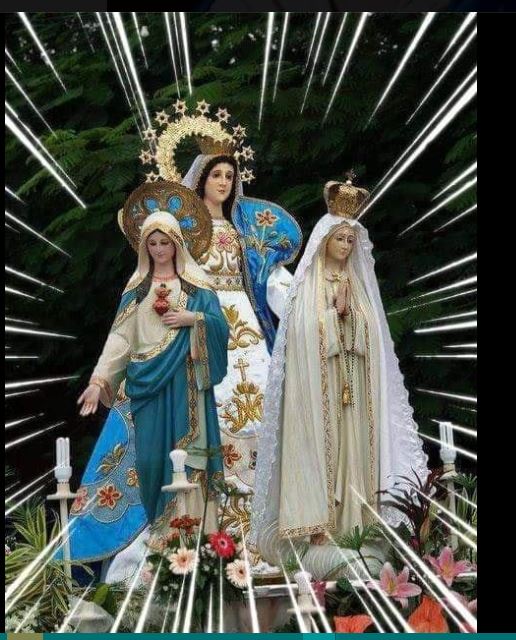
The images help me to focus on the particular mystery that I am contemplating as I say the Hail Mary on each bead.
Pray on Mondays Joyful, on Tuesdays Sorrowful, on Wednesdays Glorious, on Thursdays Luminous, on Fridays Sorrowful, on Saturdays Joyful, on Sundays Glorious Mysteries in union with millions of faithful believers on this Earth.
Joyful Mysteries
Luminous Mysteries
Sorrowful Mysteries
Glorious Mysteries
Prayers of the Rosary
Links to “How to pray the rosary” Popular Catholic Prayers
The Creed
I believe in God the father all mighty, creator of heaven and earth, and Jesus Christ, His only son,Who was conceived by the Holy Spirit, born of the Virgin Mary, suffered under Pontius Pilate, was crucified, died, and was buried,
He descended into hell; the third day He arose again from the dead; He ascended into Heaven, sitteth at the right hand of God, the Father Almighty, from thence He shall come to judge the living and the dead.
I believe in the Holy Spirit, the Holy Catholic Church, the communion of saints, the forgiveness of sins, the resurrection of the body, and life everlasting. Amen.
Our Father, Who art in Heaven, hallowed b e Thy name, Thy Kingdom come, Thy will be done on earth as it is in Heaven.
Give us this day our daily bread; and forgive us our trespasses as we forgive those who trespass against us; and lead us not into temptation, but deliver us from evil. Amen.
(this prayer is optional and may be said after all Glory Be to the Fathers…..)
O my Jesus, forgive us our sins. Save us from the fires of hell.
Lead all souls to heaven, especially those who are in most need of thy mercy.
Console the souls in Purgatory, particularly those most abandoned. Amen
Hail Mary, full of grace, the Lord is with thee, blessed art thou amongst women and blessed is the fruit of thy womb, Jesus.
Holy Mary Mother of God, pray for us sinners now and at the hour of our death. Amen.
Hail Holy Queen, Mother of Mercy, our life our sweetness and our hope.
To thee do we cry, poor banished children of Eve;
To thee do we send up our sighs, mourning and weeping in this valley of tears.
Turn then, most gracious advocate, thine eyes of mercy toward us and after this our exile show unto us the blessed fruit of thy womb, Jesus.
O clement, O loving, O sweet Virgin Mary!
That we maybe made worthy of the promises of Christ.
O God, whose only begotten Son, by His life, death, and resurrection, has purchased for us the rewards of eternal salvation.
Grant, we beseech Thee, that while meditating on these mysteries of the most holy Rosary of the Blessed Virgin Mary,
that we may imitate what they contain and obtain what they promise, through Christ our Lord. Amen.
Most Holy Trinity – Father, Son, and Holy Spirit – I adore thee profoundly. I offer Thee the most precious Body, Blood, Soul and Divinity of Jesus Christ, present in all the tabernacles of the world, in reparation for the outrages, sacrileges and indifference’s whereby He is offended. And through the infinite merits of His Most Sacred Heart and the Immaculate Heart of Mary, I beg of Thee the conversion of poor sinners.
Saint Michael, the Archangel, defend us in battle. Be our safeguard against the wickedness and snares of the devil. May God rebuke him, we humbly pray; and do you, O Prince of the heavenly host, by the power of God cast into hell Satan and all the evil spirits who wander through the world seeking the ruin of souls.
Amen.
 Thurzo Gizella Bible Study
Leave a comment